

Illustrative images
Zoanthids
Zoanthus spp.
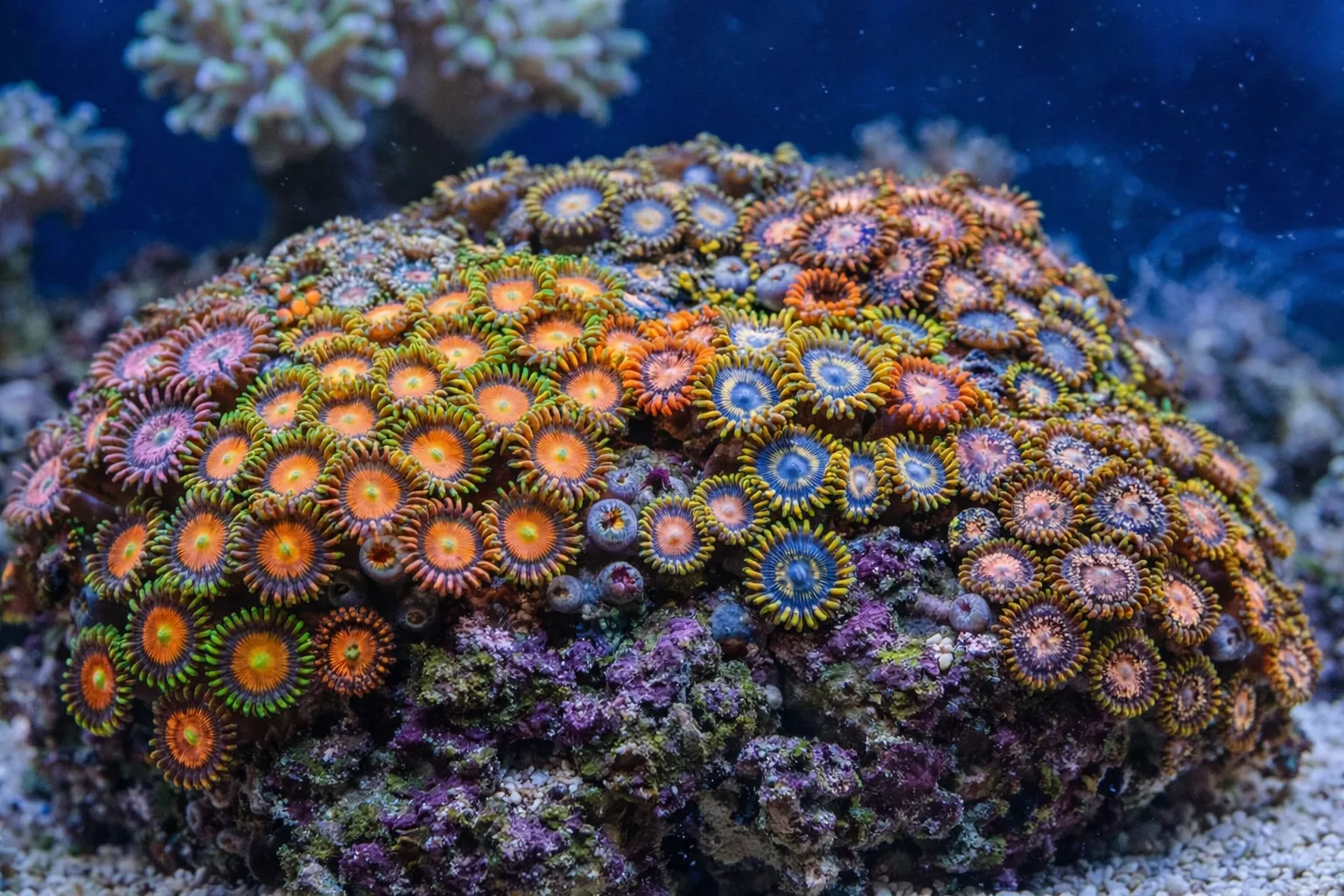
Zoanthids, commonly referred to as Zoas, are among the most popular and colorful corals in the reef aquarium hobby. These soft corals belong to the order Zoantharia and are prized for their incredible variety of colors, patterns, and relatively easy care requirements. Zoanthids form vibrant colonies that can quickly spread across rocks, creating beautiful living carpets that add striking visual impact to marine aquariums.
Native to tropical oceans around the world, Zoanthids are commonly found in shallow reef environments, lagoons, and rocky reef flats where sunlight and moderate water movement are present. Their adaptability and hardiness make them an excellent choice for both beginner and experienced reef keepers.
Appearance
Zoanthids grow in colonies made up of hundreds or even thousands of individual polyps connected by a shared tissue called the coenenchyme. Each polyp has a small circular oral disc surrounded by a ring of delicate tentacles.
What makes Zoanthids truly special is their extraordinary range of colors and patterns. Many varieties feature vibrant combinations that glow intensely under reef aquarium lighting, especially blue LED spectrums.
Popular Zoanthid morphs include:
-
Eagle Eye Zoanthids
-
Radioactive Dragon Eye
-
Utter Chaos
-
Rasta Zoanthids
-
Sunny D Zoas
-
Purple People Eaters (PPE)
Each morph has unique patterns on the oral disc, often with contrasting rings, speckles, or stripes that make them highly collectible among reef hobbyists.
Natural Habitat
In the wild, Zoanthids inhabit tropical coral reefs across the Indo-Pacific and Caribbean regions. They typically grow attached to rocks, coral rubble, and reef structures in areas with consistent water movement and strong natural lighting.
Zoanthids maintain a symbiotic relationship with zooxanthellae algae, which live within their tissues and provide energy through photosynthesis. This relationship allows Zoanthids to thrive in well-lit reef environments.
Because of their resilience, Zoanthids are often found in areas where other corals may struggle, including shallow reef zones exposed to fluctuating conditions.
Aquarium Requirements
Zoanthids are considered one of the easiest corals to keep, making them ideal for beginners entering the reef aquarium hobby.
Recommended water parameters include:
-
Temperature: 24–26°C (75–79°F)
-
Salinity: 1.024–1.026
-
pH: 8.1–8.4
-
Alkalinity: 8–10 dKH
-
Calcium: 380–450 ppm
-
Magnesium: 1200–1350 ppm
Stability is more important than perfection. Zoanthids tend to thrive in stable reef tanks with consistent parameters.
Lighting
Zoanthids adapt well to a wide range of lighting conditions but generally prefer moderate lighting.
Typical PAR levels:
80–200 PAR
Under strong blue LED lighting, many Zoanthids display intense fluorescence, making their colors appear even more vibrant. However, sudden exposure to high light intensity can cause them to remain closed, so gradual acclimation is recommended.
Water Flow
Moderate water movement is ideal for Zoanthids.
Good flow helps:
-
Remove detritus from the colony
-
Deliver nutrients
-
Prevent algae buildup around polyps
The polyps should gently sway in the current, but they should not be blasted by direct strong flow.
Placement in the Aquarium
Zoanthids can be placed in various areas of the aquarium, depending on lighting intensity and flow.
Common placements include:
-
On live rock structures
-
On frag plugs attached to reef rock
-
On isolated "zoa gardens"
Many reef aquarists create Zoanthid gardens, where multiple colorful morphs grow together to create vibrant patches across rock surfaces.
Feeding
Although Zoanthids obtain most of their energy through photosynthesis, they can also benefit from occasional supplemental feeding.
Possible foods include:
-
Reef roids
-
Phytoplankton
-
Microplankton
-
Fine coral foods
Feeding is optional but may enhance growth and coloration in some reef systems.
Growth and Propagation
Zoanthids are known for fast colony growth when kept in proper conditions. New polyps spread outward across rock surfaces, gradually forming dense clusters.
Propagation is extremely simple. Reef keepers typically:
-
Cut small sections of the colony
-
Attach the frag to a new plug or rock
-
Allow it to grow into a new colony
Because of their fast growth and diversity of morphs, Zoanthids are widely traded within the reef aquarium community.
Safety Warning
Zoanthids can contain palytoxin, one of the most potent natural toxins known. While aquarium exposure is extremely rare, reef keepers should always take precautions when handling them.
Safety recommendations include:
-
Wearing gloves
-
Avoiding contact with eyes or open wounds
-
Washing hands after handling
These precautions ensure safe maintenance of Zoanthid colonies.
Why Zoanthids Are So Popular
Zoanthids remain one of the most beloved corals in reef aquariums because they offer:
-
Incredible color diversity
-
Easy care requirements
-
Fast growth
-
Compatibility with many reef setups
-
Stunning fluorescent appearance under reef lighting
For many hobbyists, Zoanthids become the foundation of vibrant coral gardens, transforming reef aquariums into living works of art.
How to care for Zoanthids
- 1
Set up the tank
Prepare a stable reef environment with appropriate lighting, water flow, and parameters as outlined above.
- 2
Acclimate Zoanthus spp.
Float the coral in the tank to equalize temperature, then drip acclimate over 30–60 minutes to match water parameters.
- 3
Place the coral
Position Zoanthus spp. in a location with moderate to high lighting and moderate to strong, random water flow.
- 4
Monitor water parameters
Regularly test and maintain water parameters within the recommended ranges to ensure coral health.
- 5
Feed appropriately
While Zoanthus spp. primarily rely on photosynthesis, supplement their diet with small particles like phytoplankton or zooplankton.
- 6
Inspect for pests
Regularly check for pests such as zoanthid-eating nudibranchs and sundial snails, and remove them promptly.
- 7
Maintain tank mates
Ensure that tank mates are non-aggressive and compatible to prevent stress on Zoanthus spp.
Frequently asked questions
What are the ideal water parameters for Zoanthus spp. in a reef tank?▾
Maintain a temperature of 77–79°F (25–26°C), salinity at 1.025–1.026 (35 ppt), pH between 7.9 and 8.3, alkalinity at 7.5–9.0 dKH, calcium levels of 380–450 ppm, magnesium at 1280–1400 ppm, nitrate between 5 and 20 ppm, and phosphate at 0.03–0.10 ppm. ([myreeflog.com](https://www.myreeflog.com/learn/zoanthids-care-guide?utm_source=openai))
How should I acclimate Zoanthus spp. to my aquarium?▾
Acclimate Zoanthus spp. slowly to prevent stress. Float the coral in the tank to equalize temperature, then drip acclimate over 30–60 minutes to match water parameters. ([coralsdepot.com](https://www.coralsdepot.com/pages/coral-care-guide/zoanthid-coral?utm_source=openai))
What lighting conditions are best for Zoanthus spp.?▾
Provide moderate to high lighting with a PAR range of 100–250. Start with lower light intensity and gradually increase to prevent bleaching. ([royalcorals.co.uk](https://www.royalcorals.co.uk/zoanthid-care-guide?utm_source=openai))
What water flow is suitable for Zoanthus spp.?▾
Aim for moderate to strong, random water flow to keep the mat clean and prevent detritus buildup. ([royalcorals.co.uk](https://www.royalcorals.co.uk/zoanthid-care-guide?utm_source=openai))
How do I feed Zoanthus spp. in my aquarium?▾
Zoanthus spp. primarily rely on photosynthesis but can benefit from supplementary feeding with small particles like phytoplankton or zooplankton. ([elitezoanthus.nl](https://www.elitezoanthus.nl/en/pages/zoanthus-informatie?utm_source=openai))
What are common pests that affect Zoanthus spp.?▾
Zoanthus spp. can be affected by pests such as zoanthid-eating nudibranchs and sundial snails. Regularly inspect colonies for signs of damage or predation. ([coralsdepot.com](https://www.coralsdepot.com/pages/coral-care-guide/zoanthid-coral?utm_source=openai))
How can I propagate Zoanthus spp. in my aquarium?▾
Propagate Zoanthus spp. by carefully cutting the mat with a sharp, sterile tool, ensuring each fragment has attached polyps. Place the fragments on suitable substrates and allow them to establish. ([aquariumstoredepot.com](https://aquariumstoredepot.com/blogs/news/zoanthids?utm_source=openai))
What are the ideal tank mates for Zoanthus spp.?▾
Zoanthus spp. are peaceful and can coexist with other non-aggressive corals and reef-safe fish. Avoid placing them near aggressive species that may compete for space. ([coralsdepot.com](https://www.coralsdepot.com/pages/coral-care-guide/zoanthid-coral?utm_source=openai))