

Illustrative images
Zebra Nerite Snail
Vittina semiconica
Overview
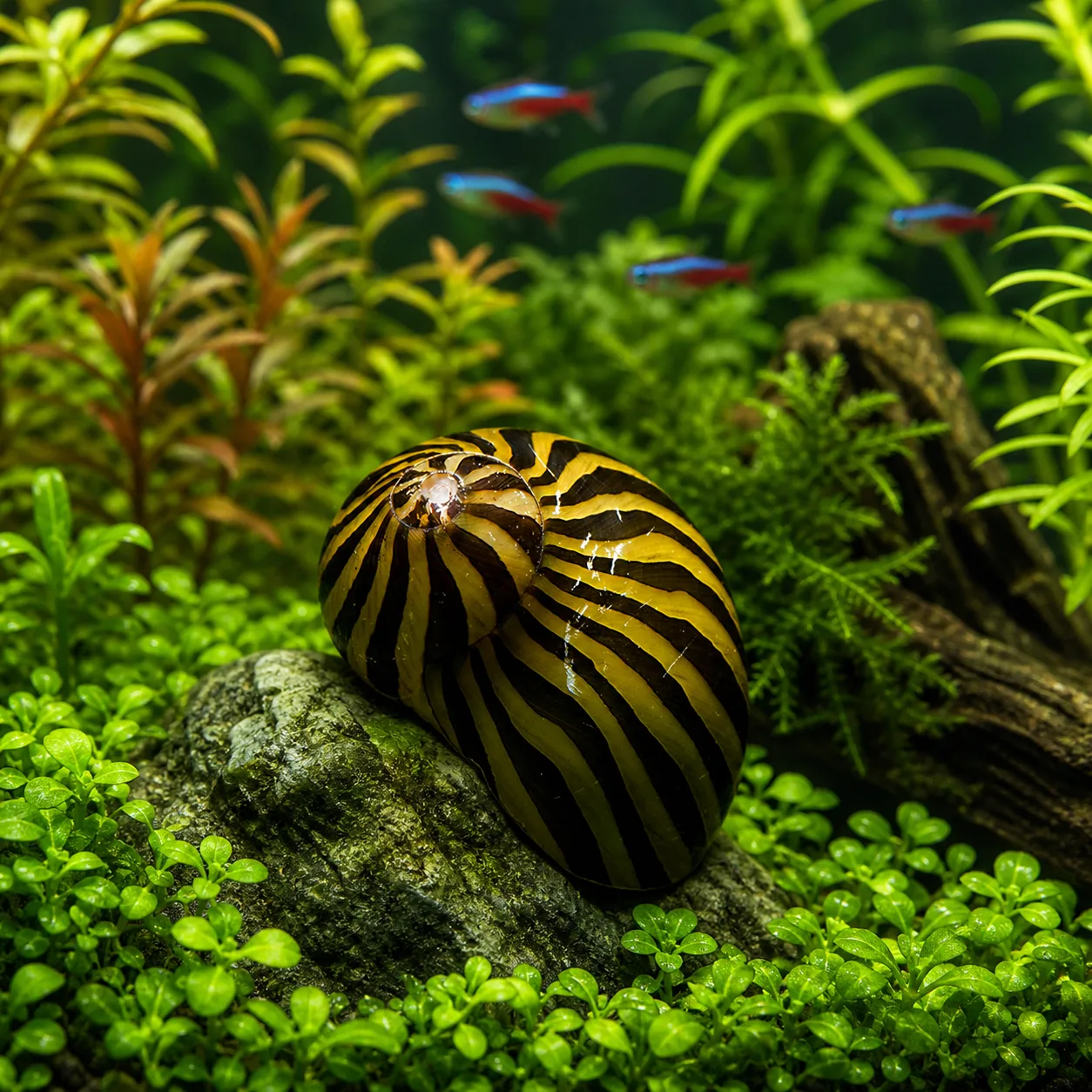
The Zebra Nerite Snail, scientifically known as Neritina natalensis, is a popular choice among aquarium enthusiasts for its unique appearance and algae-eating capabilities. It is known for its striking black and yellow-stripe patterns, making it an attractive addition to both freshwater and brackish tanks.
Natural Habitat
Zebra Nerite Snails are native to the coastal waters of Africa, particularly around estuaries and rivers. They thrive in environments rich in algae, which they graze on as part of their diet. In the wild, these snails are commonly found on rocks and submerged surfaces, which helps them avoid predators.
Care Requirements
These snails are relatively easy to care for, making them suitable for both beginners and seasoned aquarists. To ensure they thrive, consider the following care guidelines:
- Water Type: Freshwater and brackish
- Tank Size: A minimum of 20 liters is recommended for a group of snails.
- Temperature: They prefer water temperatures between 22°C to 28°C.
- pH: A pH range of 7.0 to 8.5 is optimal for their well-being.
- Hardness: General hardness between 8-12 dGH is suitable.
Tank Setup
When setting up a tank for Zebra Nerite Snails, ensure it has plenty of hiding places and surfaces for grazing. Consider including rocks, driftwood, and live plants to create a natural environment. Additionally, maintain good water quality through regular water changes and filtration to keep them healthy.
Compatibility
The Zebra Nerite Snail is a peaceful species that generally does well in community tanks. They are compatible with many fish species, especially those that are non-aggressive. However, avoid keeping them with known snail eaters, such as certain larger cichlids, as they may threaten the snails' safety.
Feeding
These snails are primarily herbivores and enjoy a diet of algae. You can supplement their diet with high-quality sinking algae wafers, blanched vegetables like zucchini or spinach, and commercial foods designed for invertebrates. They are diligent algae eaters and can help keep your tank clean.
Lighting and CO2
Zebra Nerite Snails do not require any specific lighting conditions; however, moderate lighting can help stimulate algae growth, which is beneficial for them. They do not need additional CO2 injection, making them suitable for low-tech aquascapes.
Lifespan
In captivity, the lifespan of a Zebra Nerite Snail can reach up to three years or more with proper care. These hardy invertebrates can live longer when kept in optimal conditions.
How to care for Zebra Nerite Snail
- 1
Set up the tank
Use a minimum 20-liter (5-gallon) aquarium with a secure lid to prevent snails from escaping.
- 2
Acclimate slowly
Introduce snails to the aquarium gradually to minimize stress and allow them to adjust to the new environment.
- 3
Maintain water parameters
Keep water temperature between 22°C and 28°C (72°F to 82°F), pH between 6.5 and 8.0, and hardness between 10 and 20 dGH.
- 4
Provide appropriate diet
Offer algae-based foods and ensure a calcium source is available to support shell health.
- 5
Monitor water quality
Regularly check water parameters and perform partial water changes to maintain optimal conditions.
Frequently asked questions
What is the ideal tank size for Zebra Nerite Snails?▾
A minimum tank size of 20 liters (5 gallons) is recommended for Zebra Nerite Snails.
What water temperature do Zebra Nerite Snails prefer?▾
Zebra Nerite Snails thrive in water temperatures between 22°C and 28°C (72°F to 82°F).
What pH level is suitable for Zebra Nerite Snails?▾
Zebra Nerite Snails prefer a pH range of 6.5 to 8.0.
Do Zebra Nerite Snails reproduce in freshwater aquariums?▾
No, Zebra Nerite Snails require brackish water conditions for successful reproduction; they do not breed in freshwater aquariums.
What do Zebra Nerite Snails eat?▾
Zebra Nerite Snails primarily feed on algae, detritus, and can be supplemented with sinking algae-based foods.