

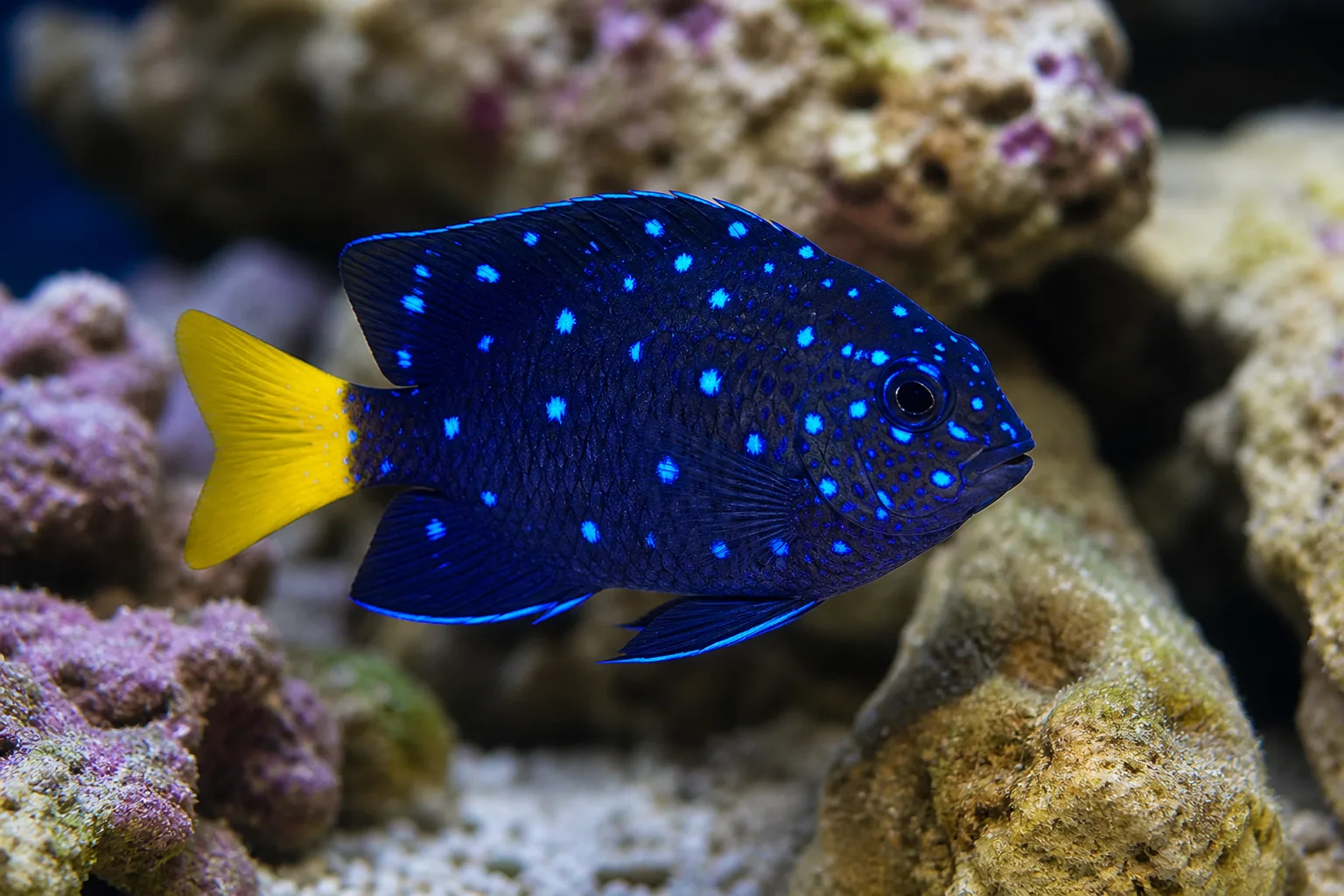
Illustrative images
Yellowtail Damselfish
Chrysiptera parasema
Overview
The Yellowtail Damselfish, scientifically known as Chrysiptera parasema, is a vibrant marine species popular among aquarium enthusiasts. Known for its striking yellow tail and bright blue body, this fish adds color and life to reef aquariums. They are relatively small fish, making them a great choice for community tanks.
Natural Habitat
Yellowtail Damselfish are typically found in the coral reefs of the Indo-Pacific region. They thrive in shallow waters and are often seen darting among the coral formations, where they seek shelter and food. Their natural environment features stable water conditions and is rich in marine life, providing both foraging opportunities and hiding spots.
Care Requirements
Caring for Yellowtail Damselfish in an aquarium setting is relatively straightforward, making them suitable for both beginner and experienced aquarists. Here are the key care requirements:
- Tank Size: A minimum tank size of 100 liters is recommended for a small group of Yellowtail Damselfish.
- Water Type: These fish are suited for marine aquariums.
- Temperature: Maintain a stable temperature between 24°C to 28°C.
- Salinity: Keeping the salinity around 1.020 to 1.025 is crucial for their health.
- pH Levels: A pH range of 8.1 to 8.4 should be maintained.
- Water Quality: Regular water changes and filtration are necessary to ensure clean and stable conditions.
Tank Setup
When setting up a tank for Yellowtail Damselfish, consider including the following:
- Live Rock: Incorporate plenty of live rock to provide hiding spots and simulate their natural reef environment.
- Coral Structures: Adding coral or artificial reef structures can help replicate their habitat.
- Open Swimming Space: Ensure there is ample open space for swimming, as these fish are active swimmers.
Compatibility
Yellowtail Damselfish can be semi-aggressive, especially when establishing territory. They are generally best kept in larger, well-planned community tanks with other robust fish. Suitable tank mates include:
- Clownfish
- Small wrasses
- Gobies
- Cardinalfish
Avoid keeping them with overly peaceful or smaller species, as they may be bullied. It's also best to introduce them into the tank first or as a group to help reduce aggression.
Feeding
In terms of diet, Yellowtail Damselfish are omnivores. In the aquarium, they can be fed a variety of foods, including:
- High-quality flake or pellet food
- Frozen or live foods such as brine shrimp, mysis shrimp, and other marine-based foods
- Vegetable matter like spirulina and algae to ensure a balanced diet
Lighting and CO2 Requirements
Lighting for a Yellowtail Damselfish tank should mimic natural reef conditions. Moderate to high lighting is often suitable, particularly if keeping live corals and plants. As for CO2, it is not typically necessary unless you plan to cultivate a heavily planted reef environment.
Lifespan
With proper care, Yellowtail Damselfish can live for several years, typically around 5 to 7 years in an aquarium setting.
How to care for Yellowtail Damselfish
- 1
Set up the tank
Use a minimum of 30 gallons (115 liters) of water, ensuring ample hiding spots with live rock to accommodate their territorial behavior.
- 2
Acclimate slowly
Introduce the fish to the tank gradually to minimize stress and allow them to adjust to the new environment.
- 3
Maintain water parameters
Keep the water temperature between 74–80°F (23–27°C), pH at 8.1–8.4, and salinity at 1.020–1.025 specific gravity.
- 4
Feed appropriately
Provide a varied diet of flakes, pellets, and frozen foods like brine shrimp and mysis shrimp to meet their nutritional needs.
Frequently asked questions
What are the ideal water parameters for Yellowtail Damselfish?▾
Maintain a temperature of 74–80°F (23–27°C), pH between 8.1 and 8.4, and salinity at 1.020–1.025 specific gravity.
What size tank is suitable for Yellowtail Damselfish?▾
A minimum tank size of 30 gallons (115 liters) is recommended to accommodate their activity level and territorial nature.
What do Yellowtail Damselfish eat?▾
They are omnivores, feeding on a varied diet including flakes, pellets, and frozen foods like brine shrimp and mysis shrimp.
Are Yellowtail Damselfish reef-safe?▾
Yes, they are considered reef-safe and do not harm corals or invertebrates.
How aggressive are Yellowtail Damselfish?▾
They are generally peaceful but can become territorial, especially in smaller tanks; keeping them in groups can help reduce aggression.