

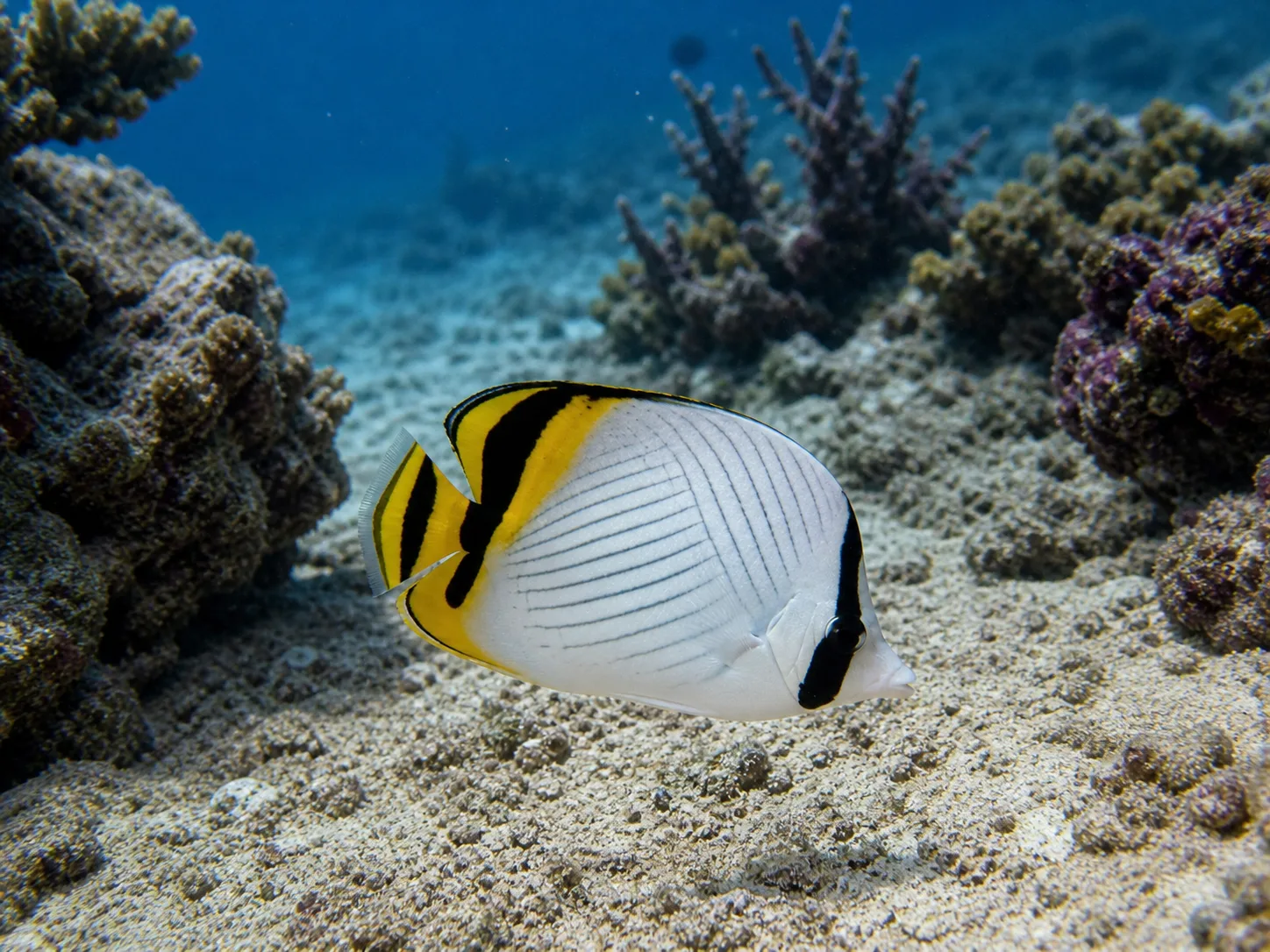
Illustrative images
Vagabond Butterflyfish
Chaetodon vagabundus
Overview
The Vagabond Butterflyfish, scientifically known as Chaetodon vagabundus, is a vibrant marine fish that captivates aquarists with its striking coloration and unique shape. This species is part of the Chaetodontidae family, commonly known as butterflyfish due to their butterfly-like appearance, featuring a laterally compressed body and bright patterns.
Natural Habitat
Vagabond Butterflyfish are native to the Indo-Pacific region, frequently found in coral reefs. They thrive in warm waters, typically at depths ranging from 1 to 30 meters. Their natural habitat provides plenty of hiding spots among the reef structure, which is essential for their protection from predators.
Care Requirements
This species is suitable for more advanced aquarists because it requires specific conditions to thrive in captivity. When keeping Vagabond Butterflyfish, consider the following:
- Water Type: Marine
- Minimum Tank Size: 200 liters (53 gallons)
- Water Parameters:
- Temperature: 24-28°C (75-82°F)
- pH: 8.1-8.4
- Salinity: 1.020-1.025 specific gravity
Tank Setup
A well-planted marine tank with live rock and a sandy substrate mimics the Vagabond Butterflyfish's natural environment. Include plenty of hiding spots and open swimming areas to accommodate their behavior. Stable water parameters and regular maintenance are crucial in keeping them healthy. A good filtration system will help maintain the quality of the water.
Compatibility
Vagabond Butterflyfish can be territorial, especially as adults, so it’s essential to carefully consider their tank mates. They generally do well with other peaceful marine fish, but it’s best to avoid aggressive species or those that resemble them. Suitable tank mates include:
- Other butterflyfish (with caution)
- Damselfish
- Wrasses
Always introduce new fish gradually and monitor their interactions to prevent stress or aggression.
Feeding
In the wild, Vagabond Butterflyfish primarily feed on coral polyps, small invertebrates, and algae. In captivity, aim to provide a varied diet that includes:
- High-quality pellet or flake food
- Frozen or live foods like brine shrimp and mysis shrimp
- Vegetable matter such as spirulina algae
Regular feeding 2-3 times per day, focusing on small portions, will help maintain their health and prevent overeating.
Lifespan
With proper care, Vagabond Butterflyfish can live for 10 years or more in captivity, making them a rewarding species for marine aquarists who are prepared to meet their care requirements.
How to care for Vagabond Butterflyfish
- 1
Set up the tank
Prepare a well-established aquarium with live rock for grazing and hiding, ensuring a minimum volume of 300 liters (79 gallons).
- 2
Acclimate slowly
Introduce the fish gradually to the new environment to reduce stress and allow it to adjust to the tank conditions.
- 3
Maintain water parameters
Keep water temperature between 24-27°C (75-81°F), pH between 8.1-8.4, and salinity at 1.020-1.025 specific gravity.
- 4
Provide a varied diet
Offer a mix of meaty foods like brine shrimp, mysis shrimp, and chopped seafood, along with vegetable matter such as algae to meet their omnivorous dietary needs.
Frequently asked questions
What is the maximum size of a Vagabond Butterflyfish?▾
Vagabond Butterflyfish can grow up to 23 cm (9 inches) in length.
What are the ideal water parameters for keeping a Vagabond Butterflyfish?▾
Maintain water temperature between 24-27°C (75-81°F), pH between 8.1-8.4, and salinity at 1.020-1.025 specific gravity.
Is the Vagabond Butterflyfish reef-safe?▾
No, this species is not reef-safe and may nip at coral polyps.
What is the recommended minimum tank size for a Vagabond Butterflyfish?▾
A minimum tank size of 300 liters (79 gallons) is recommended for this species.
What is the natural diet of a Vagabond Butterflyfish?▾
In the wild, they feed on algae, coral polyps, crustaceans, and worms.