

Illustrative images
Unicorn Tang
Naso unicornis
Overview
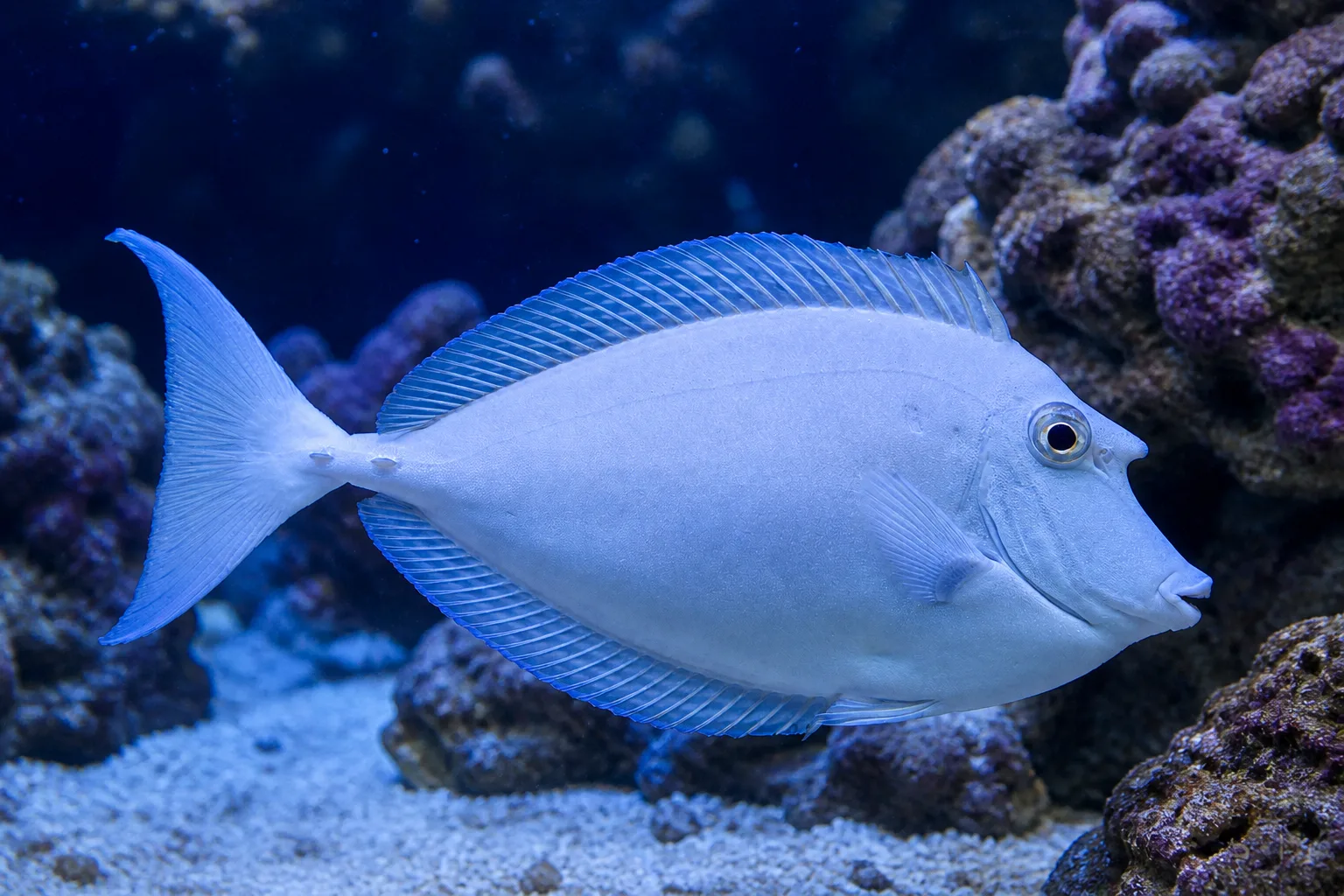
The Unicorn Tang, scientifically known as Naso unicornis, is a popular marine fish recognized for its striking appearance and vibrant colors. It is characterized by its elongated body, blue-gray coloration, and distinct protruding horn-like structure on its forehead, which is more prominent in males. This fish is a member of the Acanthuridae family and is commonly found in the Indo-Pacific region.
Natural Habitat
Unicorn Tangs inhabit shallow coral reefs and lagoons, where they often swim in groups. They prefer environments rich in algae, which form a significant part of their diet. The natural habitat of the Unicorn Tang showcases the need for ample swimming space as they can be active swimmers.
Care Requirements
Caring for a Unicorn Tang requires a suitable aquarium environment and proper maintenance practices. They thrive in a well-established marine tank with plenty of open swimming space, rocky structures, and live rock to offer grazing opportunities. Fine substrate and plenty of hiding spots are also beneficial to reduce stress.
Tank Setup
When setting up a tank for Unicorn Tang, consider the following:
- Minimum Tank Size: A minimum of 150 gallons is recommended for adult Unicorn Tangs.
- Water Type: Freshwater and marine setups are not suitable; they need a marine aquarium.
- Filtration: A good quality protein skimmer and robust filtration system are essential for maintaining water quality.
- Lighting: Moderate lighting is usually adequate, simulating natural conditions.
Compatibility
The Unicorn Tang is generally considered semi-aggressive and can exhibit territorial behavior, especially when kept with other tangs. However, they can coexist peacefully with various species if given adequate space. Ideal tank mates include other medium to large-sized fishes that are not overly aggressive, such as clownfish and larger wrasses. It is advisable to introduce them into the aquarium as the last fish to establish their dominance.
Feeding
As herbivores, Unicorn Tangs primarily feed on algae in the wild. In captivity, it is essential to replicate their diet with high-quality marine algae, such as Nori, along with plant-based foods and high-quality pellets or flakes. Regularly supplementing their diet with vegetables like spinach or zucchini can also support their overall health.
Conclusion
Unicorn Tangs are a stunning addition to any marine aquarium, provided their care requirements are met. Their unique appearance and active behavior can make them a captivating centerpiece in a well-planned setup. With the right conditions and compatibility considerations, they can thrive and contribute positively to the aesthetics and dynamics of a marine ecosystem.
How to care for Unicorn Tang
- 1
Set up a large tank
Prepare a well-established aquarium of at least 150 gallons (568 liters) with ample swimming space and live rock for grazing.
- 2
Acclimate the fish
Introduce the Unicorn Tang slowly to the aquarium to minimize stress and ensure a smooth transition.
- 3
Maintain water parameters
Keep water temperature between 72-78°F (22.2-25.6°C), pH between 8.0 and 8.5, and salinity at 1.020-1.025 specific gravity.
- 4
Provide a varied diet
Feed a mix of algae-based foods, such as nori, and meaty foods like mysis shrimp, offering small portions multiple times a day.
- 5
Monitor tankmates
Ensure tankmates are non-fin-nipping and peaceful, as Unicorn Tangs can be territorial towards other Unicorn Tangs.
- 6
Regularly check water quality
Perform routine water tests and maintenance to keep ammonia and nitrite levels at 0 ppm, and nitrate levels below 20 ppm.
Frequently asked questions
What size tank does a Unicorn Tang need?▾
A Unicorn Tang requires a minimum tank size of 150 gallons (approximately 568 liters).
What are the water temperature and pH requirements for a Unicorn Tang?▾
Maintain water temperature between 72-78°F (22.2-25.6°C) and pH between 8.0 and 8.5 for a Unicorn Tang.
What is the maximum size a Unicorn Tang can reach?▾
Unicorn Tangs can grow up to 27 inches (70 cm) in length.
Are Unicorn Tangs reef compatible?▾
Yes, Unicorn Tangs are reef compatible.
What is the diet of a Unicorn Tang?▾
Unicorn Tangs are omnivores, feeding on plankton and plant matter.
How long do Unicorn Tangs live?▾
Unicorn Tangs can live between 5 to 10 years in captivity.
What is the temperament of a Unicorn Tang?▾
Unicorn Tangs are generally peaceful but can be territorial towards other Unicorn Tangs.
What is the origin of the Unicorn Tang?▾
Unicorn Tangs are native to the Indo-Pacific region, including the Red Sea, East Africa, Hawaii, and Australia.