

Illustrative images
Torch Coral
Euphyllia glabrescens
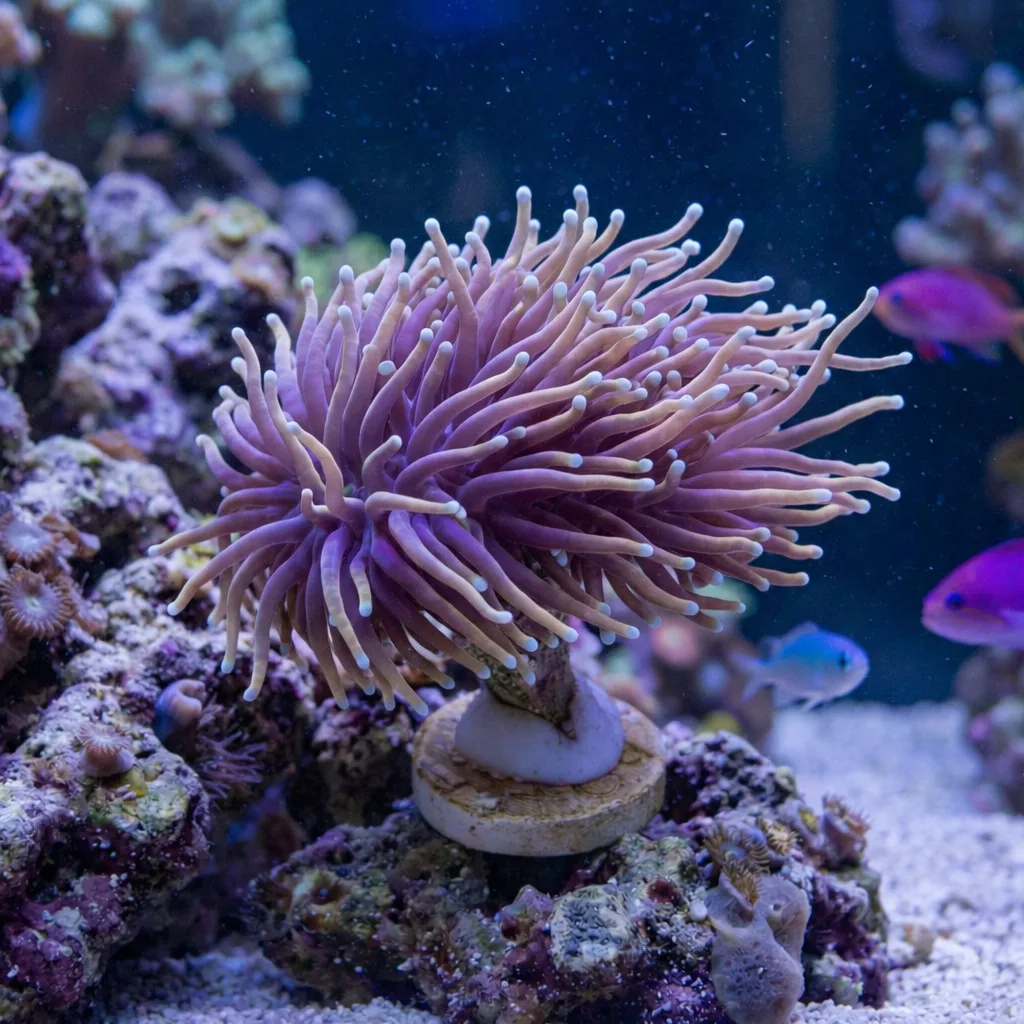
The Torch Coral (Euphyllia glabrescens) is one of the most iconic and visually striking corals found in reef aquariums. Known for its long flowing tentacles that resemble the flickering flame of a torch, this coral brings movement, color, and life to marine aquascapes. Native to the Indo-Pacific region, Torch Corals are commonly found on reef slopes and lagoons where moderate water movement allows their tentacles to sway naturally in the current.
Because of their dramatic appearance and relatively manageable care requirements, Torch Corals are extremely popular among reef aquarium hobbyists, from intermediate keepers to advanced reefers who want a centerpiece coral in their tanks.
Appearance
Torch Corals feature a hard calcium carbonate skeleton with long fleshy polyps extending from the tips. Each polyp ends in a distinctive rounded tip that can vary in color depending on the morph.
Common Torch Coral color variations include:
-
Neon green
-
Gold / Dragon Soul
-
Purple tips
-
Yellow
-
Orange
-
Rainbow morphs
Under reef aquarium lighting (especially blue LED spectrum) the coral often fluoresces intensely, creating an eye-catching glow that enhances the visual depth of reef tanks.
The tentacles can grow several inches long and move constantly with water flow, making the coral appear alive and dynamic.
Natural Habitat
In the wild, Torch Corals inhabit tropical coral reefs in Indonesia, Australia, Fiji, and other Indo-Pacific locations. They typically grow on rocky substrates where water movement is moderate and lighting levels are stable.
Their symbiotic relationship with zooxanthellae algae allows them to obtain most of their energy through photosynthesis, though they can also capture small particles and plankton from the water column.
Tank Requirements
To successfully keep a Torch Coral in a reef aquarium, stable water parameters are essential.
Recommended conditions:
-
Temperature: 24–26°C (75–79°F)
-
Salinity: 1.024–1.026
-
pH: 8.1–8.4
-
Alkalinity: 8–10 dKH
-
Calcium: 400–450 ppm
-
Magnesium: 1250–1350 ppm
Torch Corals prefer stable reef tanks that are already matured, as sudden fluctuations in water chemistry can cause stress and tissue recession.
Lighting
Torch Corals thrive under moderate lighting conditions.
Suitable lighting includes:
-
LED reef lighting
-
T5 lighting
-
Hybrid LED/T5 systems
PAR levels between 80–150 are typically ideal. Excessively strong lighting may cause the coral to retract its polyps, while too little light can reduce growth and coloration.
When introducing a new Torch Coral, it is recommended to acclimate it slowly to lighting by placing it lower in the tank and gradually moving it upward if necessary.
Water Flow
Moderate water flow is crucial for Torch Coral health.
Good flow will cause the tentacles to gently sway back and forth, similar to how they move in natural reef environments. However, extremely strong direct flow can damage the delicate tissue.
Signs of proper flow include:
-
Gentle waving motion
-
Fully extended tentacles
-
No whipping or excessive bending
Placement in the Aquarium
Torch Corals should be placed with ample space around them because they possess long sweeper tentacles capable of stinging nearby corals.
Recommended placement:
-
Mid to lower areas of the aquarium
Isolated rock structures
-
At least 15–20 cm (6–8 inches) away from other corals
This helps prevent coral aggression and ensures healthy growth.
Feeding
Although Torch Corals rely heavily on photosynthesis, they benefit from occasional supplemental feeding.
Suitable foods include:
-
Reef roids
-
Mysis shrimp
-
Brine shrimp
-
Micro plankton
-
Coral-specific liquid foods
Feeding once or twice per week can promote faster growth and improved coloration.
Growth and Propagation
Torch Corals grow by developing additional heads from their skeletal base. With proper care, they can form large branching colonies that become a focal point in reef aquariums.
Propagation is typically done by fragging, which involves cutting the skeleton between heads using a coral saw or bone cutters.
This allows hobbyists to:
-
Expand their coral colonies
-
Trade frags with other reef keepers
-
Sell rare Torch Coral morphs
Compatibility
Torch Corals are considered semi-aggressive corals. Their sweeper tentacles can sting neighboring corals, especially SPS and other LPS species.
However, they generally coexist well with:
-
Other Euphyllia species (sometimes)
-
Fish
-
Shrimp
-
Snails
-
Reef-safe invertebrates
Careful placement is important to avoid coral warfare.
Why Torch Corals Are So Popular
Torch Corals are prized in the reef aquarium hobby because they offer:
-
Incredible movement in the tank
-
Bright fluorescent colors
Unique tentacle shapes
-
Relatively manageable care requirements
Rare varieties such as Holy Grail Torch, Dragon Soul Torch, and Gold Torch Corals have become extremely valuable in the coral trade.
For many reef keepers, a healthy Torch Coral colony becomes the centerpiece of the entire reef aquarium.
How to care for Torch Coral
- 1
Set up the tank
Prepare a reef aquarium with stable water parameters: temperature 22-26°C (72-79°F), salinity 1.023-1.026 specific gravity, pH 7.8-8.4, and alkalinity 8-12 dKH.
- 2
Place the coral
Position the Torch Coral in the mid to lower sections of the tank, ensuring it has at least 15-20 cm (6-8 inches) of space from other corals to prevent stinging.
- 3
Adjust lighting
Provide moderate lighting with a PAR of 50-150 to support Torch Coral's health and coloration.
- 4
Manage water flow
Maintain moderate, indirect water flow to allow the coral's tentacles to gently sway, preventing detritus buildup.
- 5
Acclimate the coral
Gradually introduce the Torch Coral to the tank's water conditions over several hours to minimize stress.
- 6
Feed appropriately
Offer meaty foods like micro-plankton or brine shrimp 1-3 times per week, preferably in the evening when tentacles are extended.
- 7
Monitor health
Regularly check the coral for signs of stress, such as retracted tentacles or discoloration, and adjust care as needed.
Frequently asked questions
What are the ideal water parameters for Torch Coral?▾
Torch Coral (Euphyllia glabrescens) thrives in water with a temperature of 22-26°C (72-79°F), salinity of 1.023-1.026 specific gravity, pH between 7.8 and 8.4, and alkalinity of 8-12 dKH.
How should I feed Torch Coral?▾
Torch Coral benefits from occasional feeding of meaty foods such as micro-plankton, brine shrimp, or coral pellets, 1-3 times per week, preferably in the evening when tentacles are fully extended.
What lighting conditions are best for Torch Coral?▾
Torch Coral prefers moderate lighting, with a PAR (Photosynthetically Active Radiation) of 50-150, to prevent stress and promote healthy growth.
How do I prevent Torch Coral from stinging other corals?▾
To prevent Torch Coral's long sweeper tentacles from stinging nearby corals, ensure it is placed at least 15-20 cm (6-8 inches) away from other corals.
Can Torch Coral be kept with other Euphyllia species?▾
Yes, Torch Coral can be safely grouped with other Euphyllia species, such as hammer and frogspawn corals, to create a 'torch garden'.