

Illustrative images
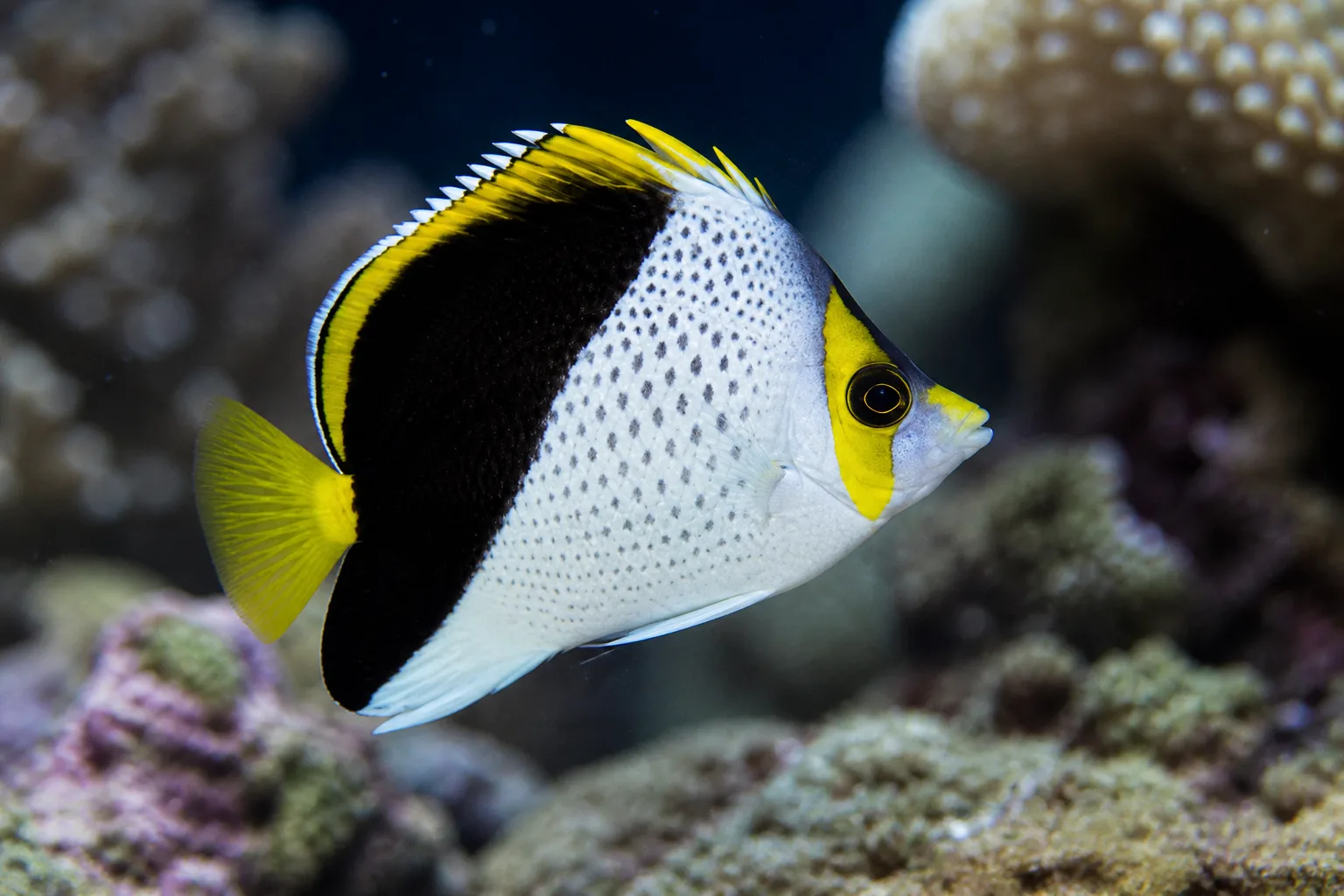
Tinker's Butterflyfish
Chaetodon tinkeri
Overview
The Tinker's Butterflyfish, scientifically known as Chaetodon tinkeri, is a vibrant marine fish that belongs to the family Chaetodontidae. This species is well-regarded among aquarium enthusiasts for its stunning appearance and interesting behaviors.
Natural Habitat
Tinker's Butterflyfish is native to the coral reef ecosystems of the Pacific Ocean, particularly around the Hawaiian Islands and the central Indo-Pacific region. They thrive in shallow waters, often found near coral structures where they can find shelter and food.
Care Requirements
While keeping Tinker's Butterflyfish may be a rewarding experience, it does require some specific care considerations:
- Minimum Tank Size: A minimum tank size of 100 gallons is recommended to provide ample swimming space and suitable conditions.
- Water Conditions: Maintain stable salinity typical of marine environments, preferably between 1.020 and 1.025 specific gravity.
- Temperature: Ideal water temperature ranges from 24°C to 28°C (75°F to 82°F).
- Lighting: Moderate to bright lighting is recommended to mimic their natural habitat, which enhances the growth of algae and other organisms they graze on.
- Filtration: Efficient filtration is crucial as these fish are sensitive to water quality.
Tank Setup
Creating a suitable environment for Tinker's Butterflyfish involves replicating their natural habitat:
- Include plenty of live rock and coral structures for hiding and foraging.
- Ensure open swimming spaces for their active nature, as they enjoy moving around the tank.
- Plants are less essential but can be added for aesthetic purposes.
Compatibility
Tinker's Butterflyfish can exhibit territorial behavior, especially towards their species. It is best to keep them in larger tanks with plenty of swimming space. Suitable tank mates include:
- Other peaceful marine fish.
- Ensure that smaller or more passive species are not nipped at or outcompeted for food.
Feeding
In the wild, Tinker's Butterflyfish primarily feed on coral polyps, small invertebrates, and algae. In captivity, they can be fed a diet that includes:
- High-quality marine flake or pellet food.
- Frozen or live foods like brine shrimp or other small invertebrates.
- Beneficial algae-based foods to mimic their natural grazing habits.
Lifespan
With proper care and environment, Tinker's Butterflyfish can live for several years in an aquarium, contributing to a lively and colorful marine display.
How to care for Tinker's Butterflyfish
- 1
Set up the tank
Prepare a well-established aquarium with ample swimming space and live rock for grazing and hiding.
- 2
Acclimate slowly
Introduce the fish gradually to the new environment to minimize stress and ensure a smooth transition.
- 3
Maintain water parameters
Keep the water temperature between 24 to 27°C (75 to 81°F), pH between 8.1 and 8.4, and salinity at 1.022 to 1.025.
- 4
Provide a varied diet
Feed a mix of meaty and algae-based foods multiple times daily, including small crustaceans like mysis and brine shrimp.
- 5
Monitor behavior
Observe the fish for signs of stress or aggression, especially if housed with other species.
Frequently asked questions
What is the ideal tank size for Tinker's Butterflyfish?▾
A minimum tank size of 300 liters (79 gallons) is recommended for Tinker's Butterflyfish.
What are the water temperature and pH requirements for Tinker's Butterflyfish?▾
Tinker's Butterflyfish thrive in water temperatures between 24 to 27°C (75 to 81°F) and a pH range of 8.1 to 8.4.
What is the maximum size of Tinker's Butterflyfish?▾
Tinker's Butterflyfish can grow up to 18 cm (7 inches) in length.
What is the natural diet of Tinker's Butterflyfish?▾
In the wild, Tinker's Butterflyfish feed on plankton, soft corals, tubeworms, and other benthic invertebrates.
Are Tinker's Butterflyfish reef-safe?▾
Tinker's Butterflyfish are considered reef-safe with caution, as they may pick at corals and crustaceans.