

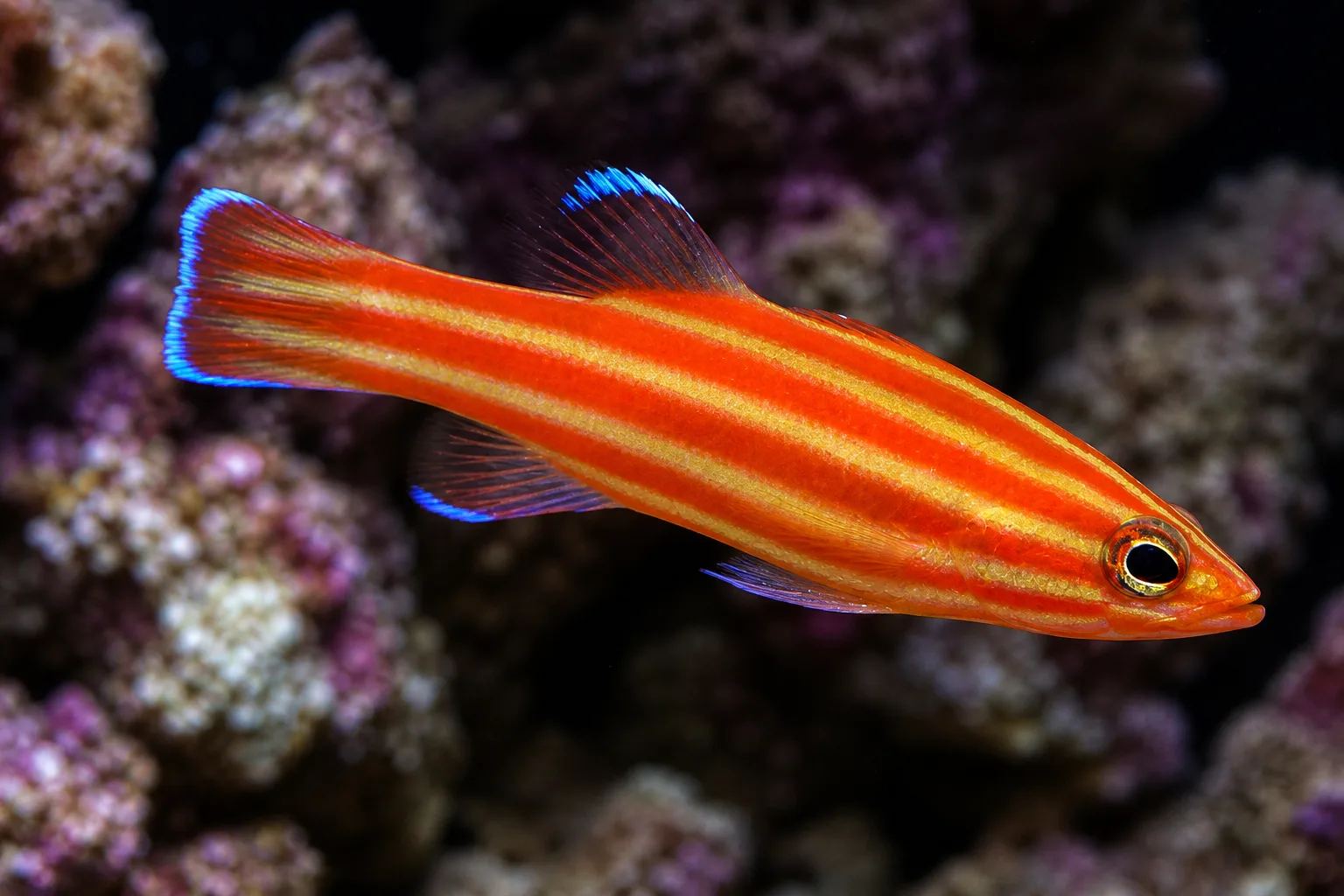
Illustrative images
Swissguard Basslet
Liopropoma rubre
Overview
The Swissguard Basslet, scientifically known as Liopropoma swirei, is a small, vibrant reef fish that captivates aquarium enthusiasts with its striking colors and unique characteristics. Native to the Caribbean, this species is sought after for both its aesthetic appeal and its relatively manageable care requirements.
Natural Habitat
Swissguard Basslets are commonly found in the warmer waters of the Caribbean Sea, often inhabiting rocky crevices and coral reefs. They prefer to stay near the bottom of the ocean, where they can find shelter among the rocks and corals. This habitat influences their behavior and care needs in captivity.
Care Requirements
When keeping a Swissguard Basslet in your aquarium, it is important to replicate their natural environment as closely as possible. Here are key care requirements:
- Tank Size: A minimum tank size of 200 liters (approximately 53 gallons) is recommended to provide ample space for swimming and hiding.
- Water Quality: Maintain stable water parameters, ideally between 24-27°C (75-81°F) with a pH around 8.1-8.4.
- Filtration: Good filtration is crucial to ensure water quality, along with regular water changes.
Tank Setup
For a successful Swissguard Basslet setup, consider the following:
- Rock Structures: Include live rock for hiding and grazing, mimicking their natural habitat.
- Lighting: Moderate lighting is suitable; too bright can stress the fish.
Compatibility
The Swissguard Basslet is generally peaceful and does well with other reef-safe fish. However, it can display territorial behavior, particularly towards its own kind. It’s best to keep them in a species-specific tank or with other shy and non-aggressive fish.
Feeding
In the wild, these fish feed on small crustaceans and zooplankton. In captivity, offer a varied diet including:
- High-quality pellets
- Frozen or live foods such as brine shrimp and mysis shrimp
Regular feeding schedules can promote good health and vibrant color in your Swissguard Basslet.
Lifespan
With proper care, Swissguard Basslets can live for several years in captivity, generally ranging from 5 to 10 years.
Conclusion
The Swissguard Basslet is an excellent choice for aquarists looking to add a beautiful and relatively easy-to-care-for fish to their reef tanks. By providing appropriate tank conditions, diet, and companionship, you can enjoy these stunning fish for years to come.
How to care for Swissguard Basslet
- 1
Set up the tank
Prepare a well-established aquarium with a minimum of 30 gallons (113.5 liters), featuring ample live rock for shelter and territory.
- 2
Acclimate slowly
Introduce the Swissguard Basslet to the tank gradually to minimize stress and prevent shock.
- 3
Maintain water parameters
Keep water temperature between 72°F and 78°F (22°C to 26°C), pH between 8.1 and 8.4, and salinity between 1.020 and 1.025.
- 4
Provide a varied diet
Feed a mix of meaty foods such as live, frozen, or freeze-dried brine shrimp, mysis shrimp, chopped krill, and high-quality pellets or flake foods.
- 5
Monitor tankmates
Ensure tankmates are peaceful, as Swissguard Basslets can be semi-aggressive towards their own kind and similar-looking species.
Frequently asked questions
What is the ideal tank size for a Swissguard Basslet?▾
A minimum tank size of 30 gallons (113.5 liters) is recommended for a single Swissguard Basslet.
What are the water temperature requirements for a Swissguard Basslet?▾
Maintain a water temperature between 72°F and 78°F (22°C to 26°C) for optimal health.
Is the Swissguard Basslet reef-safe?▾
Yes, the Swissguard Basslet is considered reef-safe but may pose a threat to smaller ornamental crustaceans.
What is the maximum size a Swissguard Basslet can reach?▾
Swissguard Basslets can grow up to 4 inches (10 cm) in length.
What is the natural diet of a Swissguard Basslet?▾
In the wild, Swissguard Basslets feed on crustaceans and small fish.