

Illustrative images
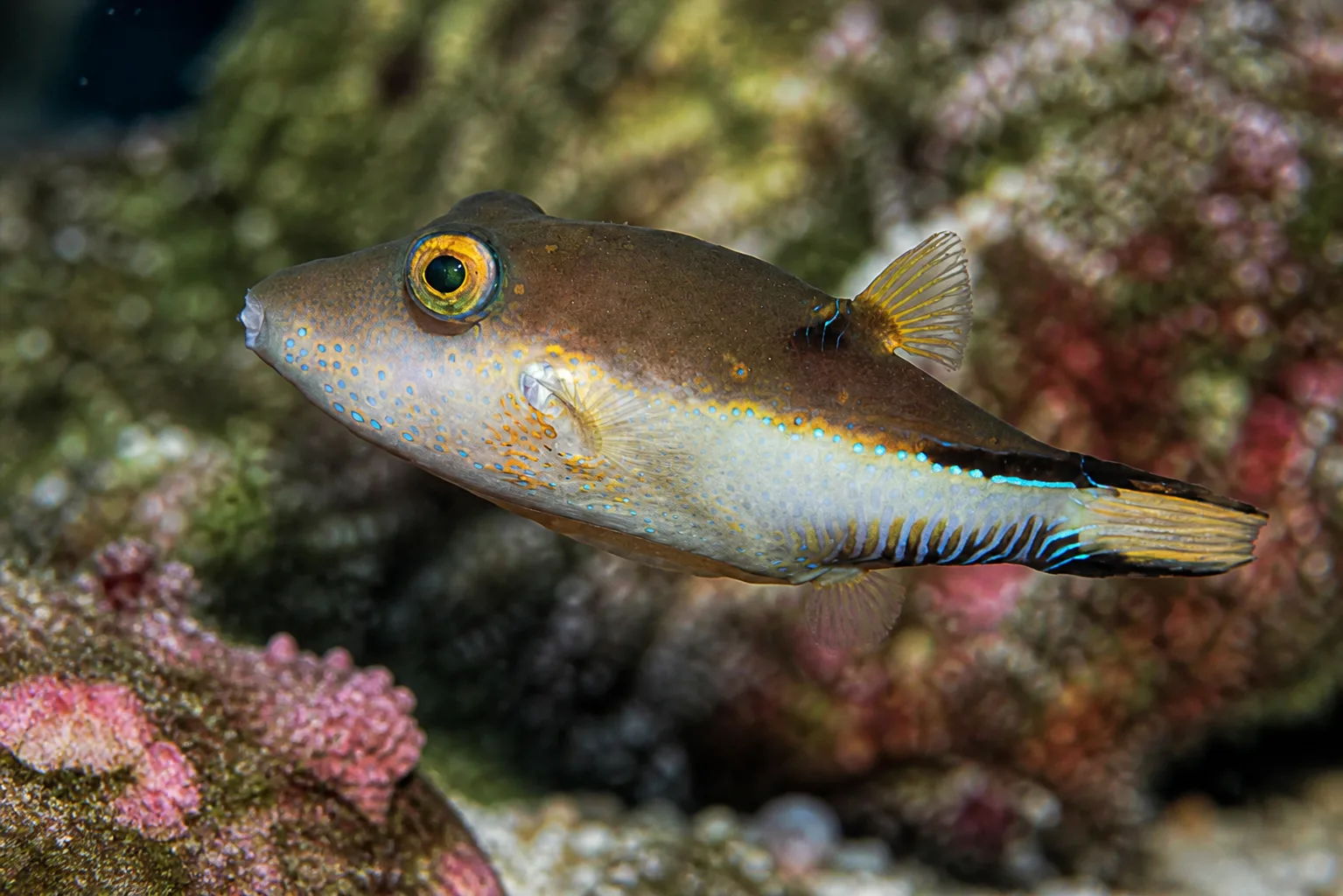
Sharpnose Puffer
Canthigaster rostrata
Overview
The Sharpnose Puffer, scientifically known as Canthigaster rostratus, is a small but fascinating fish commonly found in marine aquarium settings. These puffers are known for their unique appearance, featuring a sharply pointed nose and a vibrant coloration. They are a popular choice among marine fish enthusiasts due to their quirky behavior and adaptability.
Natural Habitat
The Sharpnose Puffer is typically found in the shallow waters of coral reefs and rocky areas throughout the Indo-Pacific region, including locations like the Red Sea and various islands in the Pacific Ocean. They thrive in warm, clean waters, where they can find shelter among rocks and coral.
Care Requirements
Caring for a Sharpnose Puffer requires some specific knowledge about their needs:
- Water Type: Marine
- Min Tank Size: 75 liters (20 gallons)
- Temperament: Semi-aggressive
- Diet: Omnivore
Tank Setup
For a Sharpnose Puffer, a well-maintained marine aquarium is essential. Here are some tips for setting up their tank:
- Filtration: Strong filtration is required to maintain water quality.
- Lighting: Moderate lighting is suitable; it promotes growth of algae, which serves as food.
- Decor: Incorporate plenty of hiding spots using live rock, coral structures, and sand to mimic their natural habitat.
Compatibility
Sharpnose Puffers can be somewhat territorial, which makes tank mate selection crucial. They do well with other semi-aggressive fish, but care should be taken to avoid overly aggressive species that could stress them.
Feeding
Feeding a Sharpnose Puffer requires a varied diet to ensure it receives proper nutrition. They typically feed on:
- Marine pellets or flakes
- Frozen or live foods such as brine shrimp, mysis shrimp, and small mussels
Be aware that puffers have strong beaks, so care should be taken to provide foods that help maintain their dental health.
Conclusion
The Sharpnose Puffer is an intriguing species for those interested in marine aquariums. With proper care, a suitable tank setup, and knowledgeable feeding practices, they can thrive in home aquariums.
How to care for Sharpnose Puffer
- 1
Set up the tank
Use a minimum 40-gallon (151-liter) tank with a secure lid to prevent jumping. Provide ample hiding spots using live rock or decorations.
- 2
Acclimate slowly
Acclimate the Sharpnose Puffer to the new tank water over 30-60 minutes to reduce stress and prevent shock.
- 3
Maintain water parameters
Keep water temperature between 75-82°F (24-28°C), pH between 8.1-8.4, and salinity at 1.020-1.025 specific gravity. ([reeflings.com](https://reeflings.com/species/canthigaster-rostrata?utm_source=openai))
- 4
Feed appropriately
Offer a varied diet including chopped seafood, crustaceans, mysis shrimp, and frozen marine fish food. Feed 3-4 times daily to support their high metabolism. ([recifathome.com](https://www.recifathome.com/en/pufferfish-boxfish/152-canthigaster-rostrata.html?utm_source=openai))
- 5
Monitor tank mates
Keep with robust, non-aggressive fish species. Avoid housing with other pufferfish or small, calm species that may be disturbed.
- 6
Observe behavior
Regularly check for signs of stress, disease, or aggression. Ensure the puffer is eating well and interacting appropriately with tank mates.
Frequently asked questions
What is the maximum size of a Sharpnose Puffer?▾
The Sharpnose Puffer (Canthigaster rostrata) reaches a maximum length of approximately 4.5 inches (11.4 cm). ([baybridgeaquarium.com](https://www.baybridgeaquarium.com/products/sharpnose-puffer?utm_source=openai))
What are the ideal water parameters for a Sharpnose Puffer?▾
Maintain water temperature between 75-82°F (24-28°C), pH between 8.1-8.4, and salinity at 1.020-1.025 specific gravity. ([reeflings.com](https://reeflings.com/species/canthigaster-rostrata?utm_source=openai))
Is the Sharpnose Puffer reef-safe?▾
No, the Sharpnose Puffer is not reef-safe; it may nip at invertebrates and corals. ([reeflings.com](https://reeflings.com/species/canthigaster-rostrata?utm_source=openai))
What is the lifespan of a Sharpnose Puffer in captivity?▾
In captivity, the Sharpnose Puffer typically lives 2-4 years, though some individuals may live longer. ([baybridgeaquarium.com](https://www.baybridgeaquarium.com/products/sharpnose-puffer?utm_source=openai))
What is the natural diet of a Sharpnose Puffer?▾
In the wild, the Sharpnose Puffer feeds on algae, sponges, seagrasses, and benthic invertebrates. ([en.wikipedia.org](https://en.wikipedia.org/wiki/Canthigaster_rostrata?utm_source=openai))
Can Sharpnose Puffers be kept with other fish?▾
Sharpnose Puffers are semi-aggressive and may nip at other fish; it's best to house them with robust species and avoid keeping multiple males together. ([reeflings.com](https://reeflings.com/species/canthigaster-rostrata?utm_source=openai))
Are Sharpnose Puffers suitable for beginner aquarists?▾
Sharpnose Puffers are considered to have moderate care requirements and are more suitable for intermediate to experienced aquarists. ([reeflings.com](https://reeflings.com/species/canthigaster-rostrata?utm_source=openai))