

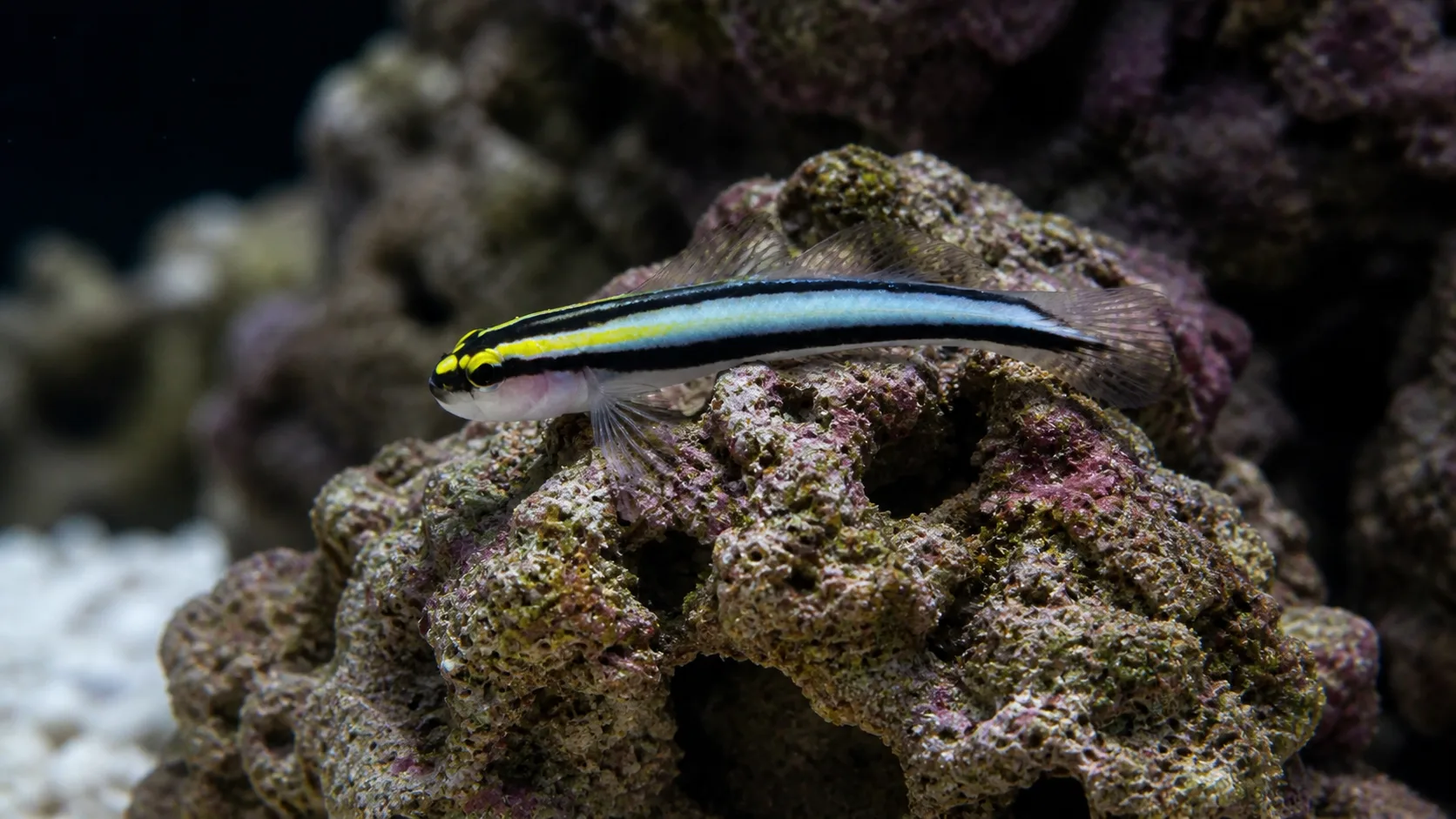
Illustrative images
Sharknose Goby
Elacatinus evelynae
Overview
The Sharknose Goby, scientifically known as Amblygobius phalaena, is a distinctive and colorful addition to a marine aquarium. These small fish are known for their unique appearance, characterized by their elongated bodies and striking facial markings resembling the nose of a shark. Their vibrant colors and engaging behavior make them a popular choice among aquarists.
Natural Habitat
Sharknose Gobies are typically found in the warm, shallow waters of the Indo-Pacific region, particularly around coral reefs and sandy substrates. They are commonly seen in areas where they can easily burrow into the sand or hide among rocks and coral, which is essential for their natural behavior and well-being.
Care Requirements
Caring for Sharknose Gobies can be rewarding, but it does require attention to their specific needs. These fish thrive in well-maintained marine environments. Here are some key care requirements:
- Water Type: Marine
- Tank Size: A minimum of 75 liters (20 gallons) is recommended for a small group.
- Diet: Sharknose Gobies are omnivorous, requiring a balanced diet consisting of high-quality pellets, frozen foods, and live foods, such as brine shrimp and mysis shrimp.
- Water Parameters: Ideal conditions include a temperature between 24-28°C, pH around 8.1-8.4, and specific gravity between 1.020-1.025.
Tank Setup
The tank setup for Sharknose Gobies should mimic their natural habitat as closely as possible. Consider the following elements:
- Substrate: A sandy substrate allows these gobies to dig and burrow, which is an essential behavior for their comfort.
- Hiding Places: Incorporate live rock and coral structures to provide hiding spots and create a natural environment.
- Lighting: Moderate lighting is suitable, as it creates a more stable environment for live plants and coral, benefiting the overall tank ecosystem.
Compatibility
Sharknose Gobies are generally known for their peaceful demeanor. However, they do best in a community tank with other non-aggressive species. Suitable tank mates include:
- Clownfish
- Damselfish
- Small wrasses
Avoid housing them with overly aggressive species, as this can lead to stress and territorial disputes.
Feeding and Lighting
Feeding them a varied diet is crucial for their health and coloration. Supplement their diet with algae and vegetarian options to ensure proper nutrition. For lighting, a standard marine light is adequate, but consider a spectrum that supports any live corals you choose to include.
Conclusion
With proper care and attention to their environment, Sharknose Gobies can be a beautiful and entertaining addition to a marine aquarium. Their unique appearance and engaging behavior will certainly delight hobbyists and visitors alike.
How to care for Sharknose Goby
- 1
Set up the tank
Prepare a well-established aquarium of at least 10 gallons (37 liters) with plenty of rockwork, caves, and crevices to provide hiding spots and cleaning stations.
- 2
Acclimate slowly
Acclimate the Sharknose Goby to the aquarium water slowly to reduce stress and prevent shock.
- 3
Maintain water parameters
Ensure water temperature is between 22–28°C (72–82°F), salinity at 1.020–1.025 specific gravity, and pH between 8.0–8.5. Regularly monitor and adjust as needed.
- 4
Feed appropriately
Offer a varied diet including small crustaceans like mysis shrimp, enriched brine shrimp, and cyclops. Provide marine pellets and finely chopped frozen foods, feeding two to three times daily.
- 5
Monitor tankmates
Keep with other peaceful community reef species. Avoid housing with large predatory fish that might consume the goby.
- 6
Provide hiding spots
Ensure the tank has plenty of rockwork, caves, and crevices to offer hiding spots and cleaning stations.
- 7
Monitor health
Regularly observe the Sharknose Goby for signs of stress or disease, and address any issues promptly.
Frequently asked questions
What is the maximum size of Elacatinus evelynae?▾
Elacatinus evelynae, commonly known as the Sharknose Goby, reaches a maximum size of approximately 4 cm (1.6 inches).
What are the ideal water parameters for Sharknose Gobies?▾
Sharknose Gobies thrive in water temperatures between 22–28°C (72–82°F), a salinity of 1.020–1.025 specific gravity, and a pH level of 8.0–8.5. They also prefer an alkalinity of 8–12 dKH. ([reefarchive.com](https://www.reefarchive.com/fish/nano-fish/sharknose-goby?utm_source=openai))
What is the minimum tank size for keeping a Sharknose Goby?▾
A minimum tank size of 10 gallons (approximately 37 liters) is recommended for keeping a Sharknose Goby. ([reefarchive.com](https://www.reefarchive.com/fish/nano-fish/sharknose-goby?utm_source=openai))
What do Sharknose Gobies eat in captivity?▾
In captivity, Sharknose Gobies are carnivorous and feed on small crustaceans like mysis shrimp, enriched brine shrimp, and cyclops. They also accept marine pellets and finely chopped frozen foods. ([reefarchive.com](https://www.reefarchive.com/fish/nano-fish/sharknose-goby?utm_source=openai))
Are Sharknose Gobies reef-safe?▾
Yes, Sharknose Gobies are completely reef-safe and can be kept with corals and invertebrates without issues. ([reefarchive.com](https://www.reefarchive.com/fish/nano-fish/sharknose-goby?utm_source=openai))
Can Sharknose Gobies be kept with other fish species?▾
Sharknose Gobies are peaceful and can be kept with other peaceful community reef species. They can be housed in pairs or small groups in larger tanks. ([reefarchive.com](https://www.reefarchive.com/fish/nano-fish/sharknose-goby?utm_source=openai))
How long do Sharknose Gobies live?▾
Sharknose Gobies have a natural lifespan of approximately 2 to 3 years. ([reefarchive.com](https://www.reefarchive.com/fish/nano-fish/sharknose-goby?utm_source=openai))
What is the natural habitat of Elacatinus evelynae?▾
Elacatinus evelynae is native to the Western Atlantic Ocean, from the Bahamas and the Lesser Antilles to the northern coast of South America, inhabiting coral reefs at depths of 1 to 53 meters. ([en.wikipedia.org](https://en.wikipedia.org/wiki/Elacatinus_evelynae?utm_source=openai))