

Illustrative images
Sebae Anemone
Heteractis crispa
Overview
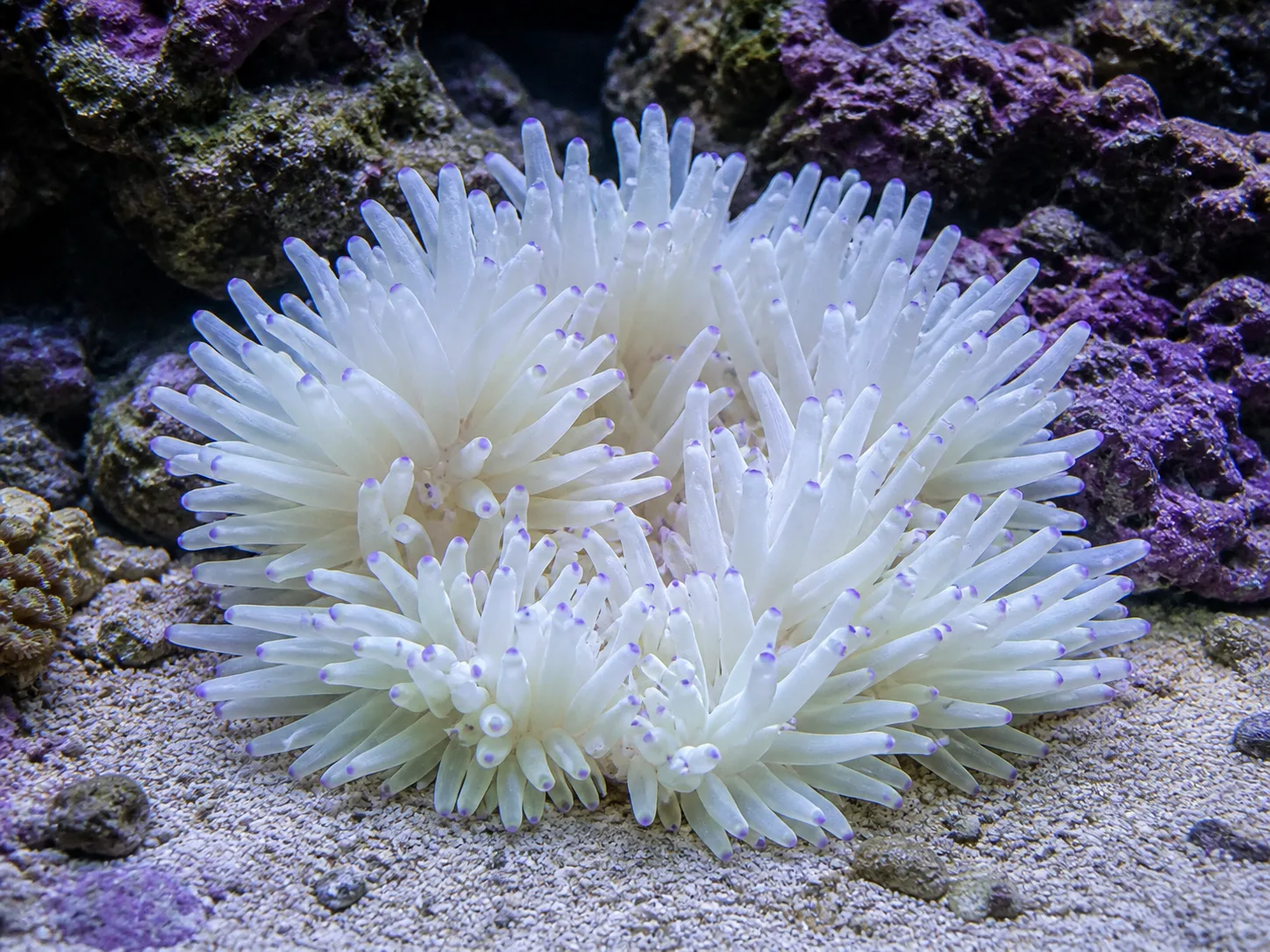
The Sebae Anemone, scientifically known as Heteractis crispa, is a popular marine invertebrate known for its vibrant colors and its symbiotic relationship with clownfish and other reef species. This anemone features long, flowing tentacles that can be various colors, including green, brown, and tan, often displaying slight variations in hue depending on light conditions and water quality.
Natural Habitat
In the wild, the Sebae Anemone is commonly found in warm, shallow waters of the Indo-Pacific region, particularly in areas with sandy substrates and coral reefs. It typically attaches to the bottom in areas that provide some protection from strong currents, while also allowing for sufficient light for photosynthesis.
Care Requirements
Keeping a Sebae Anemone in captivity requires a solid understanding of marine conditions. Below are some essential care requirements:
- Water Type: Marine
- Lighting: Moderate to high lighting is essential to support the photosynthetic algae (zooxanthellae) living within its tissues.
- Water Parameters: Stable salinity and temperature are crucial. Regular water changes and quality testing are recommended.
- Flow: Moderate water flow helps keep the tentacles extended and free of debris.
Tank Setup
When setting up a tank for a Sebae Anemone, consider the following:
- Minimum Tank Size: A tank of at least 30 gallons is recommended to provide enough space for movement and growth.
- Substrate: A sandy substrate is ideal, as it mimics the anemone's natural habitat.
- Companions: This anemone can coexist with a range of marine species, particularly clownfish, which are known to have a mutualistic relationship with it.
Compatibility
The Sebae Anemone is generally peaceful but can be territorial. It’s best kept with other peaceful marine species. Avoid housing it with aggressive fish that may disturb or harm it. The symbiotic relationship with clownfish is well-documented, where the clownfish receives protection from predators while providing the anemone with nutrients from its waste.
Feeding
In addition to photosynthesis, the Sebae Anemone benefits from direct feeding. It can be fed a variety of foods:
- Mysis shrimp
- Brine shrimp
- Chopped seafood (fish, squid, etc.)
Feed once or twice a week, ensuring that food is small enough for the anemone to catch with its tentacles.
Conclusion
With proper care and an appropriate tank setup, the Sebae Anemone can thrive in a marine aquarium, contributing to a vibrant and dynamic underwater environment.
How to care for Sebae Anemone
- 1
Set up the tank
Ensure a well-established aquarium with stable water conditions, strong lighting, and moderate to strong water flow. Provide a sandy substrate for the anemone to anchor securely.
- 2
Acclimate the anemone
Introduce the Sebae Anemone to the tank slowly, allowing it to adjust to the new environment. Monitor its behavior and health during this period.
- 3
Monitor water parameters
Regularly check and maintain water parameters: specific gravity of 1.023-1.025, pH between 8.1-8.4, and temperature between 22-26°C (72-79°F).
- 4
Feed appropriately
Offer meaty foods such as shrimp, fish, and other suitable marine-based foods. Feed regularly but avoid overfeeding to maintain water quality.
- 5
Select compatible tankmates
Choose tankmates carefully, as the Sebae Anemone can be semi-aggressive and may sting adjacent corals or invertebrates. Ensure ample space to prevent territorial disputes.
- 6
Monitor health
Observe the anemone for signs of stress or disease, such as discoloration or retraction. Address any issues promptly to maintain its health.
Frequently asked questions
What are the ideal water parameters for Heteractis crispa?▾
Maintain a specific gravity of 1.023-1.025, pH between 8.1-8.4, and temperature between 22-26°C (72-79°F).
What size tank is suitable for a Sebae Anemone?▾
A minimum tank volume of 200 liters (53 gallons) is recommended to accommodate its growth. ([reeflings.com](https://reeflings.com/species/heteractis-crispa?utm_source=openai))
Can Heteractis crispa host clownfish?▾
Yes, it can host various clownfish species, including Amphiprion clarkii, Amphiprion chrysopterus, and Amphiprion polymnus. ([theaquariumwiki.com](https://www.theaquariumwiki.com/wiki/Sebae_Anemone?utm_source=openai))
What is the feeding regimen for a Sebae Anemone?▾
Feed once a week with large meals of Artemia and other plankton-like foods. ([theaquariumwiki.com](https://www.theaquariumwiki.com/wiki/Sebae_Anemone?utm_source=openai))
Is Heteractis crispa reef-safe?▾
Yes, it is reef-safe but may consume other fish and invertebrates if they come into contact. ([fishkeeper.co.uk](https://www.fishkeeper.co.uk/fish/marine/invertebrates/anemones/sebae-anemone-leathery-sea-anemone-?utm_source=openai))