

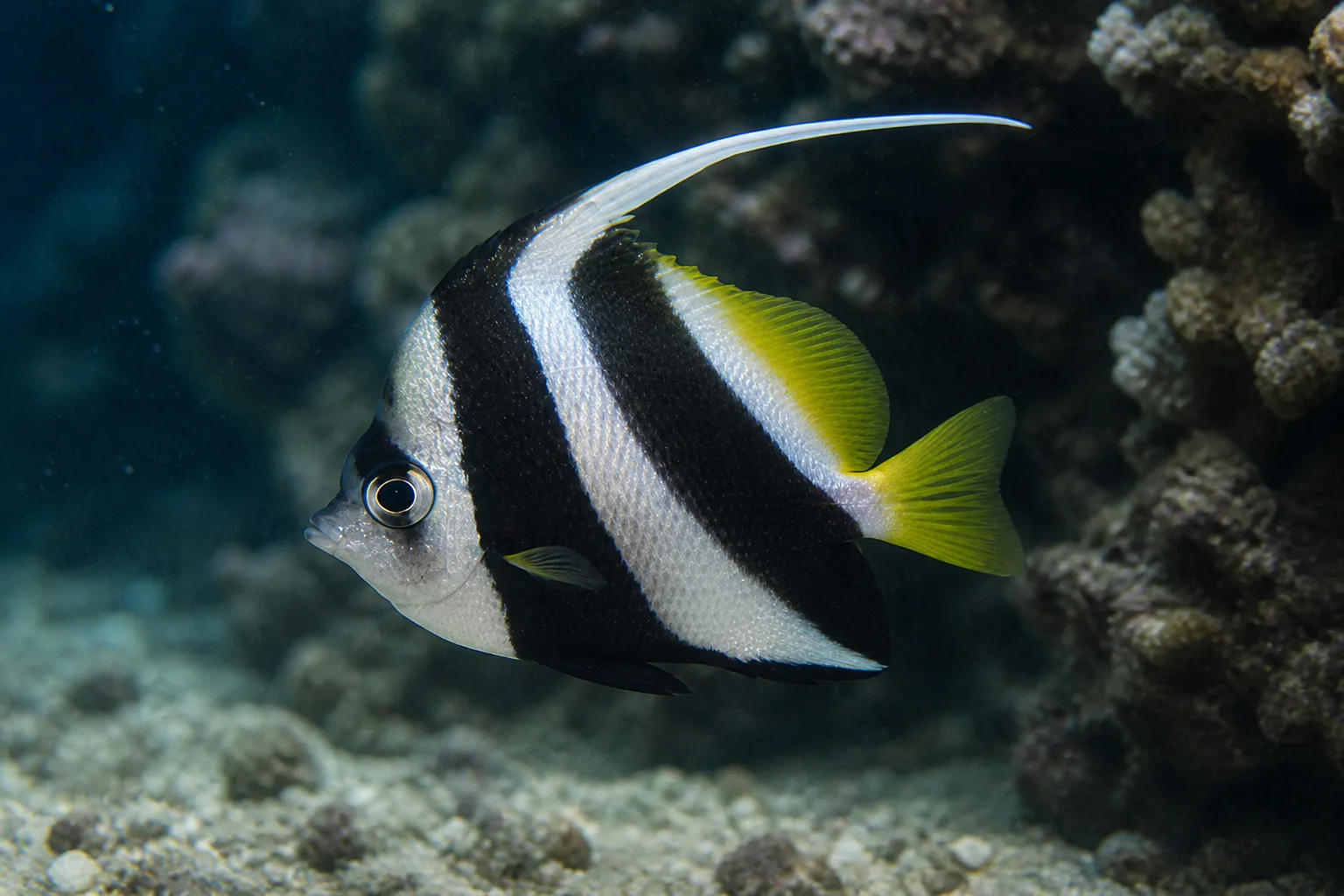
Illustrative images
Schooling Bannerfish
Heniochus diphreutes
Overview
The Schooling Bannerfish is a captivating species known for its striking appearance and sociable nature. Often found in groups, these fish are a delight for aquarists looking to create a dynamic community tank. Their unique swimming behavior and aesthetic appeal make them a popular choice.
Natural Habitat
In the wild, the Schooling Bannerfish resides in coral reefs and lagoons, where it finds shelter among the coral and rocks. These habitats provide not only safety from predators but also an abundance of food sources. While exact details about their natural range are unclear, they thrive in warm, tropical waters.
Care Requirements
Caring for Schooling Bannerfish can be rewarding, as they adapt well to various tank environments. Here are some key care considerations:
- Tank Size: A minimum tank size of 150 liters is recommended to provide sufficient swimming space and to accommodate a schooling group.
- Water Conditions: While specific parameters are not well-documented, general conditions for community tanks—such as stable temperature and pH—are crucial.
- Filtration: Good filtration and water movement can help mimic their natural habitat, supporting a healthy environment.
Tank Setup
When setting up a tank for Schooling Bannerfish, consider the following elements:
- Substrate: A sandy or fine substrate is ideal as it reflects their natural environment.
- Decorations: Include plenty of rocks, caves, and live plants to provide hiding spots and reduce stress.
- Lighting: Moderate lighting is recommended, as it encourages plant growth and creates a comfortable environment.
Compatibility
Schooling Bannerfish are generally peaceful but may display territorial behavior during breeding seasons. They thrive best in community tanks with other peaceful species. Avoid mixing them with overly aggressive fish, which may stress them out.
Feeding
The diet of Schooling Bannerfish primarily consists of a variety of marine-based foods. They appreciate a diet rich in protein, including:
- Frozen or live food such as brine shrimp and bloodworms.
- High-quality flakes or pellets tailored for marine fish.
- Vegetable matter offered occasionally, like spirulina or blanched vegetables, can be beneficial.
Lighting and CO2 Requirements
Lighting needs may vary, but they generally prefer moderate lighting conditions. Specific CO2 supplementation is unlikely to be necessary in a fish-only setup, though the inclusion of live plants may require attention to CO2 levels for plant health.
Conclusion
Overall, Schooling Bannerfish can add both beauty and character to a community aquarium. They are best suited for aquarists with some experience, given their specific care requirements and the importance of compatible tank mates. With the right environment, these fish can thrive and provide a dynamic presence in your aquarium.
How to care for Schooling Bannerfish
- 1
Set up the tank
Prepare a 79-gallon (300-liter) or larger aquarium with stable water conditions, including salinity of 1.020-1.025, temperature between 72-81°F (22-27°C), and pH levels of 8.1-8.4.
- 2
Acclimate the fish
Introduce the Schooling Bannerfish to the aquarium slowly to minimize stress and ensure a smooth transition.
- 3
Maintain water quality
Regularly monitor and maintain water parameters to keep the environment stable and healthy for the fish.
- 4
Provide a varied diet
Feed a mix of meaty foods, marine flakes, and pellets to ensure a balanced diet for the Schooling Bannerfish.
- 5
Monitor fish health
Observe the fish regularly for signs of stress or disease, and address any issues promptly to maintain a healthy aquarium.
Frequently asked questions
What size tank does a Schooling Bannerfish need?▾
A minimum tank size of 79 gallons (300 liters) is recommended for a Schooling Bannerfish.
What are the ideal water parameters for Heniochus diphreutes?▾
Maintain a salinity of 1.020-1.025, temperature between 72-81°F (22-27°C), and pH levels of 8.1-8.4.
Is the Schooling Bannerfish reef-safe?▾
Yes, Heniochus diphreutes is generally considered reef-safe and can be kept in reef aquariums.
What is the maximum size of a Schooling Bannerfish?▾
Heniochus diphreutes can reach a maximum length of 7.5 inches (19 cm).
What is the natural diet of Heniochus diphreutes?▾
In the wild, Schooling Bannerfish feed on zooplankton in open waters.