

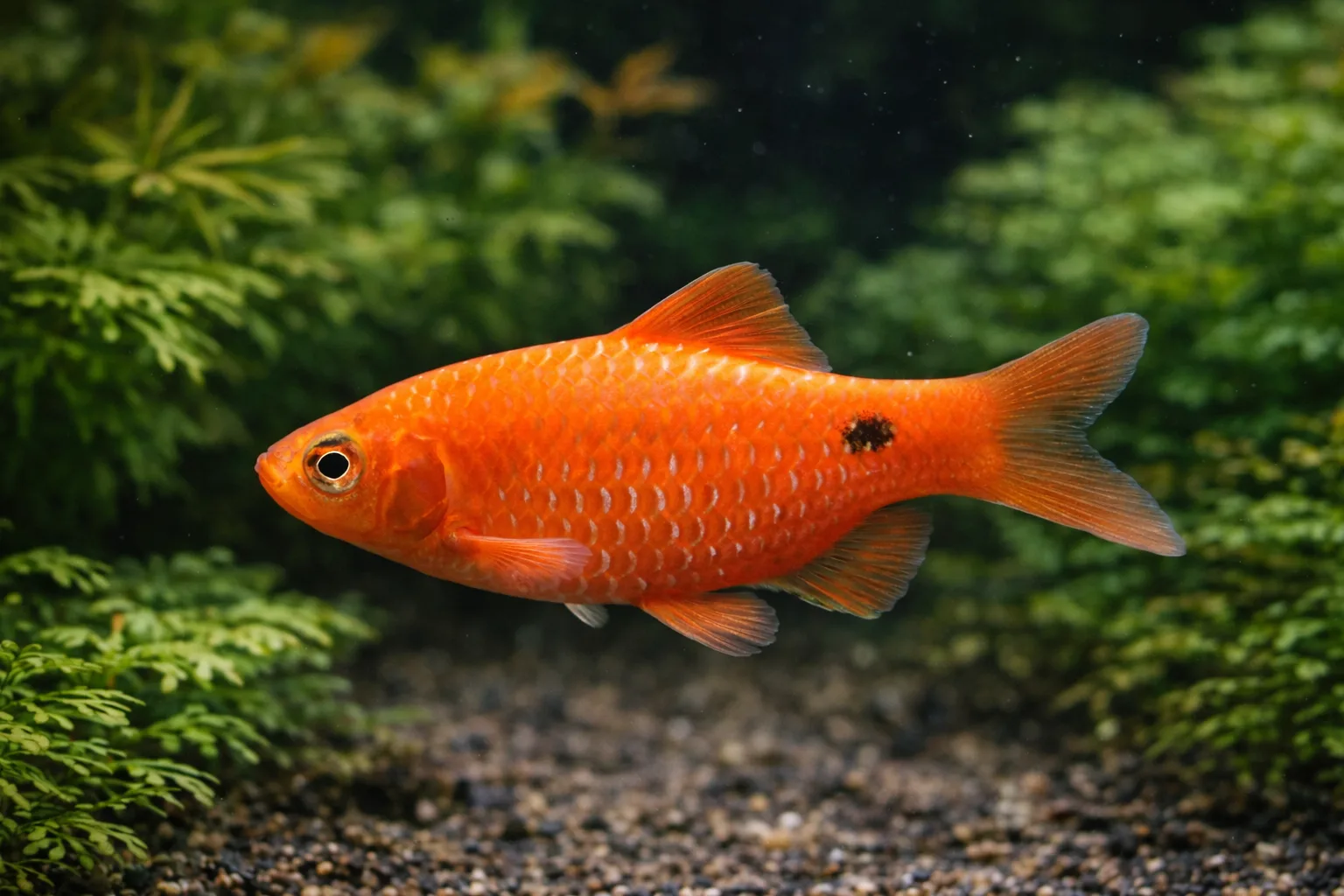
Illustrative images
Rosy Barb
Pethia conchonius
Overview
The Rosy Barb, scientifically known as Pethia conchonius, is a popular freshwater fish revered for its vibrant coloration and active nature. Native to the streams and rivers of South Asia, particularly in countries like India and Bangladesh, these fish are often found in schools in their natural habitat. With their hardy disposition, they make excellent additions to both novice and experienced aquarists' tanks.
Natural Habitat
In the wild, Rosy Barbs inhabit slow-moving rivers and streams with plenty of vegetation and submerged structures. They thrive in waters with moderate currents, which provide them with a stable environment. Understanding their natural habitat is crucial for replicating their needs in captivity.
Care Requirements
Rosy Barbs are relatively easy to care for, making them suitable for beginners. They prefer a well-planted tank with open swimming space and subdued lighting. Regular water changes and filtration are necessary to maintain water quality and ensure the health of these active fish.
Tank Setup
To create a suitable environment for Rosy Barbs, consider the following:
- Minimum tank size: 75 liters (20 gallons) for a small school
- Substrates: Sand or fine gravel
- Decoration: Rocks, driftwood, and live plants for hiding spots
- Lighting: Moderate lighting to encourage plant growth while mimicking their natural habitat
Compatibility
Rosy Barbs are generally peaceful and do well in community tanks. Ideal tankmates include:
- Tetras
- Guppies
- Cherry Barbs
- Other small, non-aggressive fish
However, avoid keeping them with overly aggressive or territorial species, as they may nip at the fins of slower-moving fish.
Feeding
In terms of diet, Rosy Barbs are omnivorous and will accept a variety of foods. A balanced diet should include:
- High-quality flake or pellet food
- Frozen or live foods such as brine shrimp and daphnia
- Vegetable matter, including blanched spinach or peas
Feeding them two to three times a day, ensuring they consume the food within a few minutes, is advised.
Lighting, CO2, and Water Parameters
Optimal conditions for Rosy Barbs include:
- Lighting: Moderate, to promote plant growth
- CO2: Optional, as they can thrive in low-tech setups
- Temperature: 18-24°C (64-75°F)
- pH: 6.5-7.5
- Hardness: 5-15 dGH
Lifespan
With proper care, Rosy Barbs can live up to 5-8 years in captivity.
Conclusion
The Rosy Barb is a lively and attractive choice for any community tank, bringing color and activity to its environment. With proper care practices, they can thrive and provide enjoyment for years to come.
How to care for Rosy Barb
- 1
Set up the tank
Choose a tank of at least 76 liters (20 US gallons) with a dark substrate and plenty of plants to enhance the Rosy Barb's coloration.
- 2
Acclimate slowly
Introduce Rosy Barbs to the aquarium gradually to minimize stress and allow them to adjust to the new environment.
- 3
Maintain water parameters
Keep the water temperature between 18-25°C (64-77°F), pH between 6.5-7.5, and hardness between 5-15 dGH.
- 4
Feed appropriately
Provide a balanced diet of high-quality flake or pellet foods, supplemented with live or frozen foods like bloodworms, daphnia, or mosquito larvae.
- 5
Monitor tankmates
Rosy Barbs are peaceful but can nip the fins of slower-moving fish; avoid keeping them with long-finned species like angelfish or bettas.
Frequently asked questions
What is the ideal tank size for Rosy Barbs?▾
A minimum tank size of 76 liters (20 US gallons) is recommended for Rosy Barbs.
What water temperature do Rosy Barbs prefer?▾
Rosy Barbs thrive in water temperatures between 18-25°C (64-77°F).
What pH level is suitable for Rosy Barbs?▾
A pH range of 6.5-7.5 is ideal for Rosy Barbs.
What is the lifespan of Rosy Barbs?▾
Rosy Barbs typically live for 3-4 years in captivity.
What is the recommended stocking ratio for Rosy Barbs?▾
A stocking ratio of 1 male to 2 females is recommended for Rosy Barbs.