Illustrative images
Riccia fluitans
Riccia fluitans
Overview
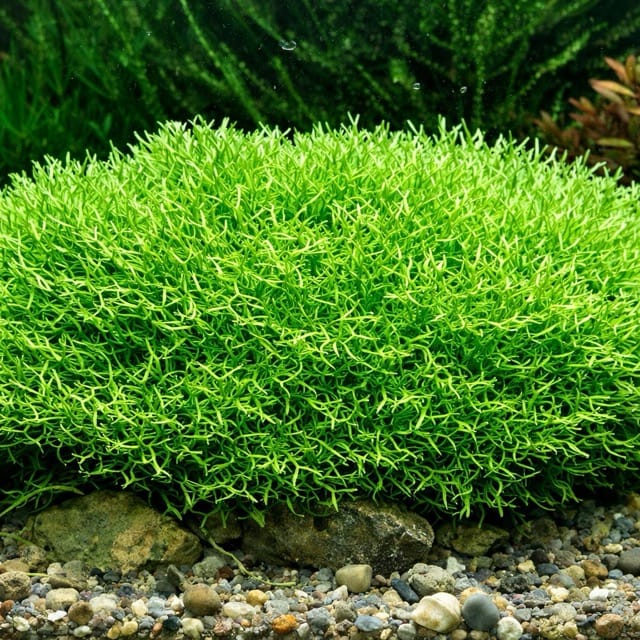
Riccia fluitans, commonly known as Floating Crystalwort, is a freshwater aquatic plant that floats freely on the surface of aquariums. Its bright green, delicate appearance makes it a popular choice among aquascapers and aquarium enthusiasts. This plant can also be used to create lush, green carpets if anchored to the substrate.
Natural Habitat
Floating Crystalwort is primarily found in slow-moving or stagnant waters, including ponds, marshes, and ditches across various regions. It thrives in a variety of water conditions, making it highly adaptable.
Care Requirements
Tank Setup
To cultivate Riccia fluitans effectively, it is best to provide a tank with moderate to bright lighting. While it can grow under low light conditions, its growth may slow significantly. This plant can be anchored using mesh or netting if a carpeting effect is desired.
Compatibility
Riccia fluitans is generally compatible with a wide range of freshwater fish and invertebrates. It’s important to avoid species that may consume or uproot the plant. Suitable tank mates include peaceful species such as tetras, guppies, and shrimp.
Feeding and Lighting
Riccia fluitans benefits from a nutrient-rich environment. Regular fertilization and the addition of CO2 can enhance its growth. For lighting, a photoperiod of 10-12 hours per day is ideal, ensuring the light is sufficient to promote healthy, abundant growth.
Propagation
This plant propagates through fragmentation. When sections of Riccia reach a sufficient size, they can be cut and replanted to establish new growth in different areas of the tank. Regular trimming may be necessary to prevent excessive growth and maintain the desired aesthetics.
Conclusion
Riccia fluitans is an excellent choice for both beginners and experienced aquarists alike. Its adaptability and aesthetic appeal make it suitable for various aquascapes, from nestled carpets to floating islands. With proper care and attention, it can thrive and contribute significantly to the beauty of your aquarium.
How to care for Riccia fluitans
- 1
Set up the tank
Ensure the aquarium has a stable temperature between 68–82°F (20–28°C) and a pH of 6.0–8.0. Use a gentle filter to avoid strong currents.
- 2
Plant Riccia fluitans
Attach the plant to rocks, driftwood, or substrate using fine mesh or thread to create a carpeting effect. It can also float freely on the water's surface.
- 3
Provide appropriate lighting
Install medium to high-intensity lighting. If Riccia fluitans is floating, it can thrive with less intense light; submerged growth benefits from stronger lighting.
- 4
Maintain water parameters
Regularly check and maintain water temperature between 68–82°F (20–28°C) and pH between 6.0–8.0. Keep water hardness between 2–12 dGH.
- 5
Add CO₂ if desired
While not required, adding medium levels (6–14 mg/L) of CO₂ can enhance growth, especially in submerged setups.
- 6
Monitor growth and prune
Regularly check the plant's growth. Prune as needed to prevent overgrowth and maintain desired appearance.
Frequently asked questions
What are the ideal water parameters for Riccia fluitans?▾
Riccia fluitans thrives in water temperatures between 68–82°F (20–28°C) and a pH range of 6.0–8.0. It prefers water hardness between 2–12 dGH.
Does Riccia fluitans require CO₂ supplementation?▾
While Riccia fluitans can grow without CO₂ supplementation, adding medium levels (6–14 mg/L) of CO₂ can enhance its growth rate, especially in submerged setups.
How should Riccia fluitans be planted in an aquarium?▾
Riccia fluitans can be attached to rocks, driftwood, or substrate using fine mesh or thread to create a carpeting effect. It can also float freely on the water's surface.
What lighting conditions are best for Riccia fluitans?▾
Riccia fluitans requires medium to high lighting. If left floating, it can thrive with less intense light, but submerged growth benefits from stronger lighting.
How do you propagate Riccia fluitans?▾
Riccia fluitans propagates through fragmentation. Simply divide a dense portion and attach it to your desired location using fine mesh or thread.
Is Riccia fluitans suitable for aquariums with fish?▾
Yes, Riccia fluitans is compatible with small, peaceful fish like tetras, rasboras, and bettas. It provides shelter and can help reduce algae growth.
Lighting that can support this plant
Suggested from plant care level and compatibility.