

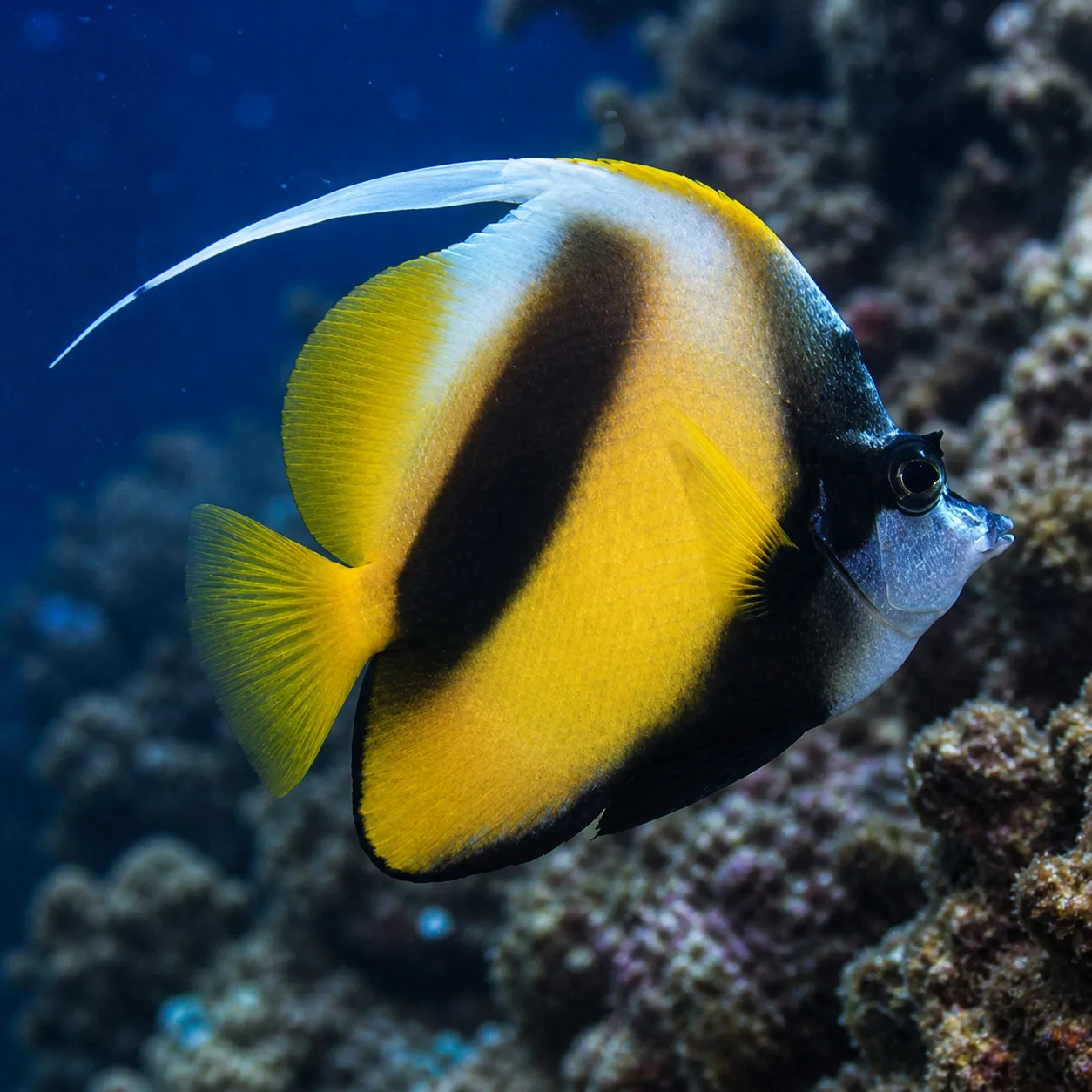
Illustrative images
Red Sea Bannerfish
Heniochus intermedius
Overview
The Red Sea Bannerfish, scientifically known as Heniochus intermedius, is a striking marine fish found specifically in the reefs of the Red Sea. This species is beloved for its unique appearance, characterized by a long, sweeping dorsal fin and a body featuring an elegant blend of yellow and black patterns. The Red Sea Bannerfish is often a vital addition to reef aquariums, thanks to its visual appeal and generally peaceful nature.
Natural Habitat
In the wild, the Red Sea Bannerfish inhabits coral reefs and lagoons. It prefers shallow waters where it can thrive among the corals, feeding on small invertebrates as well as zooplankton. This environment plays a crucial role in shaping the fish's behavior and dietary habits.
Care Requirements
For hobbyists looking to keep the Red Sea Bannerfish, it is essential to understand its specific care requirements. Here are the key considerations:
- Tank Size: A minimum tank size of 150 liters is recommended to provide ample space for swimming.
- Water Conditions: Stable water conditions are crucial, including a temperature range of 24-28°C and a pH level around 8.1-8.4.
- Filtration: A high-quality filtration system is important to maintain water clarity and quality.
- Lighting: Moderate lighting mimicking natural sunlight will help maintain tank health and coral life.
- Rockwork: Providing live rock and hiding spots is beneficial for the fish, allowing it to feel secure in its environment.
Compatibility
The Red Sea Bannerfish is known for its peaceful temperament, making it compatible with a variety of other marine species. In a community tank, it can cohabitate with other peaceful fish. However, care should be taken to avoid aggressive species that may harass it.
Feeding
Dietarily, the Red Sea Bannerfish is an omnivore. In an aquarium setting, it thrives on a varied diet that includes high-quality flake foods, frozen foods such as mysis shrimp, and finely chopped seafood. Regular feeding will ensure that the fish maintains its vibrant colors and good health.
Lifespan and Behavior
Under optimal care, the Red Sea Bannerfish can live for several years. They are generally active swimmers and can often be seen exploring their surroundings. This species does best in schools, so keeping multiple individuals can enhance their natural behaviors and reduce stress levels.
Conclusion
The Red Sea Bannerfish is an excellent choice for marine aquariums, suitable for both novice and experienced aquarists. Its vibrant coloration and peaceful demeanor make it a fantastic addition to a reef tank setup.
How to care for Red Sea Bannerfish
- 1
Set up the tank
Use a minimum 300-liter (79-gallon) aquarium with stable water parameters: temperature 22-26°C (72-79°F), pH 8.1-8.4, and specific gravity 1.020-1.025.
- 2
Acclimate slowly
Introduce the Red Sea Bannerfish to the tank gradually to reduce stress and allow adjustment to the new environment.
- 3
Maintain water quality
Regularly monitor and maintain water parameters, ensuring they remain within the optimal ranges for the species.
- 4
Provide a varied diet
Feed a mix of meaty foods like mysis shrimp and vegetable matter to meet their nutritional needs.
- 5
Monitor tankmates
Keep an eye on interactions with other fish, as they can be territorial, especially with similar-looking species.
Frequently asked questions
What are the ideal water parameters for Red Sea Bannerfish?▾
Maintain a temperature of 22-26°C (72-79°F), pH between 8.1 and 8.4, and specific gravity (salinity) of 1.020 to 1.025.
What is the maximum size of Heniochus intermedius?▾
Red Sea Bannerfish can grow up to 18 cm (7.1 inches) in length.
Are Red Sea Bannerfish reef-safe?▾
They may nip at corals and invertebrates, so they are not considered reef-safe.
What is the recommended minimum tank size for Red Sea Bannerfish?▾
A minimum tank size of 300 liters (79 gallons) is recommended to provide ample swimming space.
What is the natural diet of Heniochus intermedius?▾
In the wild, they feed on zooplankton and benthic invertebrates.