

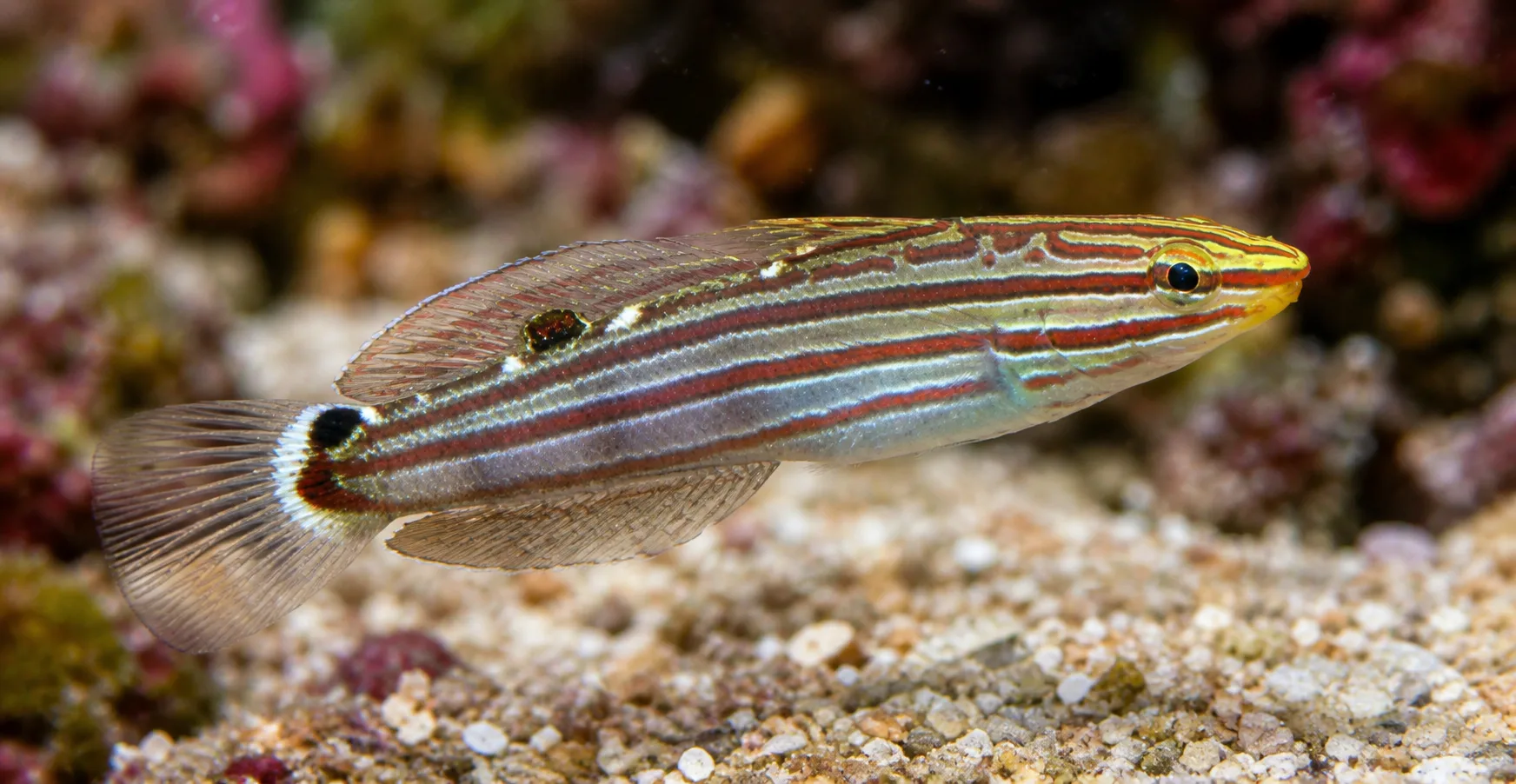
Illustrative images
Rainford's Goby
Koumansetta rainfordi
Overview
Rainford's Goby, known scientifically as Amblygobius rainfordi, is a small and colorful species often found in reef tanks. This peaceful fish is an excellent addition for aquarists looking to create a vibrant underwater environment.
Natural Habitat
This species is typically found in the shallow waters of coral reefs, particularly in the Indo-Pacific region. Rainford's Gobies inhabit sandy bottoms near the reef structure, where they can find food and shelter.
Care Requirements
Rainford's Goby is considered to be relatively easy to care for, making it suitable for both novice and experienced hobbyists. However, it's essential to maintain stable water conditions for their health and well-being.
- Water Type: Marine
- Temperament: Peaceful
- Diet: Omnivore
- Lifespan: 5-8 years
Tank Setup
For optimal care, setting up a suitable environment for Rainford's Goby is crucial.
- Minimum Tank Size: 50 liters (13 gallons)
- Substrate: Fine sand is preferred, as this allows for natural foraging behavior.
- Hiding Spots: Provide various caves and crevices to help them feel secure.
- Filtration: Use a good filtration system to keep water clean and well-oxygenated.
Compatibility
Rainford's Goby is best housed with other peaceful marine fish. They can sometimes be territorial towards their own kind if space is limited, so it's advisable to keep only one per tank unless in a larger setup.
Feeding
In the aquarium, Rainford's Goby thrives on a diet of high-quality flake foods, frozen foods like brine shrimp and mysis shrimp, and small pellets. Regular feeding will help keep them healthy and vibrant.
Lighting and CO2
Rainford's Goby prefers moderate lighting levels that mimic their natural habitat. While they do not require additional CO2, keeping the aquarium well-maintained will contribute to their overall health.
How to care for Rainford's Goby
- 1
Set up the tank
Use a 20-gallon or larger aquarium with fine sand substrate and live rock to provide grazing areas and hiding spots.
- 2
Acclimate the fish
Introduce Rainford's Goby to the tank slowly to reduce stress, using drip acclimation or a similar method.
- 3
Maintain water parameters
Keep water temperature between 74-80°F, salinity at 1.020-1.025 specific gravity, and pH between 8.1-8.4.
- 4
Feed appropriately
Offer a varied diet including filamentous algae, live or frozen brine shrimp, mysis shrimp, and vitamin-enriched pellets or flakes.
- 5
Monitor tankmates
Ensure all tankmates are peaceful, avoiding aggressive species that may outcompete the goby for food.
Frequently asked questions
What is the ideal tank size for Rainford's Goby?▾
A minimum tank size of 20 gallons is recommended for Rainford's Goby. ([aquariumdomain.com](https://www.aquariumdomain.com/SpeciesProfiles/MarineFish/RainfordsGoby.shtml?utm_source=openai))
What are the optimal water parameters for Rainford's Goby?▾
Maintain water temperature between 74-80°F, salinity at 1.020-1.025 specific gravity, and pH between 8.1-8.4. ([aquariumdomain.com](https://www.aquariumdomain.com/SpeciesProfiles/MarineFish/RainfordsGoby.shtml?utm_source=openai))
What should I feed Rainford's Goby?▾
Provide a varied diet including filamentous algae, live or frozen brine shrimp, mysis shrimp, and vitamin-enriched pellets or flakes. ([aquariumdomain.com](https://www.aquariumdomain.com/SpeciesProfiles/MarineFish/RainfordsGoby.shtml?utm_source=openai))
Can Rainford's Goby be kept with other fish?▾
Yes, they are peaceful and can be housed with other peaceful species, but avoid aggressive tankmates. ([aquariumdomain.com](https://www.aquariumdomain.com/SpeciesProfiles/MarineFish/RainfordsGoby.shtml?utm_source=openai))
How large does Rainford's Goby grow?▾
Rainford's Goby typically reaches a maximum size of 3 inches (7.6 cm). ([aquariumdomain.com](https://www.aquariumdomain.com/SpeciesProfiles/MarineFish/RainfordsGoby.shtml?utm_source=openai))