

Illustrative images
Rabbit Snail
Tylomelania sp.
Overview
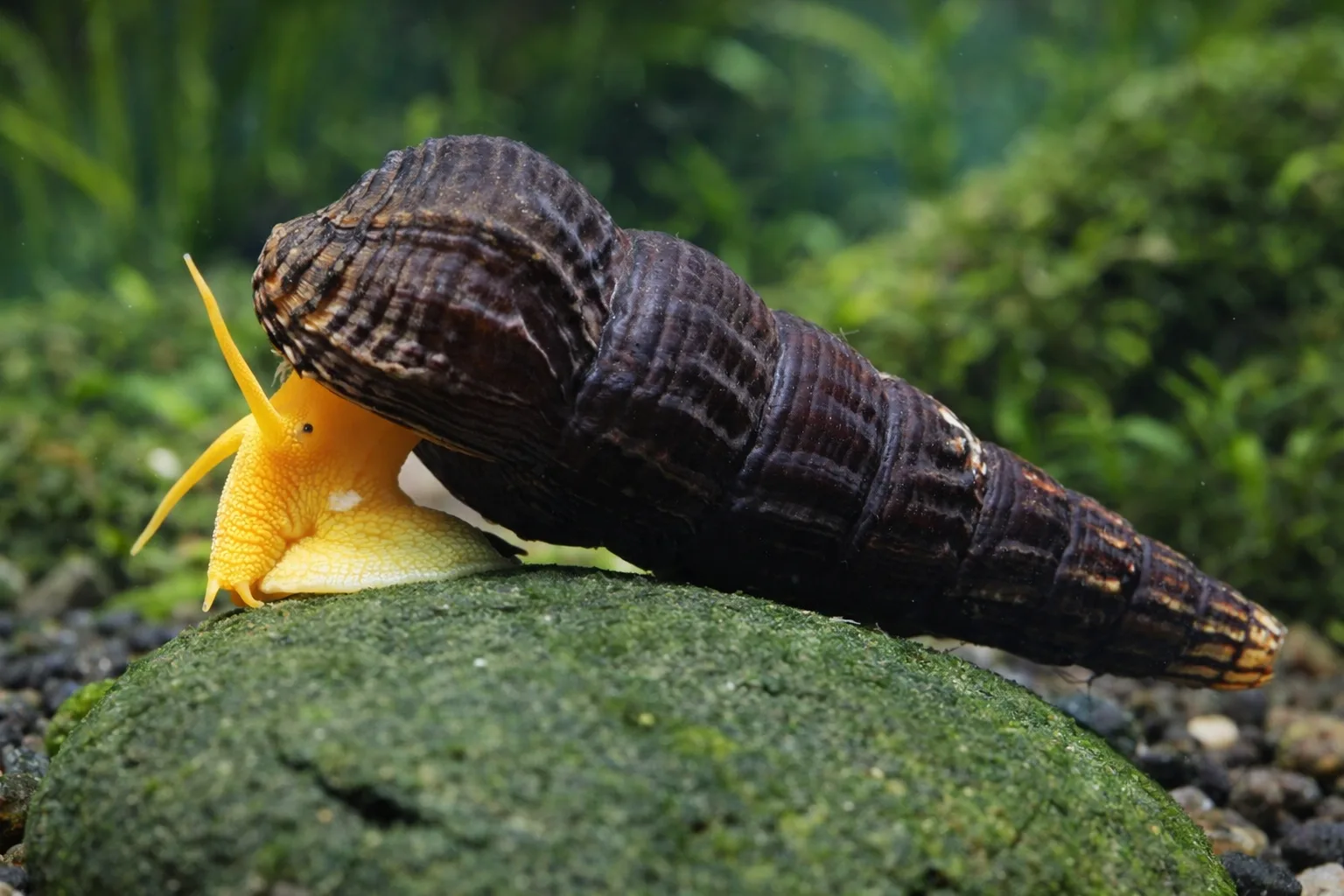
The Rabbit Snail, commonly known as Tylomelania, is an intriguing aquatic invertebrate that adds both beauty and functionality to freshwater aquariums. With its distinctive shell shape resembling that of a rabbit's ear, this species is not only a visual delight but also plays a role in maintaining a healthy aquarium ecosystem.
Natural Habitat
The Rabbit Snail is native to the freshwater rivers and streams of Southeast Asia, particularly Indonesia. These snails thrive in soft, slightly acidic waters rich in organic material. In the wild, they are often found among decaying leaves and plant matter, which they graze on as part of their natural diet.
Care Requirements
Rabbit Snails are generally considered easy to care for, making them suitable for both novice and experienced aquarists. Here are some key care requirements:
- Tank Size: A minimum of 20 liters is recommended to ensure adequate space for movement and foraging.
- Water Parameters: Aim for a temperature range of 24-28°C, with a pH between 6.5 and 7.5. Soft to moderately hard water is preferable.
- Substrate: A soft substrate is essential to protect their delicate bodies; sand or fine gravel works well.
Tank Setup
When setting up a tank for Rabbit Snails, consider the following:
- Provide plenty of hiding spots with plants, rocks, and driftwood.
- Choose gentle filtration to avoid strong currents, as Rabbit Snails prefer calm waters.
Compatibility
Rabbit Snails are peaceful creatures that can coexist with a variety of other freshwater fish and invertebrates. However, avoid keeping them with aggressive species that may harm them. Suitable tank mates include:
- Small tetras
- Community fish
- Peaceful bottom dwellers
Feeding
Rabbit Snails are primarily herbivorous, feeding on algae, decaying plant matter, and specially formulated sinking pellets. To ensure optimal health, supplement their diet with blanched vegetables such as zucchini or spinach.
Lifespan
With proper care, Rabbit Snails can live for approximately 3 to 5 years, making them a long-lasting addition to your aquarium.
Conclusion
Overall, Rabbit Snails are an excellent choice for aquarists looking to enhance their aquarium with a unique and peaceful invertebrate. They are easy to care for, contribute to maintaining a clean tank, and add biological diversity to your aquatic environment.
How to care for Rabbit Snail
- 1
Set up the tank
Choose a tank of at least 40 liters (10 gallons) for a single adult Rabbit Snail. Ensure the tank has a fine gravel or sand substrate, smooth rocks, driftwood, and caves to mimic their natural habitat.
- 2
Acclimate slowly
When introducing Rabbit Snails to the tank, acclimate them slowly to prevent shock. Float the bag in the aquarium to equalize temperature, then gradually mix tank water into the bag over 15–20 minutes before releasing them.
- 3
Maintain water parameters
Regularly monitor and maintain water parameters: pH 7.0–8.0, hardness 8–15 dGH, and temperature 22–28°C (72–82°F). Perform regular water changes to keep conditions stable.
- 4
Feed appropriately
Provide a balanced diet of sinking algae wafers, blanched vegetables like zucchini or spinach, and occasional protein sources. Feed once every other day, adjusting the amount based on consumption.
- 5
Monitor tank mates
Ensure tank mates are peaceful and non-aggressive. Avoid species that may nip at the snails or compete aggressively for food.
- 6
Observe health regularly
Regularly check Rabbit Snails for signs of stress or disease, such as inactivity, shell damage, or unusual behavior. Promptly address any issues to maintain a healthy aquarium environment.
Frequently asked questions
What is the ideal tank size for Rabbit Snails?▾
A minimum tank size of 40 liters (10 gallons) is recommended for a single adult Rabbit Snail. Larger tanks are preferable for groups to provide ample space for movement and grazing.
What water parameters do Rabbit Snails require?▾
Rabbit Snails thrive in freshwater with a pH range of 7.0–8.0, hardness between 8–15 dGH, and a temperature range of 22–28°C (72–82°F). Stable water conditions are crucial for their health.
What do Rabbit Snails eat?▾
Rabbit Snails are omnivorous scavengers, feeding on algae, detritus, and leftover fish food. They also appreciate vegetable-based foods like blanched vegetables and sinking algae wafers.
Can Rabbit Snails live with other fish?▾
Yes, Rabbit Snails are peaceful and can coexist with most non-aggressive fish species, such as tetras, rasboras, and gouramis. Avoid keeping them with aggressive or fin-nipping species.
How long do Rabbit Snails live?▾
Rabbit Snails have a lifespan of 5–10 years, making them a long-term addition to your aquarium.
Do Rabbit Snails reproduce in aquariums?▾
Yes, Rabbit Snails reproduce in aquariums, giving birth to 1–3 well-formed 'babies' encased in individual milky-white egg sacs, preventing rapid population growth.