

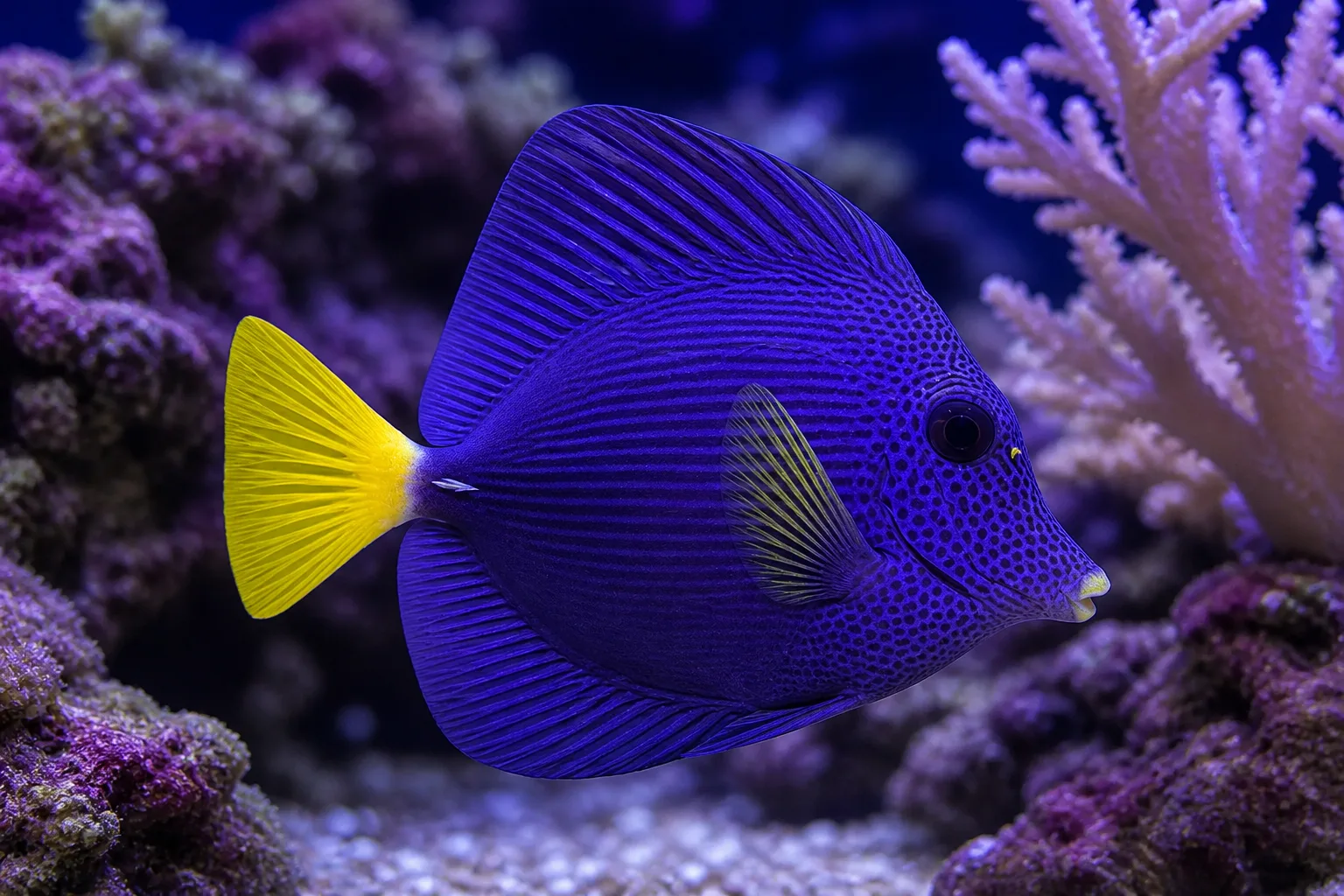
Illustrative images
Purple Tang
Zebrasoma xanthurum
Overview
The Purple Tang, scientifically known as Zebrasoma xanthurum, is a vibrant marine fish popular among aquarium enthusiasts. Due to its striking coloration and graceful swimming patterns, it represents an attractive addition to any saltwater aquarium.
Natural Habitat
The Purple Tang is native to the coral reefs of the Indo-Pacific region, particularly around the islands of the central and western Pacific Ocean. These fish are typically found in shallow waters, where they thrive within the protective environments provided by coral structures.
Care Requirements
As a semi-aggressive species, the Purple Tang requires careful consideration when selecting tank mates. They do best in larger aquariums that can accommodate their active swimming behavior, making them suitable for experienced aquarists.
Tank Setup
For optimal health, provide a well-maintained saltwater tank with plenty of hiding spots and swimming space. Live rock and coral structures are ideal for mimicking their natural habitat. A high-quality filtration system is also crucial for maintaining water quality.
Compatibility
While the Purple Tang can exhibit territorial behavior, particularly towards other Tangs, they can coexist with peaceful species like clownfish, gobies, and certain wrasses. Avoid housing them with aggressive fish to reduce stress.
Feeding
In their natural habitat, Purple Tangs primarily feed on algae and plant matter. In captivity, their diet should consist of high-quality marine algae, spirulina, and prepared algae-based foods. Supplementing with occasional meaty foods can enhance their diet, but focus on maintaining a herbivorous regimen.
Lighting and Water Conditions
While lighting needs can vary, a well-lit aquarium with sufficient light intensity will encourage the growth of algae, a primary food source for the Purple Tang. Maintain stable salinity, temperature, and pH levels, and ensure that the water is adequately filtered and oxygenated.
Conclusion
The Purple Tang is a gorgeous species that can add color and life to your reef aquarium. With the right environment and care, they can thrive and display their vibrant personalities.
How to care for Purple Tang
- 1
Set up a spacious tank
Provide a well-established 100-gallon (379-liter) aquarium with ample swimming space and live rock for grazing and hiding.
- 2
Acclimate the fish slowly
Introduce the Purple Tang to the tank gradually to reduce stress and allow it to adjust to its new environment.
- 3
Maintain stable water parameters
Keep the water temperature between 72°F and 78°F (22.2°C to 25.6°C), salinity at 1.020-1.025, pH between 8.1 and 8.4, and alkalinity at 8-12 dKH.
- 4
Provide a varied diet
Feed the Purple Tang a mix of algae-based foods, such as marine seaweed, and meaty foods like mysis shrimp and brine shrimp.
- 5
Monitor tank mates
Be cautious when introducing other tangs, as Purple Tangs can be aggressive towards similarly shaped species.
Frequently asked questions
What size tank does a Purple Tang need?▾
A Purple Tang requires a minimum tank size of 100 gallons (379 liters) to accommodate its adult size and active swimming behavior.
What is the ideal water temperature for a Purple Tang?▾
The ideal water temperature for a Purple Tang is between 72°F and 78°F (22.2°C to 25.6°C).
What do Purple Tangs eat?▾
Purple Tangs are omnivorous, primarily feeding on algae, but they also consume meaty foods like mysis shrimp and brine shrimp.
Are Purple Tangs reef safe?▾
Yes, Purple Tangs are considered reef safe and can be kept in reef aquariums.
How aggressive are Purple Tangs?▾
Purple Tangs are semi-aggressive, especially towards other tangs, and may exhibit territorial behavior.