

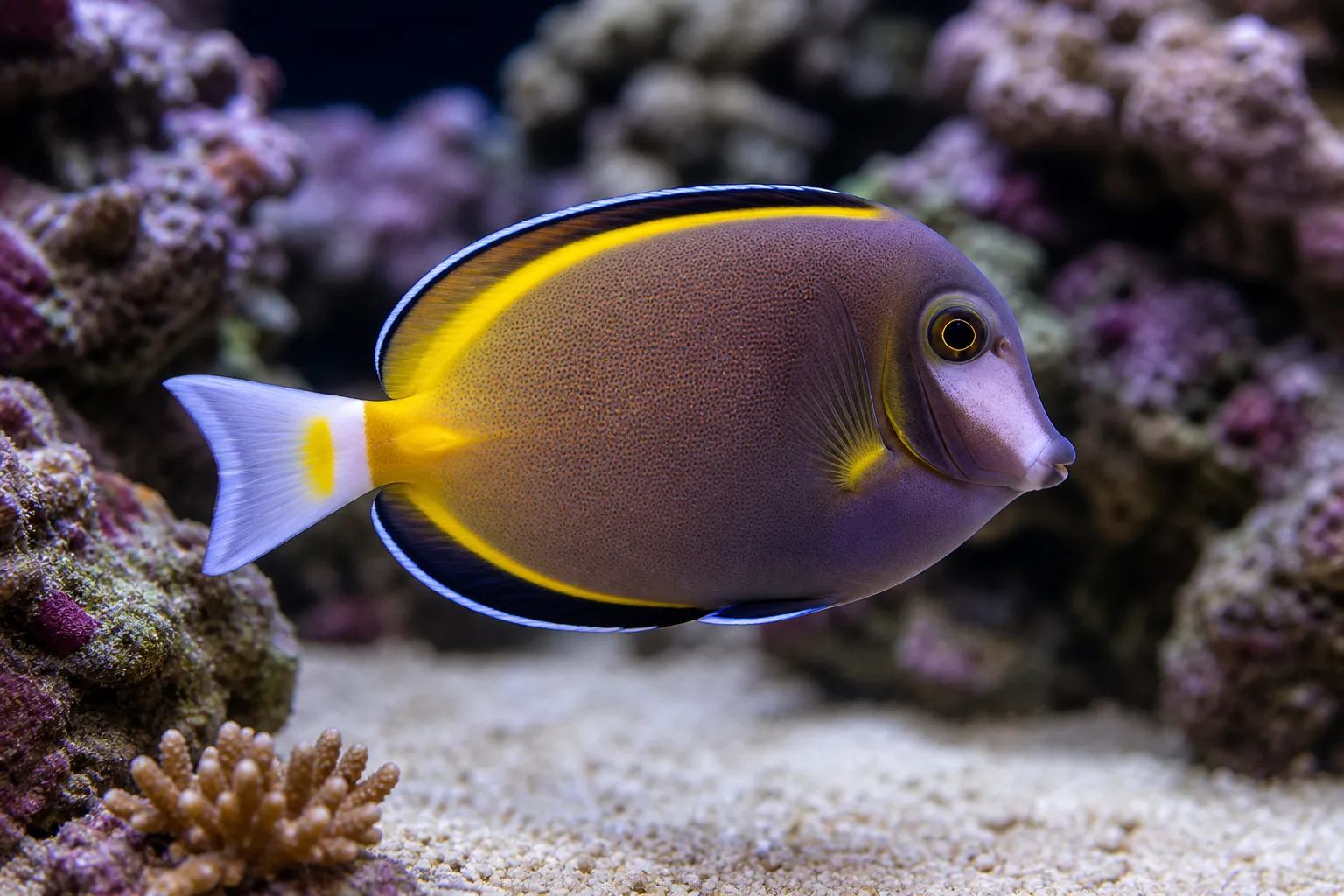
Illustrative images
Powder Brown Tang
Acanthurus japonicus
Overview
The Powder Brown Tang, known scientifically as Acanthurus japonicus, is a popular marine fish recognized for its interesting coloration and unique body shape. This species is well-suited for reef aquariums and captivates aquarists with its calm demeanor and striking presence.
Natural Habitat
Powder Brown Tangs are native to the reefs of the Indo-Pacific region, commonly found in areas with abundant coral cover and plenty of hiding spots. They thrive in tropical waters, making them an excellent choice for marine tanks that can replicate such conditions.
Care Requirements
The Powder Brown Tang requires attentive care and a well-maintained aquarium to flourish. Here are some key considerations:
- Minimum Tank Size: At least 300 liters (about 80 gallons) is recommended for adequate swimming space.
- Water Type: This species is suitable for marine environments.
- Temperature: Ideal water temperature ranges from 24°C to 28°C (75°F to 82°F).
- pH Level: A pH range of 8.1 to 8.4 is suitable.
- Salinity: Maintain a stable salinity level appropriate for marine fish.
Tank Setup
When setting up a tank for a Powder Brown Tang, consider the following:
- Structure: Provide ample rockwork and plant life to create hiding spots and territories.
- Lighting: Moderate to bright lighting is suitable, as this species does well in well-lit environments, enhancing colors and overall health.
- Filtration: A strong filtration system is necessary to maintain water quality in a marine setup.
Compatibility
Powder Brown Tangs are generally peaceful but can be territorial, especially towards their kind. It's advisable to introduce them to a community tank with a variety of other peaceful marine fish. Avoid keeping multiple Tangs in smaller tanks unless adequate space allows for established territories.
Feeding
Being herbivorous, Powder Brown Tangs thrive on a diet rich in algae. Provide a mix of high-quality marine flakes, pellets, and fresh vegetables such as spirulina and nori. Regular feeding should encourage healthy growth and coloration.
Conclusion
The Powder Brown Tang is a beautiful addition to any marine aquarium, offering both aesthetic appeal and tranquility. With the proper care, tank setup, and diet, hobbyists will enjoy observing its vibrant behavior and dynamic interactions in the tank.
How to care for Powder Brown Tang
- 1
Set up the tank
Use a 125-gallon (473-liter) or larger aquarium with ample swimming space and live rock for grazing and hiding.
- 2
Acclimate slowly
Introduce the Powder Brown Tang to the tank gradually to reduce stress and allow it to adjust to the new environment.
- 3
Maintain water parameters
Keep water temperature between 72-78°F (22-26°C), pH between 8.1-8.4, and specific gravity between 1.020-1.025.
- 4
Provide a balanced diet
Offer a variety of marine algae, seaweed, and high-quality herbivore pellets or flakes, supplemented with occasional meaty foods.
- 5
Monitor tank mates
Keep only one Powder Brown Tang per tank and avoid housing with other tangs or similarly shaped species to prevent aggression.
Frequently asked questions
What size tank does a Powder Brown Tang need?▾
A minimum tank size of 125 gallons (473 liters) is recommended to provide ample swimming space for a Powder Brown Tang.
What are the ideal water parameters for a Powder Brown Tang?▾
Maintain water temperature between 72-78°F (22-26°C), pH between 8.1-8.4, and specific gravity between 1.020-1.025 for optimal health.
What should I feed a Powder Brown Tang?▾
Provide a diet rich in marine algae and seaweed, supplemented with high-quality herbivore pellets or flakes, and occasional treats like mysis or brine shrimp.
Can Powder Brown Tangs be kept with other tangs?▾
They are territorial towards other tangs and similarly shaped species; it's best to keep only one per tank to prevent aggression.
Are Powder Brown Tangs reef-safe?▾
Generally, they are reef-safe but may pick at small, mobile, and sessile invertebrates if not well-fed.