

Illustrative images
Powder Blue Tang
Acanthurus leucosternon
Overview
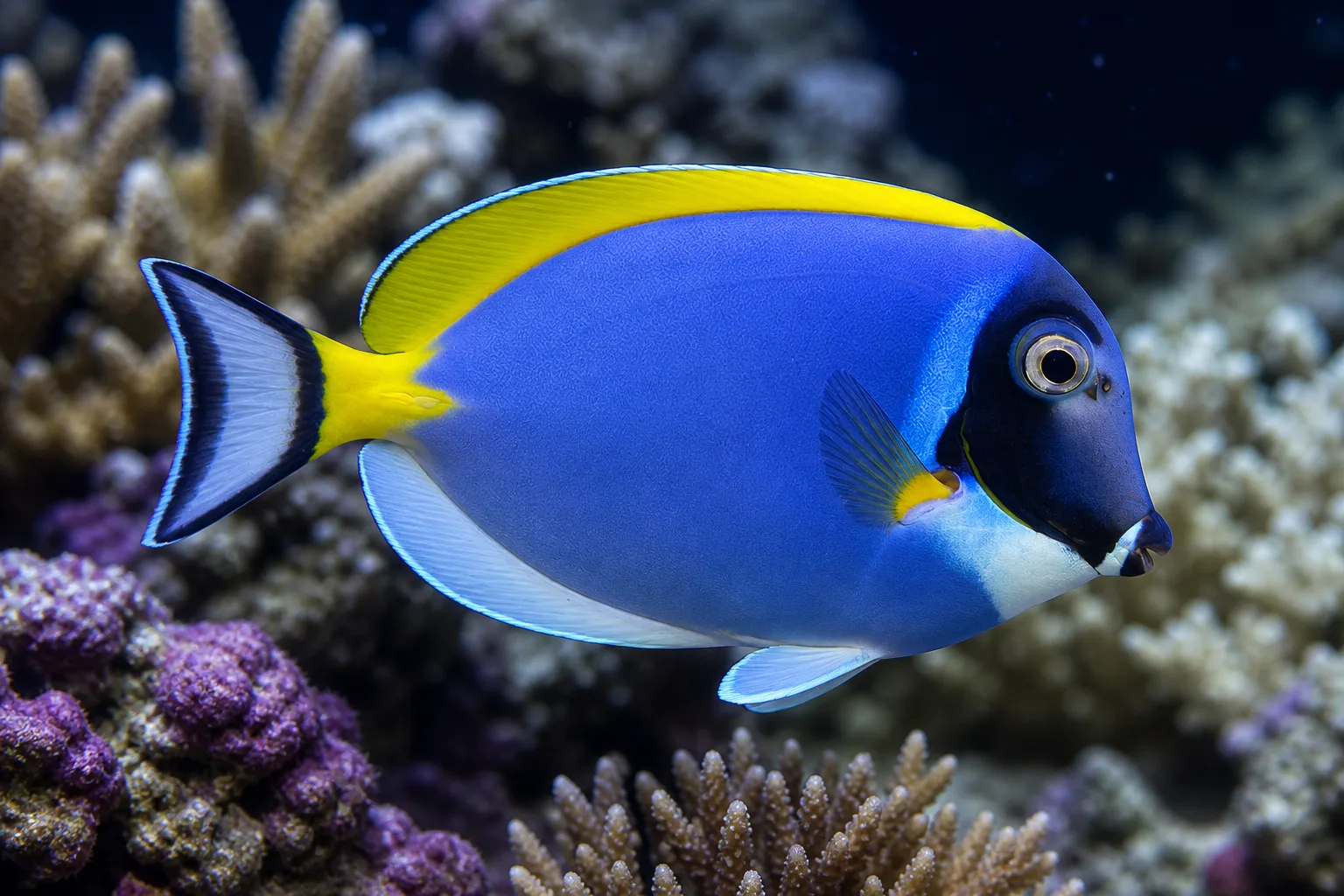
The Powder Blue Tang, scientifically known as Acanthurus leucosternon, is a striking marine fish renowned for its vibrant colors and unique shape. This species of surgeonfish is particularly beloved by aquarium enthusiasts for its brilliant blue body paired with a contrasting yellow tail and black markings. The Powder Blue Tang typically grows to a moderate size, making it suitable for various marine tanks.
Natural Habitat
Powder Blue Tangs are originally found in the Indo-Pacific region, particularly around coral reefs. They tend to inhabit deeper waters, often close to the reef structure. Their natural environment offers plenty of hiding spots and grazing opportunities, which are key to understanding their care in captivity.
Care Requirements
Tank Setup
To successfully keep a Powder Blue Tang, it is essential to provide a suitably sized aquarium, ideally with a minimum volume of 250 liters. A well-maintained reef environment with plenty of live rock for grazing and hiding spaces is necessary for the fish's well-being. A sandy substrate is recommended, along with high-quality filtration to maintain water clarity, as these fish thrive in clean and well-oxygenated water.
Water Parameters
- Salinity: Maintain a stable salinity level typical for marine tanks.
- Temperature: A stable temperature between 24-27°C is best for this species.
- pH: Keep pH levels between 8.1 to 8.4.
- Ammonia/Nitrite: Keep levels at 0 for a healthy environment.
Compatibility
Powder Blue Tangs are generally considered semi-aggressive. They do best in a community setting with peaceful tank mates; however, care should be taken to avoid keeping them with other Tangs and aggressive species that may compete for territory. Ideal companions include wrasses, clownfish, and other reef-safe fish.
Feeding
In the wild, Powder Blue Tangs primarily feed on algae and other plant materials. In captivity, it is vital to replicate this diet with high-quality marine herbivore flakes, spirulina, and frozen foods containing greens. They also benefit from graze-friendly items like nori or algae sheets, which can be attached to aquarium decorations for easy access.
Lighting and CO2
The lighting in a tank housing a Powder Blue Tang should simulate natural sunlight, which not only promotes healthy coral growth but also helps maintain the fish’s vibrant colors. Bright lighting conditions paired with moderate water flow will create a suitable environment. CO2 injection is typically not necessary unless keeping sensitive corals that require specific conditions.
Lifespan
With proper care, Powder Blue Tangs can live for 8-10 years in a well-maintained aquarium. Regular water changes and monitoring of tank parameters will contribute to their longevity.
Conclusion
The Powder Blue Tang is a fantastic addition for any marine aquarist willing to meet its needs. With proper tank setup, compatible tank mates, and a suitable diet, this fish can thrive and add a splash of color and excitement to your aquarium.
How to care for Powder Blue Tang
- 1
Set up the tank
Prepare a well-established aquarium of at least 125 gallons (473 liters) with ample swimming space and live rock for grazing.
- 2
Acclimate slowly
Introduce the Powder Blue Tang to the tank gradually to minimize stress and prevent aggression from other tank mates.
- 3
Maintain water parameters
Keep water temperature between 72-78°F (22-26°C), salinity at 1.020-1.025, pH between 8.1-8.4, and alkalinity at 8-12 dKH.
- 4
Provide a varied diet
Feed a primarily herbivorous diet, including marine-based algae, supplemented with Nori, Romaine lettuce, spinach leaves, or broccoli.
- 5
Monitor tank mates
Keep only one Powder Blue Tang per tank unless it's a very large system; they can be aggressive towards other tangs or similarly shaped fish.
- 6
Ensure high water movement
Provide strong water flow to mimic their natural high-surge reef environment.
Frequently asked questions
What size tank does a Powder Blue Tang need?▾
A minimum tank size of 125 gallons (473 liters) is recommended for a single Powder Blue Tang.
What is the lifespan of a Powder Blue Tang?▾
With excellent care, Powder Blue Tangs can live 10-15 years.
What is the natural habitat of the Powder Blue Tang?▾
Powder Blue Tangs are native to the Indian Ocean, found on shallow, clear coastal and island coral reefs, typically on reef flats and upper seaward slopes at depths of 0–25 meters.
What is the diet of a Powder Blue Tang?▾
Powder Blue Tangs are primarily herbivorous, feeding mainly on algae. In captivity, supplement their diet with marine-based foods like Nori, Romaine lettuce, spinach leaves, or broccoli.
Are Powder Blue Tangs reef safe?▾
Yes, Powder Blue Tangs are considered reef safe but may pick at small, mobile and sessile invertebrates if not well fed.
How aggressive are Powder Blue Tangs?▾
Powder Blue Tangs are semi-aggressive and can be territorial, especially towards other tangs or similarly shaped fish.
What are the water parameters for keeping a Powder Blue Tang?▾
Maintain water temperature between 72-78°F (22-26°C), salinity at 1.020-1.025, pH between 8.1-8.4, and alkalinity at 8-12 dKH.