

Illustrative images
Potter's Angelfish
Centropyge potteri
Overview
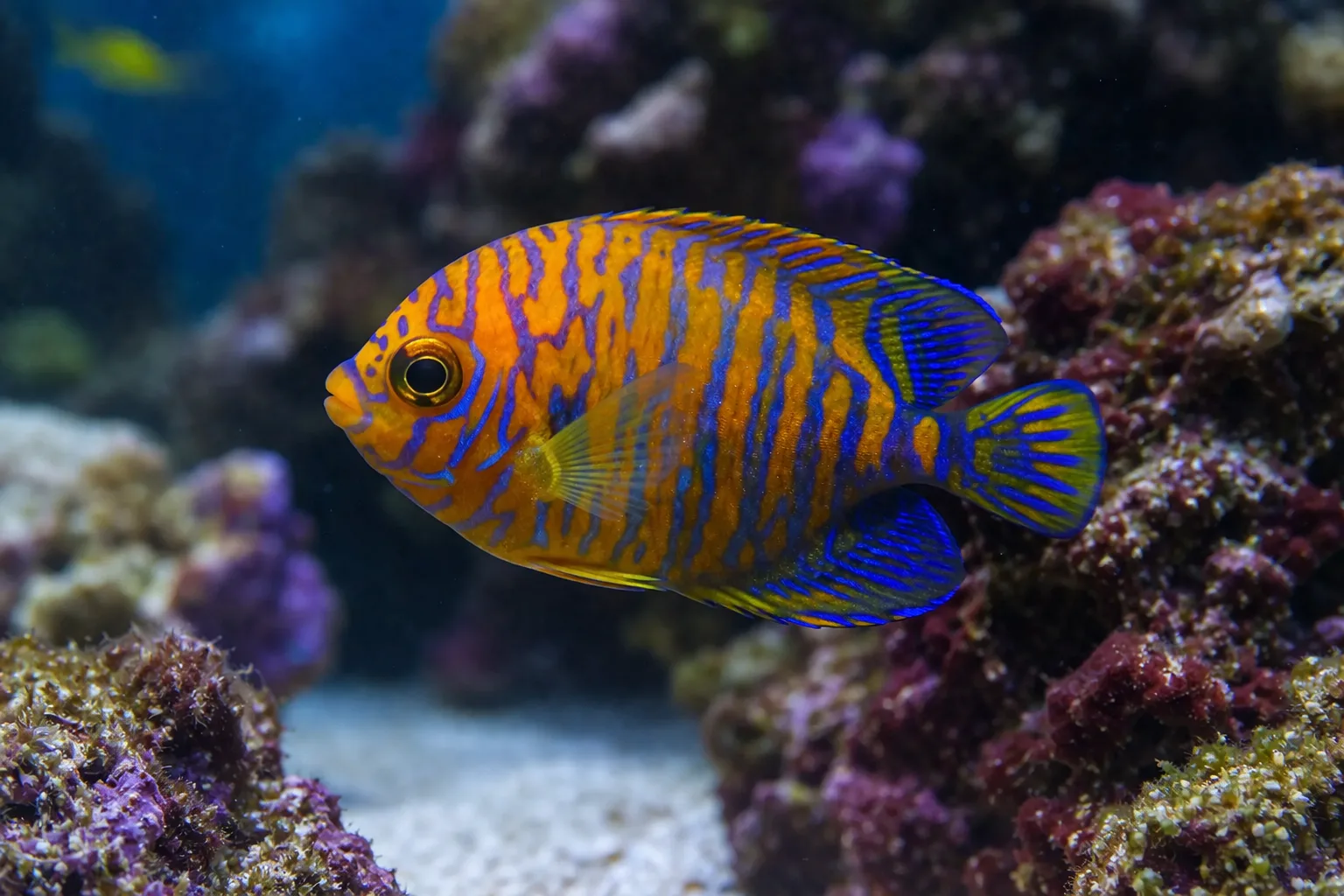
The Potter's Angelfish, scientifically known as Centropyge potteri, is a small, colorful marine fish that is popular among aquarium enthusiasts. This species is known for its beautiful coloration, which includes stunning blue and orange hues, making it a vibrant addition to reef tanks.
Natural Habitat
Potter's Angelfish are native to the tropical waters of the Pacific Ocean, particularly around Hawaii and the surrounding islands. They typically inhabit rocky reefs where they can find shelter and food among corals and algae.
Care Requirements
In captivity, the care of Potter's Angelfish requires attention to water quality, feeding, and habitat. These fish thrive in stable environments with minimal aggression from tank mates.
Tank Setup
A minimum tank size of 114 liters (30 gallons) is recommended for a single Potter's Angelfish. The tank should include plenty of hiding spots, such as live rock and coral structures, to replicate their natural habitat. Adequate water flow and good filtration are essential to maintain water quality.
Water Parameters
- Salinity: Marine
- Temperature: 24-28°C (75-82°F)
- pH: 8.1-8.4
Compatibility
Potter's Angelfish are generally peaceful but can be territorial, particularly towards their own species. It is advisable to keep them with other peaceful marine fish such as wrasses, gobies, and clownfish. Avoid keeping them with overly aggressive species that might outcompete them for food or space.
Feeding
In the wild, these fish predominantly consume algae and small invertebrates. In captivity, they should be provided a varied diet that includes high-quality marine flakes, pellets, and frozen foods such as brine shrimp and spirulina. Regular feedings (2-3 times daily) will help maintain their health and coloration.
Lighting and CO2
While Potter's Angelfish do not require specialized lighting, a well-lit tank can promote the growth of algae and corals, which can serve as a food source. Carbon dioxide supplementation is not necessary in a marine environment but is beneficial if keeping live plants alongside your fish.
Lifespan
With proper care, the Potter's Angelfish can live between 10 to 15 years in captivity.
How to care for Potter's Angelfish
- 1
Set up the tank
Prepare a well-established aquarium of at least 70 gallons with live rock and plenty of hiding places to mimic the natural habitat.
- 2
Acclimate slowly
Introduce the fish to the tank gradually to reduce stress and allow it to adjust to the new environment.
- 3
Maintain water parameters
Keep the water temperature between 72-78°F (22-26°C), salinity at 1.020-1.025, pH between 8.1-8.4, and alkalinity at 8-12 dKH.
- 4
Provide a varied diet
Offer a mix of high-quality angelfish preparations, Spirulina, marine algae, and meaty items like mysis or frozen shrimp, feeding 2-3 times daily.
Frequently asked questions
What is the maximum size of Potter's Angelfish?▾
Potter's Angelfish can grow up to 10 cm (4 inches) in length.
What is the natural habitat of Centropyge potteri?▾
Centropyge potteri is native to the central Pacific Ocean, specifically around the Hawaiian Islands and Johnston Atoll.
What is the recommended minimum tank size for Potter's Angelfish?▾
A minimum tank size of 70 gallons (approximately 265 liters) is recommended for Potter's Angelfish.
What is the diet of Potter's Angelfish?▾
Potter's Angelfish are omnivores, feeding on algae, small invertebrates, and detritus in the wild.
Is Potter's Angelfish reef-safe?▾
Potter's Angelfish may nip at soft corals and other sessile invertebrates, so they should be kept with caution in reef aquariums.