

Illustrative images
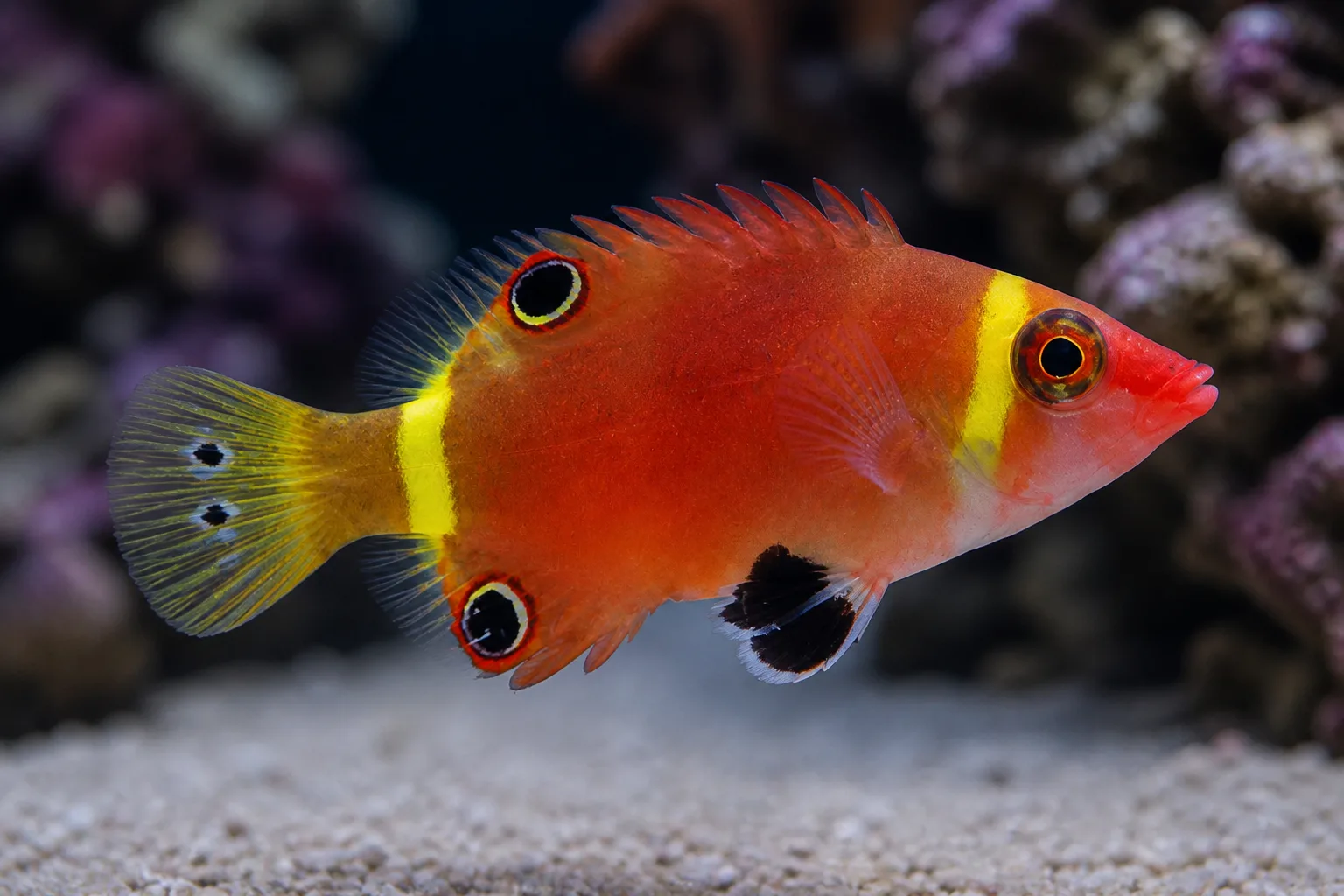
Possum Wrasse
Wetmorella albofasciata
Overview
The Possum Wrasse, scientifically known as Wetmorethys holacanthus, is a small, colorful fish native to the reefs of the Indo-Pacific region. This species is popular among reef aquarists due to its vibrant colors and engaging behavior.
Natural Habitat
Possum Wrasses are typically found in shallow waters, often inhabiting rocky areas and coral reefs. They prefer well-structured environments where they can hide among corals and rocks, providing them with protection from predators.
Care Requirements
Possum Wrasses are considered to have a medium care level, making them suitable for intermediate aquarium keepers.
Tank Setup
To create an appropriate environment for Possum Wrasses, consider the following:
- Minimum tank size: 150 liters is recommended to provide ample swimming space.
- A sandy substrate or small pebbles should be used to mimic their natural habitat.
- Include plenty of live rock and hiding spots to ensure the fish feels secure.
- Water movement should be moderate, ideally mimicking the currents found in their natural reefs.
Water Parameters
Possible ranges for optimal water conditions include:
- Temperature: 24-27 °C
- pH: 8.1-8.4
- Salinity: 1.020-1.025
Compatibility
Possum Wrasses are generally peaceful but can show some territorial behavior, especially toward their own species or similar-looking wrasses. It's best to introduce them to a community tank with other peaceful fish. They pair well with clownfish, dartfish, and peaceful tangs.
Feeding
Possum Wrasses are omnivores that accept a varied diet, including:
- High-quality pellets
- Frozen or live brine shrimp
- Small pieces of marine fish or shrimp
It's crucial to provide a diet that includes both protein and vegetables to ensure their health and vibrant colors.
Lifespan
With proper care, Possum Wrasses can live for around 5 to 7 years in captivity.
How to care for Possum Wrasse
- 1
Set up the tank
Choose a well-established aquarium of at least 75 liters (20 gallons) with plenty of live rock and crevices for hiding.
- 2
Acclimate slowly
Introduce Wetmorella albofasciata to the tank gradually to reduce stress and allow it to adjust to the new environment.
- 3
Maintain water parameters
Keep salinity between 1.020 and 1.025, temperature at 22 to 26°C (72 to 79°F), and pH between 8.1 and 8.4.
- 4
Provide hiding spots
Ensure the tank has numerous caves and crevices where Wetmorella albofasciata can seek refuge and feel secure.
- 5
Feed appropriately
Offer a diet of small, meaty foods such as mysis shrimp, brine shrimp, and finely chopped seafood several times daily.
- 6
Monitor behavior
Observe Wetmorella albofasciata for signs of stress or aggression, and ensure it is eating well and interacting peacefully with tankmates.
Frequently asked questions
What is the ideal tank size for Wetmorella albofasciata?▾
A minimum tank size of 75 liters (20 gallons) is recommended for Wetmorella albofasciata.
What are the preferred water parameters for Wetmorella albofasciata?▾
Maintain a salinity of 1.020 to 1.025, a temperature range of 22 to 26°C (72 to 79°F), and a pH between 8.1 and 8.4.
What is the maximum size Wetmorella albofasciata can reach?▾
Wetmorella albofasciata can grow up to 6 cm (2.4 inches) in length.
Is Wetmorella albofasciata reef-safe?▾
Yes, Wetmorella albofasciata is considered reef-safe and does not typically harm corals or invertebrates.
What is the natural diet of Wetmorella albofasciata?▾
In the wild, Wetmorella albofasciata feeds on worms and crustaceans.