

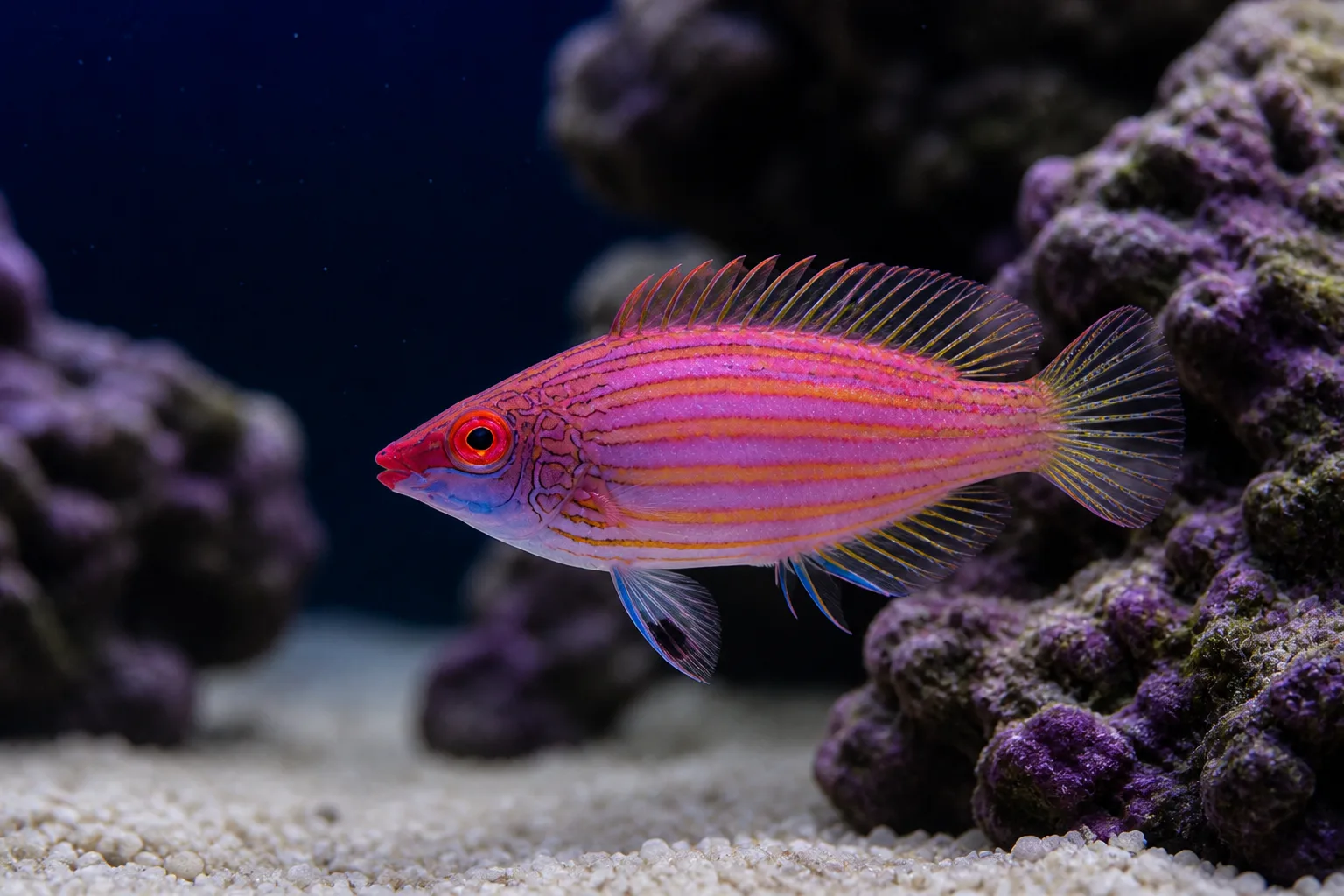
Illustrative images
Pink-Streaked Wrasse
Pseudocheilinops ataenia
Overview
The Pink-Streaked Wrasse, often recognized for its vibrant coloration and active behavior, is a popular choice among marine aquarium enthusiasts. This species is known for its beautiful pink streaks that add a pop of color to any tank. It belongs to the family Labridae and is commonly found in coral reef environments.
Natural Habitat
In the wild, Pink-Streaked Wrasses inhabit shallow reefs, often residing among coral formations where they can find shelter and forage for food. Their natural habitat usually extends throughout the warm waters of the Indo-Pacific region.
Care Requirements
Caring for a Pink-Streaked Wrasse requires an understanding of its needs in terms of water quality, tank setup, and diet.
Tank Setup
It is recommended to provide a minimum tank size of 75 gallons to accommodate their active swimming behavior. The tank should have plenty of hiding places, such as rocks and corals, to mimic their natural environment and alleviate stress. A sandy substrate can also be beneficial for this species, allowing them to exhibit natural behaviors like burrowing.
Water Parameters
- Temperature: Ideally between 24-27°C (75-80°F)
- pH: Maintain a pH range of 8.1-8.4
- Salinity: A salinity of 1.020-1.025 is ideal for this marine species.
Compatibility
The Pink-Streaked Wrasse is generally considered peaceful but can exhibit territorial behavior, particularly with their own kind. It is best kept in a community tank with other non-aggressive species. Caution is advised when introducing new tank mates, as they may be aggressive towards similar-shaped fish.
Feeding
This wrasse is an omnivore and thrives on a varied diet. A combination of high-quality flakes, pellets, and frozen or live foods such as brine shrimp and mysis shrimp is recommended. It is essential to feed small amounts several times a day to ensure a balanced diet and to prevent overfeeding.
Lighting and CO2
While this species does not require specific lighting conditions, moderate lighting will benefit aquarium plants and corals that may coexist with the wrasse. CO2 injection is not necessary unless you are maintaining a planted tank.
Conclusion
The Pink-Streaked Wrasse is an engaging and colorful addition to a marine aquarium. With proper care, tank setup, and compatible tank mates, this species can thrive and bring vibrancy to your aquatic environment.
How to care for Pink-Streaked Wrasse
- 1
Set up the tank
Use a well-established tank with live rock to provide hiding places and a stable environment.
- 2
Acclimate slowly
Introduce the fish gradually to reduce stress and allow them to adjust to the new environment.
- 3
Maintain water parameters
Regularly monitor and adjust salinity (1.020-1.025), pH (8.0-8.4), and temperature (21.1-23.9°C or 70-75°F).
- 4
Provide appropriate diet
Feed small meaty foods like brine shrimp once or twice a day to mimic their natural diet.
- 5
Select compatible tank mates
Choose peaceful species and avoid aggressive or similarly colored wrasses to prevent territorial disputes.
- 6
Monitor health
Observe for signs of stress or disease, and address any issues promptly to ensure the fish's well-being.
Frequently asked questions
What are the ideal water parameters for Pink-Streaked Wrasse?▾
Maintain a salinity of 1.020-1.025, pH between 8.0-8.4, and temperature around 21.1-23.9°C (70-75°F).
What size tank is suitable for Pink-Streaked Wrasse?▾
A minimum tank size of 57 liters (15 US gallons) is recommended. Larger tanks provide more stability and space. ([theaquariumwiki.com](https://www.theaquariumwiki.com/wiki/Pseudocheilinops_ataenia?utm_source=openai))
What do Pink-Streaked Wrasse eat?▾
They feed on small invertebrates like amphipods and brine shrimp. In captivity, they may also accept sinking dry foods. ([theaquariumwiki.com](https://www.theaquariumwiki.com/wiki/Pseudocheilinops_ataenia?utm_source=openai))
Can Pink-Streaked Wrasse be kept with other fish?▾
Yes, they are peaceful and can be kept with other peaceful species. Avoid housing with aggressive or similarly colored wrasses. ([theaquariumwiki.com](https://www.theaquariumwiki.com/wiki/Pseudocheilinops_ataenia?utm_source=openai))
How do I sex Pink-Streaked Wrasse?▾
Males have more pronounced yellow lines down the body and bluish-grey markings on the gill cover. ([theaquariumwiki.com](https://www.theaquariumwiki.com/wiki/Pseudocheilinops_ataenia?utm_source=openai))
What is the lifespan of Pink-Streaked Wrasse?▾
They typically live for 2-3 years. ([theaquariumwiki.com](https://www.theaquariumwiki.com/wiki/Pseudocheilinops_ataenia?utm_source=openai))
Are Pink-Streaked Wrasse reef-safe?▾
Yes, they are considered reef-safe and can be kept in reef aquariums. ([reefs.com](https://reefs.com/fish/pink-streaked-wrasse/?utm_source=openai))