

Illustrative images
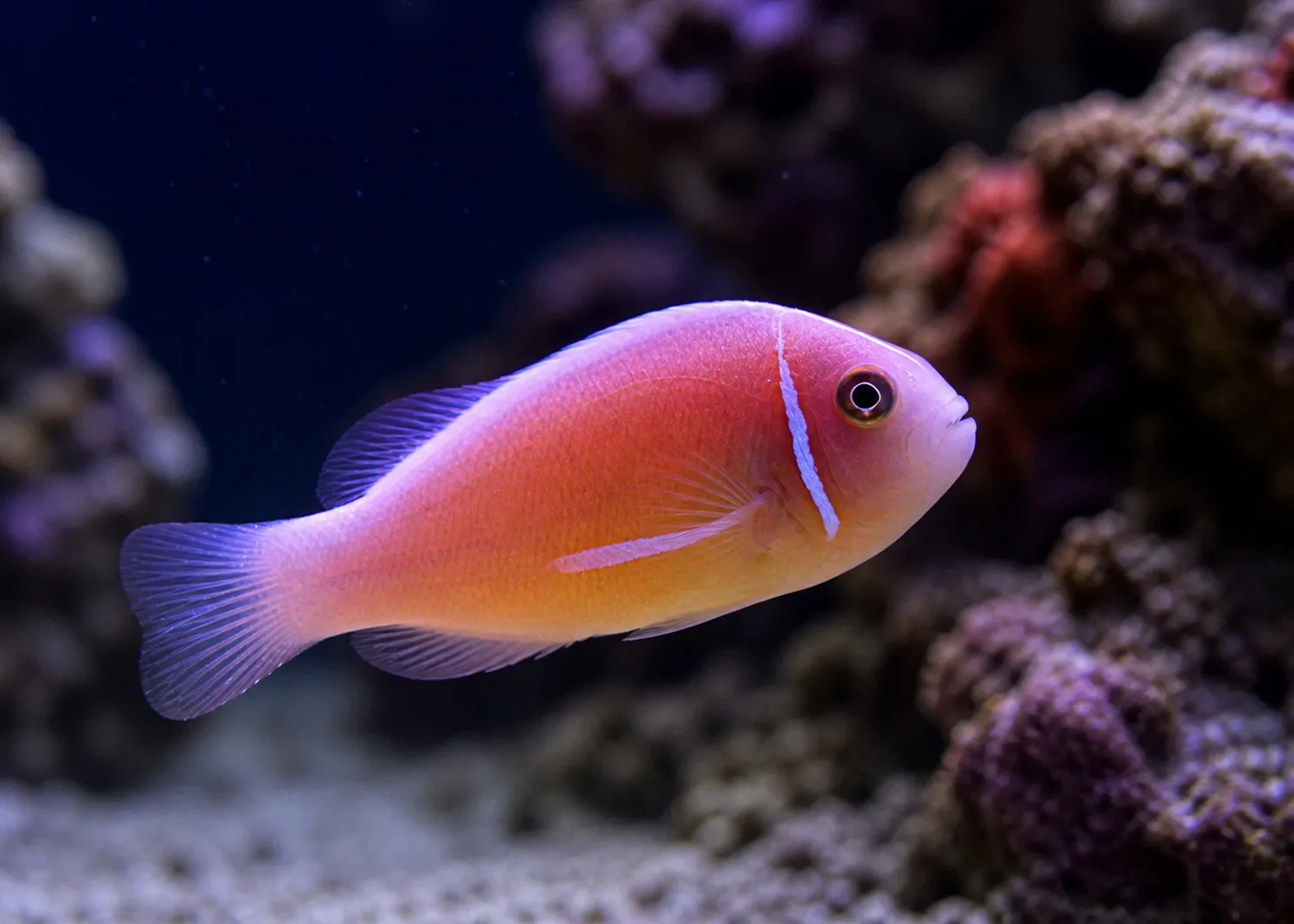
Pink Skunk Clownfish
Amphiprion perideraion
Overview
The Pink Skunk Clownfish, scientifically known as Amphiprion perideraion, is a popular choice among marine aquarium enthusiasts. Known for its striking orange-pink coloration and distinct white horizontal bands, this species is not only visually appealing but also exhibits fascinating behaviors that make it a joy to keep. These fish are native to the reefs of the Indo-Pacific, often found among sea anemones which provide them with protection from predators.
Natural Habitat
In the wild, the Pink Skunk Clownfish typically resides in warm, tropical reef environments. They form symbiotic relationships with specific anemone species, where they gain shelter in exchange for providing the anemones with food scraps and protection from predators. This relationship is crucial for their survival and thriving in nature.
Care Requirements
Caring for Pink Skunk Clownfish in a home aquarium requires attention to several key factors:
- Tank Size: A minimum tank size of 100 liters (26 gallons) is recommended for a pair.
- Water Conditions: Maintain stable water parameters with a temperature between 24-27°C (75-81°F), a pH level between 6.8-7.2, and specific gravity around 1.020-1.025.
- Filtration: Good water quality is essential; thus, a reliable filtration system is necessary to manage waste and maintain clear water.
Tank Setup
A well-planted marine tank mimicking their natural habitat will greatly benefit the Pink Skunk Clownfish. Inclusion of live rock and sandy substrate will provide hiding spots and allow for natural behaviors.
Adding a suitable host anemone can provide additional comfort for your clownfish, but it’s important to ensure the anemone's compatibility with the clownfish and other tank inhabitants.
Compatibility
The Pink Skunk Clownfish is generally a peaceful species but can be territorial, especially during breeding. They do well in a community tank with other non-aggressive marine fish. However, caution should be taken when introducing new fish to avoid stress and aggression.
Feeding
In the aquarium, Pink Skunk Clownfish are not picky eaters. They will accept a variety of foods including:
- High-quality flake or pellet food
- Frozen or live foods such as brine shrimp and mysis shrimp
- Vegetable matter like spirulina or algae
Regular feeding will ensure they maintain a healthy diet and vibrant colors.
Conclusion
The Pink Skunk Clownfish is a beautiful and interesting addition to any marine aquarium. With proper care, they can thrive and provide enjoyment for many years. They are a fantastic choice for hobbyists interested in fish that have unique personalities and appealing colors.
How to care for Pink Skunk Clownfish
- 1
Set up the tank
Prepare a 30-gallon (114-liter) tank with live rock and caves to create hiding spots and territories.
- 2
Acclimate slowly
Introduce the clownfish to the tank gradually to reduce stress and allow them to adjust to the new environment.
- 3
Maintain water parameters
Keep water temperature between 72-78°F (22-27°C), salinity at 1.020-1.025, pH between 8.1-8.4, and alkalinity at 8-12 dKH.
- 4
Feed appropriately
Provide a varied diet of pellets, flakes, and live foods like brine shrimp and mysis shrimp to ensure balanced nutrition.
- 5
Monitor behavior
Observe for signs of stress or aggression, especially towards other clownfish species, and adjust tank mates accordingly.
Frequently asked questions
What are the ideal water parameters for Pink Skunk Clownfish?▾
Maintain water temperature between 72-78°F (22-27°C), salinity at 1.020-1.025, pH between 8.1-8.4, and alkalinity at 8-12 dKH.
What size tank is suitable for Pink Skunk Clownfish?▾
A minimum tank size of 30 gallons (114 liters) is recommended to provide ample space for swimming and hiding spots.
What do Pink Skunk Clownfish eat?▾
They are omnivores, feeding on a varied diet including pellets, flakes, and live foods like brine shrimp and mysis shrimp.
Can Pink Skunk Clownfish live with other species?▾
They are generally peaceful but can be territorial towards other clownfish species; it's best to keep them with non-aggressive tank mates.
Do Pink Skunk Clownfish require a host anemone?▾
While they form symbiotic relationships with sea anemones, they can adapt to aquariums without one if provided with adequate hiding spots.