

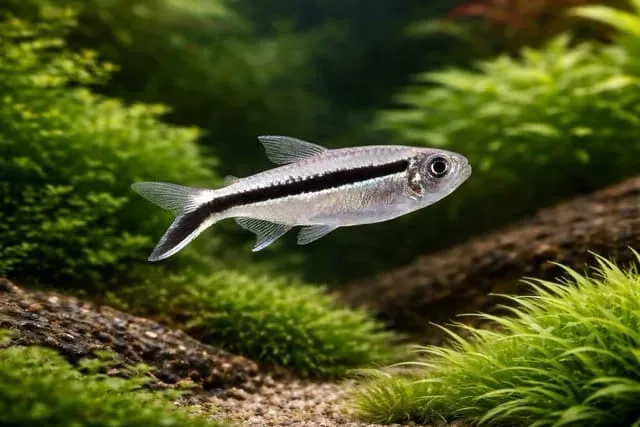
Illustrative images
Penguin Tetra
Thayeria boehlkei
Overview
The Penguin Tetra, scientifically known as Thayeria boehlkei, is a small freshwater fish that is popular among aquarists for its striking appearance and peaceful nature. Native to the waters of South America, particularly in Brazil, these fish are often found in slow-moving streams and rivers, where they thrive in schools. Their unique coloration and behaviors make them a fantastic addition to community tanks.
Natural Habitat
In the wild, Penguin Tetras inhabit the clear and slow-moving waters of the Amazon basin. They prefer shaded areas provided by overhanging vegetation, where they can find both protection from predators and a variety of food sources. The natural environment plays a significant role in the well-being of these fish, influencing their dietary habits and social interactions.
Care Requirements
Penguin Tetras are relatively easy to care for, making them suitable for both beginners and experienced aquarists. They require a well-maintained aquarium with stable water conditions to thrive. Here are some care essentials:
- Water Type: Freshwater
- pH: Ideally between 6.0 and 7.0
- Temperature: Maintain a range of 22°C to 28°C
- Hardness: Soft to moderately hard water is preferred
Tank Setup
When setting up a tank for Penguin Tetras, consider the following:
- Size: A minimum tank size of 60 liters is recommended to provide ample swimming space.
- Environment: Use plants, driftwood, and other decorations to create hiding spots and mimic their natural habitat.
- Lighting: Moderate lighting is ideal, as it encourages plant growth while not overwhelming the fish.
Compatibility
Penguin Tetras are known for their peaceful temperament and do well in community tanks. They are best kept in groups of at least 6, as this helps reduce stress and encourages natural schooling behaviors. Suitable tank mates include:
- Other tetras (e.g., Neon Tetra, Cardinal Tetra)
- Small rasboras
- Your favorite cyprinids
Feeding
As omnivores, Penguin Tetras have a varied diet. They thrive on high-quality flake foods, but will also enjoy frozen or live foods such as:
- Brine shrimp
- Daphnia
- Bloodworms
Be sure to supplement their diet with plant matter, such as spirulina or algae flakes, to ensure balanced nutrition.
Conclusion
Overall, the Penguin Tetra is a wonderful choice for any community aquarium. Their vibrant colors, peaceful nature, and social behavior make them captivating to observe. With proper care and a suitable tank setup, they can thrive in your aquarium for several years.
How to care for Penguin Tetra
- 1
Set up the tank
Use a minimum 30-gallon tank with a well-planted environment, leaving open swimming areas. Ensure the tank is fully cycled before introducing the fish.
- 2
Acclimate slowly
Introduce Penguin Tetras to the tank gradually to minimize stress and allow them to adjust to the new environment.
- 3
Maintain water parameters
Keep the water temperature between 72-82°F (22-28°C) and pH between 6.0 and 7.5. Regularly monitor water quality to maintain stability.
- 4
Feed appropriately
Provide a varied diet including high-quality flakes or pellets, supplemented with live or frozen foods like brine shrimp and bloodworms.
- 5
Monitor tank mates
Keep Penguin Tetras with other peaceful, non-predatory species. Avoid long-finned fish to prevent fin nipping.
Frequently asked questions
What is the ideal tank size for Penguin Tetras?▾
A minimum of 30 gallons (113 liters) is recommended for a school of 6-8 Penguin Tetras to provide ample swimming space.
What water temperature do Penguin Tetras prefer?▾
They thrive in temperatures between 72-82°F (22-28°C).
What is the maximum size of a Penguin Tetra?▾
Adult Penguin Tetras can reach up to 3 inches (7.5 cm) in length.
What is the lifespan of Penguin Tetras?▾
They can live up to 5 years in captivity.
What is the natural diet of Penguin Tetras?▾
In the wild, they feed on worms, small insects, and crustaceans.