

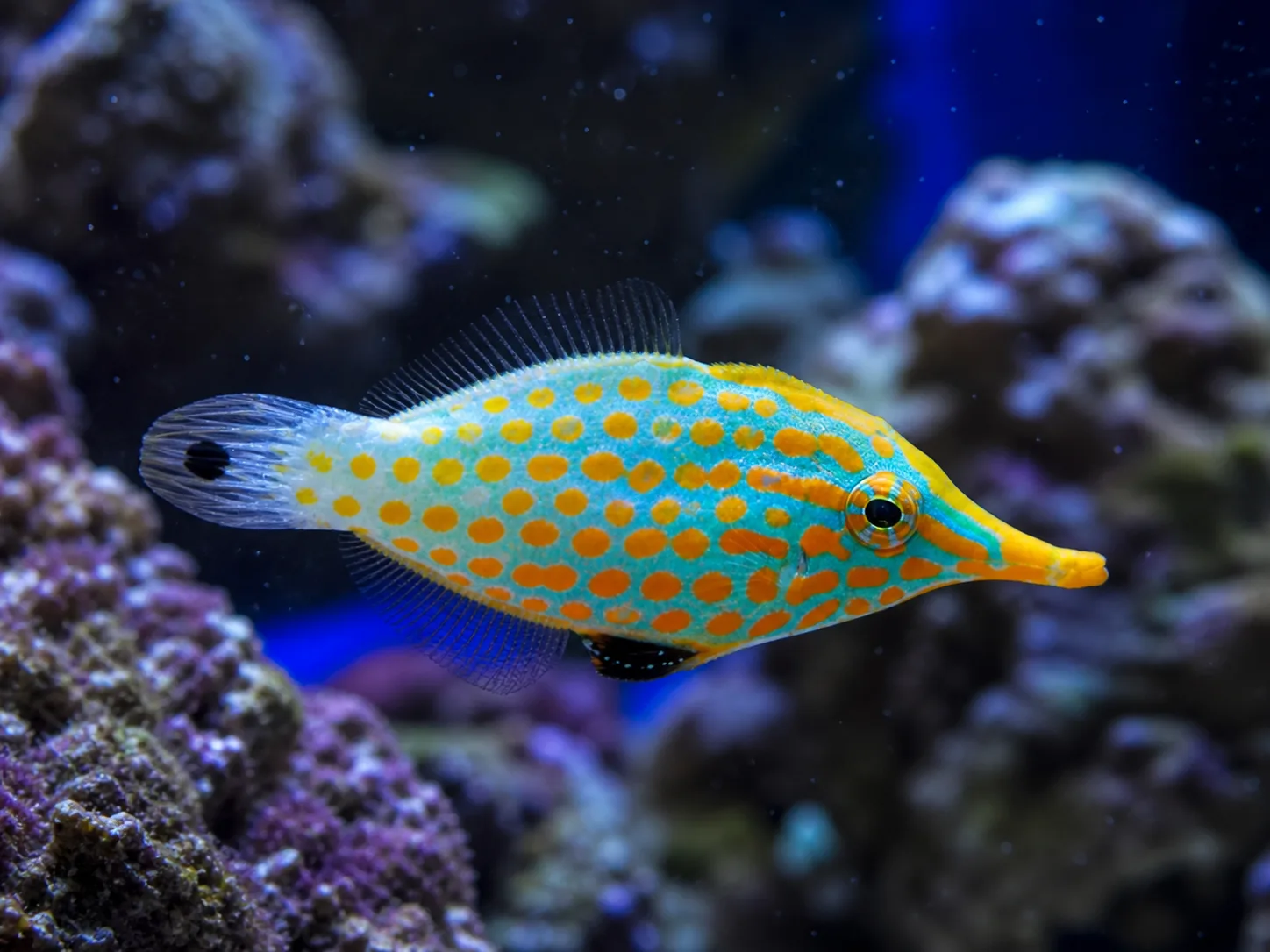
Illustrative images
Orange Spotted Filefish
Oxymonacanthus longirostris
Overview
The Orange Spotted Filefish, known scientifically as Oxymonacanthus longirostris, is a unique species that captivates hobbyists with its striking appearance and interesting behavior. With its vibrant orange spots against a bluish-green body, this fish is a lovely addition to a marine aquarium.
Natural Habitat
This species is typically found in shallow waters of the Indo-Pacific region, often around coral reefs. They thrive in areas with abundant algae, which forms a significant part of their diet in the wild.
Care Requirements
Caring for the Orange Spotted Filefish can be moderately challenging due to its specific dietary needs and sensitivity to water conditions. It is essential to provide a stable environment to ensure the health and wellbeing of the fish.
Tank Setup
When setting up a tank for Orange Spotted Filefish, consider the following:
- Minimum Tank Size: A minimum of 200 liters is recommended for a single fish.
- Tank Mates: They can be housed with other peaceful marine species, but care should be taken to avoid aggressive tankmates.
- Decor: Include rocky structures and plenty of hiding spots to mimic their natural habitat.
- Water Quality: It is vital to maintain excellent water quality with frequent changes and appropriate filtration.
Compatibility
The Orange Spotted Filefish is generally peaceful but may show territorial behavior towards its own kind or similar species. Suitable tank mates include smaller fish and peaceful species, avoiding larger or aggressive fish.
Feeding
This fish's diet typically consists of algae and small invertebrates. In captivity, it can be fed a variety of foods, including:
- Marine algae
- Dry and frozen foods
- Specialty mixes designed for herbivorous fish
It is important to provide a varied diet to ensure optimal health.
Lighting and CO2
Moderate lighting is suitable for Orange Spotted Filefish, as it encourages the growth of natural algae in the tank, which they may graze on. CO2 supplementation is generally not required but can enhance the overall health of live plants if included in the aquascape.
Conclusion
Overall, the Orange Spotted Filefish is a colorful and engaging species that can add interest and beauty to a marine aquarium. With the right care and environment, they can thrive and provide enjoyment to their keepers.
How to care for Orange Spotted Filefish
- 1
Set up a well-established tank
Ensure the aquarium is well-established with live Acropora corals to provide a natural food source for the Orange Spotted Filefish.
- 2
Acclimate the fish slowly
Acclimate the Orange Spotted Filefish slowly to the aquarium to reduce stress and prevent shock.
- 3
Maintain stable water parameters
Regularly monitor and maintain water parameters within the ideal ranges: temperature 72-78°F (22-26°C), salinity 1.020-1.025, pH 8.1-8.4, and alkalinity 8-12 dKH.
- 4
Provide a varied diet
Offer a diet that includes live Acropora coral polyps, supplemented with vitamin-enriched marine flakes and pellets to support health and coloration.
Frequently asked questions
What is the natural diet of the Orange Spotted Filefish?▾
The Orange Spotted Filefish primarily feeds on Acropora coral polyps in the wild.
What is the maximum size of the Orange Spotted Filefish?▾
The Orange Spotted Filefish can grow up to 5 inches (12 cm) in length.
Is the Orange Spotted Filefish reef-safe?▾
No, the Orange Spotted Filefish is not reef-safe as it feeds on live corals, particularly Acropora species.
What is the recommended minimum tank size for the Orange Spotted Filefish?▾
A minimum tank size of 30 gallons (113 liters) is recommended for the Orange Spotted Filefish.
What are the ideal water parameters for the Orange Spotted Filefish?▾
The ideal water parameters for the Orange Spotted Filefish are a temperature of 72-78°F (22-26°C), salinity of 1.020-1.025, pH of 8.1-8.4, and alkalinity of 8-12 dKH.