

Illustrative images
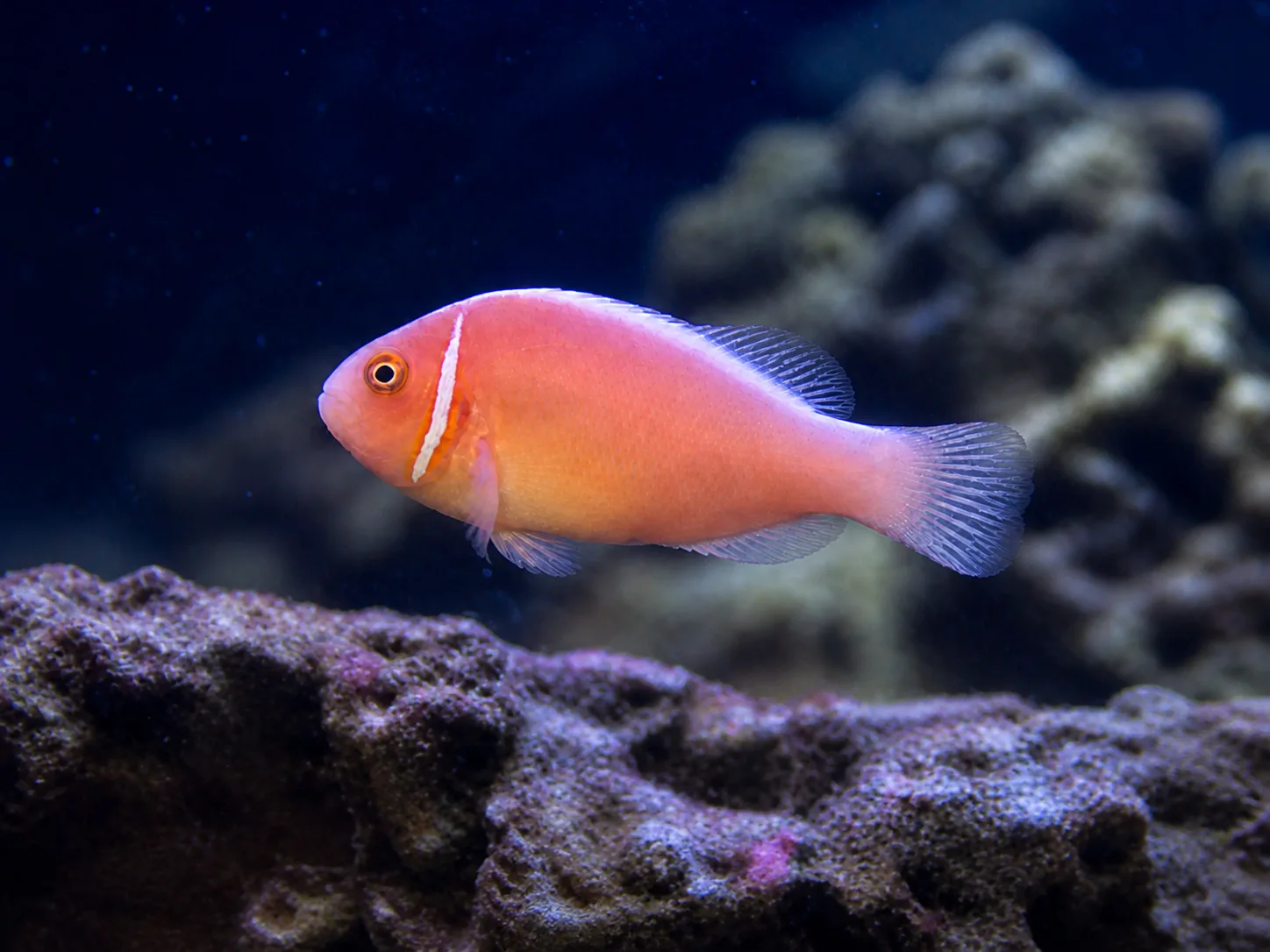
Orange Skunk Clownfish
Amphiprion sandaracinos
Overview
The Orange Skunk Clownfish, scientifically known as Amphiprion akindynos, is a popular marine fish among aquarium enthusiasts. This species is cherished for its striking orange coloration and unique patterning, making it a vibrant addition to any marine tank. These clownfish are known for their symbiotic relationship with anemones, which provide them protection from predators while benefiting from the clownfish's presence.
Natural Habitat
Orange Skunk Clownfish are typically found in the warm, shallow reefs of the Pacific Ocean, particularly around Indonesia, the Philippines, and parts of Australia. They inhabit rocky crevices and associate closely with sea anemones, often residing within their tentacles.
Care Requirements
Taking care of Orange Skunk Clownfish in an aquarium setting requires attention to their specific needs:
- Tank Size: A minimum tank size of 75 liters (20 gallons) is recommended for a pair.
- Water Conditions: Maintain stable water parameters, including a temperature between 24-28°C (75-82°F) and specific gravity of 1.020-1.025.
- pH Level: Optimal pH should be between 7.8 and 8.4.
Tank Setup
For an ideal habitat, use a well-structured aquarium with live rock, which provides hiding spots and mimics their natural environment. Including one or two anemones not only enhances the aesthetics but also helps the clownfish feel secure. Be sure to provide areas for swimming and grazing.
Compatibility
Orange Skunk Clownfish are generally peaceful but can be territorial, especially towards other clownfish. It's best to keep them in pairs or small groups, ideally with similar species that are not overly aggressive. They can coexist with a variety of reef-safe fish, but avoid aggressive species.
Feeding
This species is omnivorous. Provide a varied diet, which can include high-quality fish flakes, pellets, and frozen foods like brine shrimp and mysis shrimp. Regular feeding will promote vibrant color and healthy growth.
Lighting and CO2
Moderate lighting is suitable for the aquarium housing Orange Skunk Clownfish. They do not require special CO2 supplementation; however, maintaining good water quality and regular water changes is essential for the health of both the clownfish and their anemone partners.
Lifespan
With proper care, the Orange Skunk Clownfish can live up to 6-10 years in an aquarium environment.
How to care for Orange Skunk Clownfish
- 1
Set up the tank
Use a minimum 100-liter (26-gallon) tank with live rock and hiding spots to replicate their natural reef environment.
- 2
Acclimate slowly
Introduce the clownfish to the tank gradually to reduce stress and allow them to adjust to the new environment.
- 3
Maintain water parameters
Keep water temperature between 24-27°C (75-81°F), salinity at 1.023-1.026 specific gravity, and pH between 8.0 and 8.4.
- 4
Provide a varied diet
Offer high-quality marine flakes or pellets, supplemented with frozen or live foods like brine shrimp and chopped seafood.
- 5
Monitor tank mates
Keep them with peaceful reef species and avoid aggressive tank mates to prevent stress and aggression.
Frequently asked questions
What are the ideal water parameters for Orange Skunk Clownfish?▾
Maintain water temperature between 24-27°C (75-81°F), salinity at 1.023-1.026 specific gravity, and pH between 8.0 and 8.4 for optimal health.
What is the recommended tank size for Orange Skunk Clownfish?▾
A minimum tank size of 100 liters (26 gallons) is recommended to provide ample space for swimming and interaction.
What is the maximum size of Orange Skunk Clownfish?▾
Females can grow up to 11 cm (4.5 inches) in length, while males typically reach 3-6.5 cm (1.2-2.6 inches).
What is the lifespan of Orange Skunk Clownfish in captivity?▾
With proper care, Orange Skunk Clownfish can live up to 10 years in captivity.
What is the natural habitat of Orange Skunk Clownfish?▾
They are native to the Indo-Pacific region, including the Great Barrier Reef, Solomon Islands, and the Philippines, inhabiting coral reefs and lagoons.