

Illustrative images
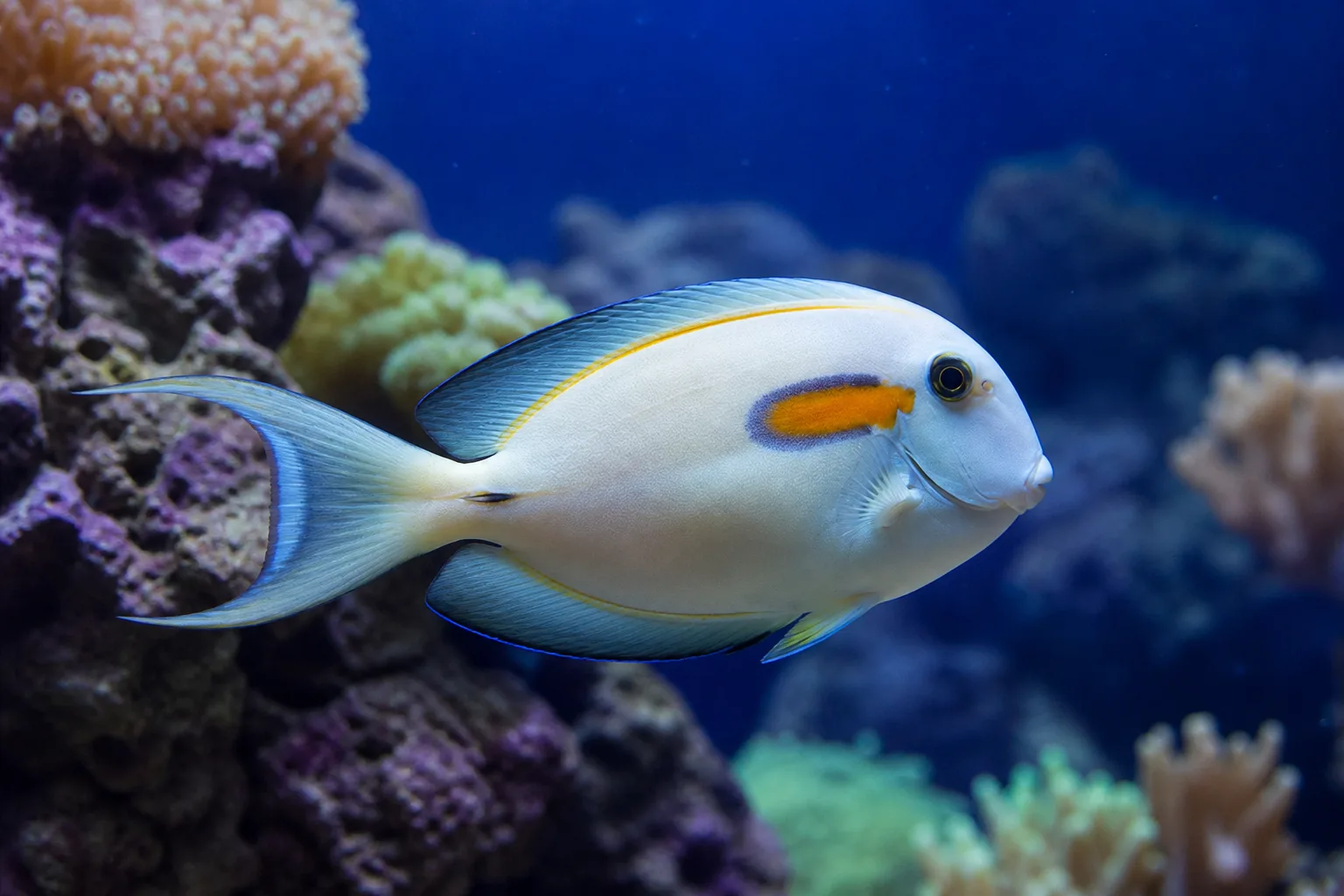
Orange Shoulder Tang
Acanthurus olivaceus
Overview
The Orange Shoulder Tang, scientifically known as Acanthurus olivaceus, is a popular marine fish among aquarium enthusiasts. This species is easily recognizable by its striking coloration, featuring a predominantly blue body with a bright orange patch on its shoulder.
Natural Habitat
In the wild, Orange Shoulder Tangs are native to the reefs of the Indo-Pacific region, particularly around the islands of Micronesia, Fiji, and Hawaii. They thrive in shallow waters and are often found in rocky areas and coral reefs, where they graze on algae.
Care Requirements
Tank Setup
For an Orange Shoulder Tang, a minimum tank size of 50 gallons is recommended to provide plenty of swimming space. The tank should be well-established with ample live rock to replicate their natural habitat. Include hiding spots and plenty of open swimming space to allow for natural behaviors.
Water Conditions
Maintain stable water parameters for optimal health. A pH between 8.1 and 8.4 with a salinity of 1.020 to 1.025 is ideal. Regular water changes and good filtration are crucial to maintain water quality.
Compatibility
Orange Shoulder Tangs are generally peaceful but can exhibit territorial behavior, especially towards their own kind. It is advisable to keep them with non-aggressive tank mates. Suitable companions include other tangs, clownfish, and various species of wrasses.
Feeding
Orange Shoulder Tangs are herbivores and primarily feed on algae in the wild. In captivity, provide them with a varied diet consisting of high-quality marine algae, pellets, and occasional greens such as spinach or romaine lettuce. Feeding multiple times a day is recommended to keep them healthy and active.
Lifespan
With proper care, the Orange Shoulder Tang can live for 10 to 15 years in captivity, making it a long-term commitment for aquarists.
How to care for Orange Shoulder Tang
- 1
Set up a spacious tank
Provide a minimum of 180 gallons of water with ample swimming space and established rockwork for grazing.
- 2
Acclimate the fish slowly
Introduce the Orange Shoulder Tang to the tank gradually to reduce stress and allow it to adjust to its new environment.
- 3
Maintain stable water parameters
Keep the water temperature between 75°F and 82°F (24°C to 28°C), pH between 8.1 and 8.4, and salinity at 1.025 to 1.026.
- 4
Provide a varied diet
Offer a mix of marine-based algae, high-quality pellets, and occasional frozen or live foods to meet nutritional needs.
- 5
Monitor tank mates
Ensure compatibility with other species, as Orange Shoulder Tangs can be territorial, especially towards other tangs.
Frequently asked questions
What size tank does an Orange Shoulder Tang need?▾
An Orange Shoulder Tang requires a minimum tank size of 180 gallons to accommodate its active swimming behavior and adult size.
What is the natural diet of an Orange Shoulder Tang?▾
In the wild, Orange Shoulder Tangs are primarily herbivores, feeding on algae and organic films from hard surfaces.
How does the coloration of an Orange Shoulder Tang change as it matures?▾
Juvenile Orange Shoulder Tangs are bright yellow, while adults develop a grayish-brown body with a distinctive orange band near the shoulder.
Are Orange Shoulder Tangs reef-safe?▾
Yes, Orange Shoulder Tangs are generally reef-safe, but they may nip at fleshy corals if not adequately fed.
What water temperature is ideal for an Orange Shoulder Tang?▾
The optimal water temperature for an Orange Shoulder Tang is between 75°F and 82°F (24°C to 28°C).
Can Orange Shoulder Tangs be kept with other tangs?▾
Orange Shoulder Tangs can be territorial, especially towards other tangs or similarly shaped fish, so careful monitoring is necessary.