

Illustrative images
Nerite Snail
Vittina natalensis
Overview
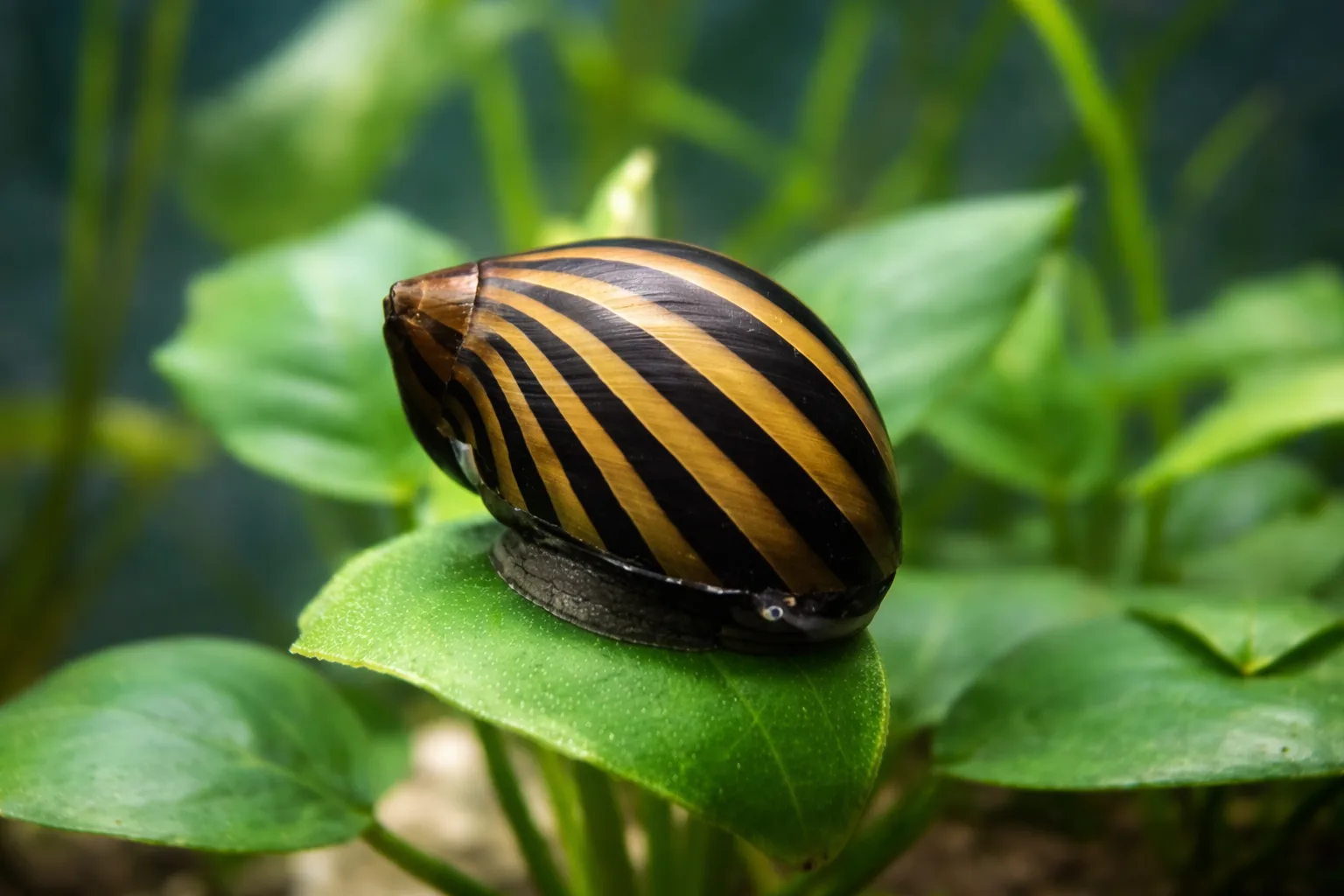
The Nerite Snail, belonging to the family Neritidae, is a popular choice among aquarium enthusiasts for its unique coloring and patterns. These snails are known for their ability to graze on algae, making them a natural solution for algae control in freshwater aquariums. They are also appreciated for their peaceful disposition and compatibility with various tank mates.
Natural Habitat
Nerite Snails are typically found in brackish waters along the coastlines of Africa and the Pacific Islands. They thrive in environments with plenty of algae and plant matter, which they feed on. In their natural habitat, they often inhabit rocky substrates and mangroves where they can easily access their food source.
Care Requirements
Caring for Nerite Snails is relatively straightforward, making them suitable for both beginners and experienced aquarists. Here are some important care guidelines:
Tank Setup
A minimum tank size of 20 liters is recommended for a small group of Nerite Snails. A well-planted aquarium with open spaces for grazing will benefit these snails, as they enjoy browsing. Ensure that the tank has a secure lid, as Nerite Snails are known to climb and may escape from an open tank.
Water Parameters
- Temperature: Ideal range is 22-28°C.
- pH: Slightly acidic to neutral, around 6.5-8.0.
- Hardness: Moderately hard water is preferable, with general hardness (GH) around 10-20 dGH.
Feeding
Nerite Snails are primarily herbivores, feeding on algae and detritus. In a well-established aquarium, they will graze on the surfaces available. However, it is good practice to supplement their diet with algae wafers or blanched vegetables to ensure they receive adequate nutrition.
Compatibility
Nerite Snails are generally peaceful and can be kept with a variety of tank mates. They work well in community tanks with other peaceful species such as tetras, guppies, and other small fish. However, avoid keeping them with aggressive fish that might disturb or harm them.
Conclusion
In summary, the Nerite Snail is an excellent addition to a freshwater aquarium. They help in maintaining algae levels, are easy to care for, and are compatible with many tank mates. With the right conditions and care, they can thrive and enrich your aquarium environment.
How to care for Nerite Snail
- 1
Set up the tank
Choose a tank of at least 5 gallons with a secure lid to prevent escape. Provide smooth surfaces like rocks, driftwood, and glass for grazing.
- 2
Acclimate the snails
Introduce Nerite Snails slowly to the tank to minimize stress. Ensure water parameters match those of the tank to prevent shock.
- 3
Maintain water quality
Regularly test and adjust water parameters to keep temperature at 72-78°F (22-26°C), pH between 7.0-8.2, and hardness between 8-20 dGH. Perform regular water changes to keep ammonia and nitrite levels at 0 ppm, and nitrates below 40 ppm.
- 4
Feed appropriately
Provide algae wafers a few times per week and supplement with blanched vegetables like zucchini, cucumber, and spinach if natural algae is insufficient. Remove uneaten food within 24 hours to maintain water quality.
- 5
Monitor health
Regularly check the snails for signs of shell erosion or inactivity, which may indicate water quality issues or insufficient calcium.
Frequently asked questions
What water parameters do Nerite Snails need?▾
Nerite Snails require a temperature of 72-78°F (22-26°C), a pH of 7.0-8.2, and water hardness between 8-20 dGH. Ammonia and nitrite levels should be 0 ppm, with nitrates below 40 ppm.
How big do Nerite Snails get?▾
Nerite Snails typically reach up to 1 inch (2.5 cm) in diameter.
Can Nerite Snails reproduce in freshwater?▾
No, Nerite Snails cannot reproduce in freshwater. Their eggs require brackish or saltwater conditions to hatch.
What do Nerite Snails eat?▾
Nerite Snails are primarily herbivores, feeding on algae, biofilm, and decaying plant matter. In aquariums with limited algae, supplement their diet with blanched vegetables like zucchini, cucumber, spinach, and sinking algae wafers.
Are Nerite Snails compatible with other tank mates?▾
Yes, Nerite Snails are peaceful and can coexist with most community fish, such as bettas, tetras, guppies, and platies. Avoid housing them with large or aggressive species that might pose a threat.