

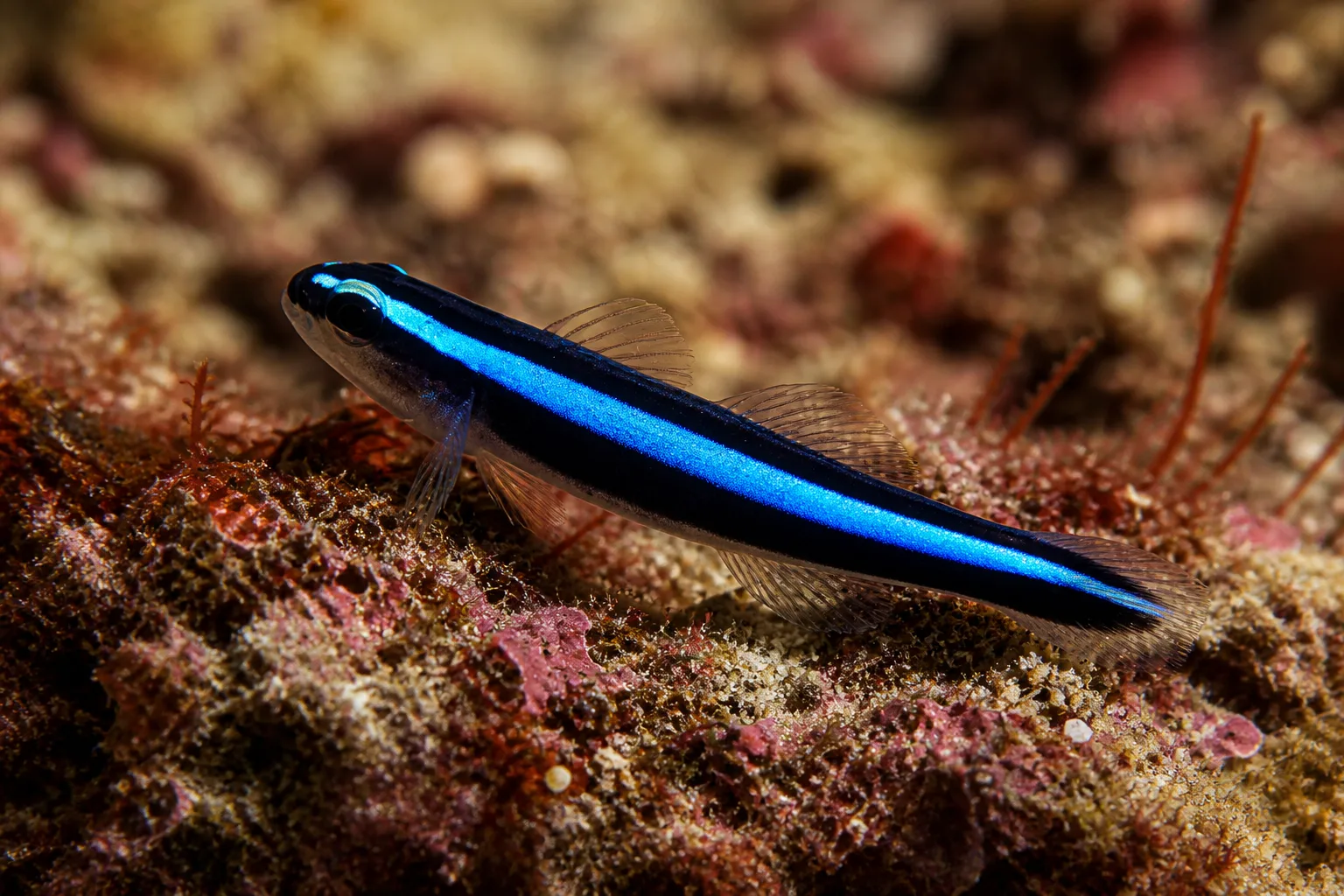
Illustrative images
Neon Goby
Elacatinus oceanops
Overview
The Neon Goby, scientifically known as Elacatinus tenuis, is a small, vibrant fish popular in the aquarium trade. Known for its striking blue and yellow coloration, this species is often found in pairs or small groups, making them an excellent addition to community tanks and reef aquariums.
Natural Habitat
Neon Gobies are native to the coral reefs of the Caribbean and South America. They typically inhabit shallow waters where they can find crevices and overhangs that provide shelter from predators. This environment also offers a plethora of food sources, which the Neon Goby actively seeks out.
Care Requirements
These fish are considered relatively easy to care for, making them suitable for both beginner and experienced aquarists. However, they thrive best in well-maintained tanks that mimic their natural habitat.
Tank Setup
A minimum tank size of 75 liters (20 gallons) is recommended for a small group of Neon Gobies. The enclosure should have plenty of hiding spots, such as live rock or artificial decorations, to reduce stress levels. Neon Gobies prefer a sandy substrate and will enjoy areas with gentle water flow.
Water Parameters
- Temperature: Ideally between 24°C and 28°C (75°F - 82°F).
- pH: A tolerant range of 8.0 to 8.4 is optimal.
- Salinity: This species requires marine conditions.
Compatibility
Neon Gobies are generally peaceful fish but can exhibit territorial behavior, especially toward their own kind. It is best to keep them in groups of at least three to minimize any aggressive behavior. Suitable tank mates include other small reef-safe fish, such as clownfish and blennies. Avoid larger aggressive species that may see them as food.
Feeding
In the wild, Neon Gobies primarily feed on small zooplankton and various microscopic organisms. In captivity, they thrive on a diet of high-quality marine flakes, frozen or live brine shrimp, and other meaty foods. It's essential to provide a varied diet to maintain their health and enhance their vibrant coloration.
Lighting and CO2 Requirements
Neon Gobies do not have specific lighting requirements, but a standard aquarium light suitable for a reef tank will suffice. CO2 injection is not necessary for their care, but maintaining stable water parameters is crucial to their overall wellbeing.
Lifespan
When properly cared for, Neon Gobies can live for around 3 to 5 years in a home aquarium.
How to care for Neon Goby
- 1
Set up the tank
Prepare a well-established aquarium with live rock and caves to provide hiding places and grazing areas for the Neon Goby.
- 2
Acclimate slowly
Introduce the Neon Goby to the aquarium gradually to minimize stress and allow it to adjust to the new environment.
- 3
Maintain water parameters
Regularly monitor and maintain water temperature between 75-80°F (24-27°C), pH between 8.1-8.4, and salinity between 1.020-1.025 specific gravity.
- 4
Provide a varied diet
Feed the Neon Goby a balanced diet of frozen foods, flake foods, and live foods to ensure optimal health.
- 5
Monitor tank mates
Ensure that other fish are compatible and that the Neon Goby is not exhibiting territorial behavior towards its own species.
Frequently asked questions
What are the ideal water parameters for Neon Gobies?▾
Neon Gobies thrive in water with a temperature of 75-80°F (24-27°C), a pH of 8.1-8.4, and a salinity of 1.020-1.025 specific gravity.
What size tank is suitable for Neon Gobies?▾
A minimum tank size of 10 gallons (38 liters) is recommended to provide adequate space for Neon Gobies.
What do Neon Gobies eat?▾
Neon Gobies are omnivores, feeding on a varied diet including frozen foods, flake foods, and live foods.
Are Neon Gobies reef-safe?▾
Yes, Neon Gobies are reef-safe and can be kept in reef aquariums.
Can Neon Gobies live with other fish?▾
Neon Gobies are peaceful and can coexist with other species, but they may exhibit territorial behavior towards their own kind unless paired.