

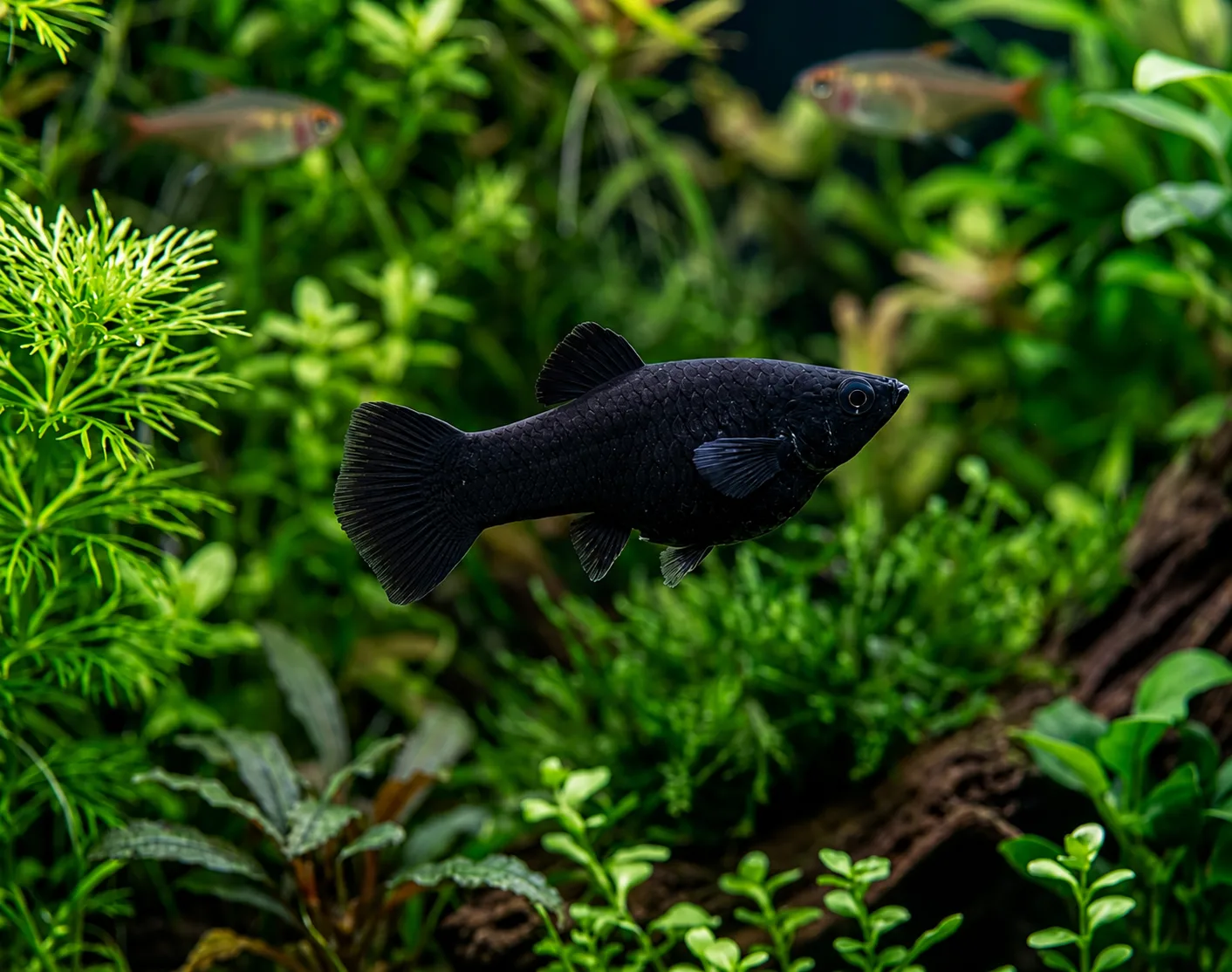
Illustrative images
Molly fish
Poecilia spp.
Overview
Molly fish, commonly referred to simply as "mollies", belong to the family Poeciliidae and are popular among aquarium enthusiasts. These freshwater fish are known for their hardiness and varying vibrant colors. They are peaceful and can make a great addition to community tanks.
Natural Habitat
Mollies are native to North America and can be found in a variety of fresh and brackish waters, including coastal lagoons, rivers, and streams. They tend to thrive in areas with plenty of vegetation and open swimming spaces.
Care Requirements
Tank Setup
When setting up a tank for molly fish, it's crucial to provide plenty of swimming space along with hiding spots in the form of plants or decorations. A tank size of at least 50 liters is recommended to accommodate a small group.
Water Parameters
Mollies prefer a slightly alkaline environment with a pH of around 7.5 to 8.5. They are adaptable but thrive best in warmer conditions, typically between 24°C to 28°C. Regular water changes will help maintain water quality.
Compatibility
Mollies are generally peaceful and can safely coexist with other community fish such as guppies, tetras, and other peaceful species. However, it's essential to avoid keeping them with aggressive fish as they can become stressed.
Feeding
Mollies are omnivores and their diet should include a mix of high-quality flake food, frozen or freeze-dried foods, and vegetable matter. They enjoy consuming algae, which makes them beneficial in controlling tank algae levels.
Lighting and CO2 Requirements
Moderate lighting is suitable for molly fish. Live plants in the aquarium can benefit from CO2 injection, but it’s not a strict necessity for the overall success of keeping mollies.
Conclusion
Overall, molly fish are resilient and adaptable, making them an ideal choice for both beginner and experienced aquarists. With proper care, including a balanced diet and suitable tank mates, mollies can thrive and bring a vibrant touch to your aquarium.
How to care for Molly fish
- 1
Set up the tank
Choose a tank of at least 20 gallons (80 liters) for a small group of mollies, ensuring it has a reliable filtration system to maintain water quality.
- 2
Acclimate slowly
Introduce mollies to the tank gradually to minimize stress, especially when adding new fish.
- 3
Maintain water parameters
Keep water temperature between 75–81°F (24–27°C), pH at 7.5–8.3, and hardness between 10–20 dGH. Regularly test ammonia, nitrite, and nitrate levels.
- 4
Feed appropriately
Provide a balanced diet of high-quality flake food, supplemented with green vegetables and live or frozen foods like bloodworms and brine shrimp.
- 5
Monitor health
Observe mollies regularly for signs of stress or disease, such as 'molly disease' (shimmying), and address issues promptly.
Frequently asked questions
What are the ideal water parameters for Molly fish?▾
Molly fish thrive in water temperatures of 75–81°F (24–27°C), a pH of 7.5–8.3, and hardness between 10–20 dGH. They can adapt to slightly brackish conditions with salinity up to 1.5 ppt.
What size tank is suitable for keeping Molly fish?▾
A minimum tank size of 20 gallons (80 liters) is recommended for a small group of mollies. For larger colonies, a 30-gallon (120-liter) tank is ideal, adding approximately 4 gallons (15 liters) for each additional molly.
What is the recommended male-to-female ratio for Molly fish?▾
To minimize aggressive behavior, keep one male for every two to three females in the tank.
What do Molly fish eat?▾
Molly fish are omnivorous and should be fed a balanced diet of high-quality flake food, supplemented with green vegetables like zucchini, cucumber, and peas, as well as live or frozen foods such as bloodworms, black worms, daphnia, and brine shrimp.
How can I prevent common health issues in Molly fish?▾
Maintain stable water conditions, avoid overcrowding, and provide a balanced diet to prevent issues like 'molly disease' (shimmying), ich, and fin rot.