

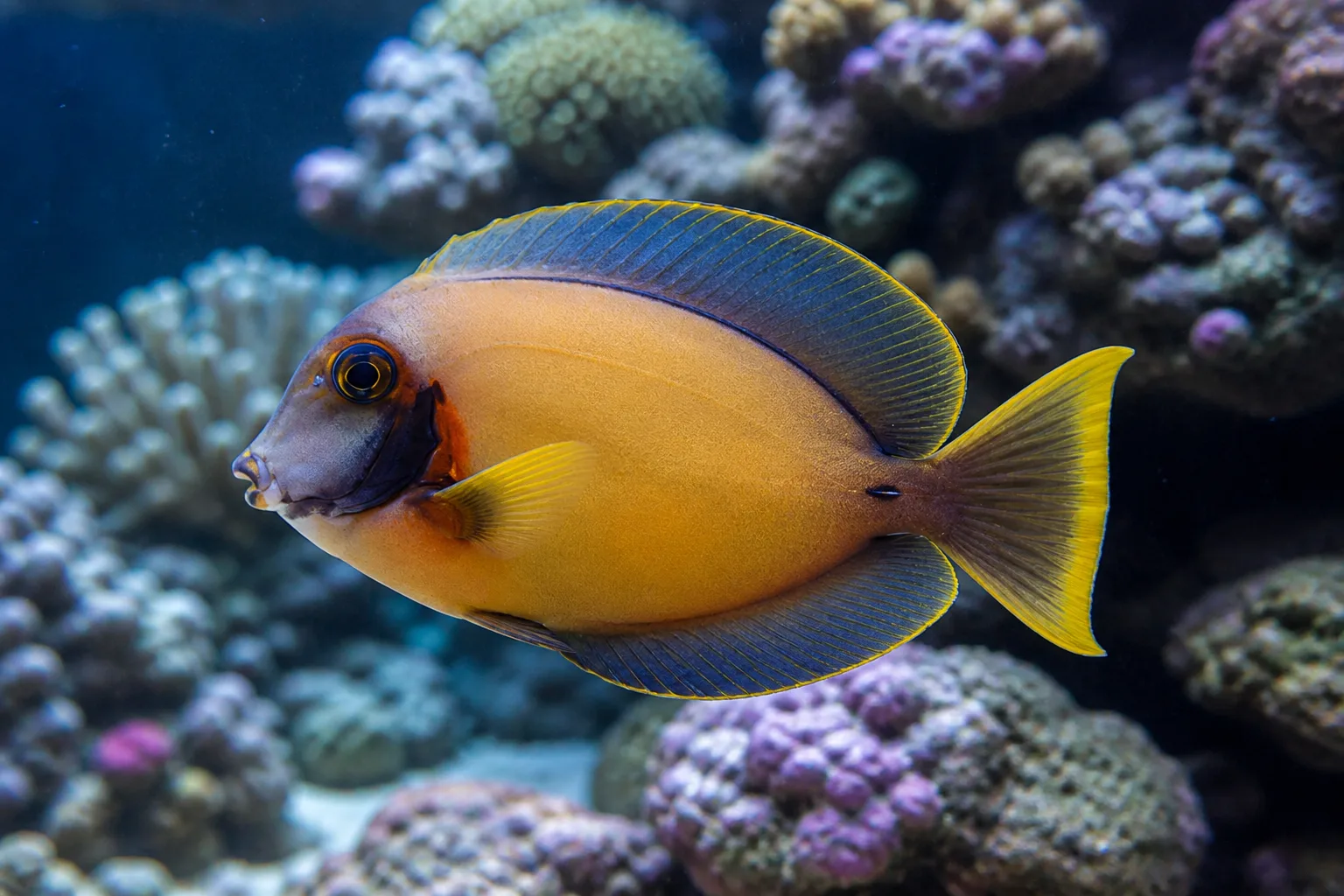
Illustrative images
Mimic Tang
Acanthurus pyroferus
Overview
The Mimic Tang, scientifically known as Acanthurus pyroferus, is an intriguing species that captivates both novice and experienced aquarists. This species is popularly known for its vibrant colors and mimicry of other tangs, allowing it to blend in effortlessly with its surroundings. Originating from the Indo-Pacific region, the Mimic Tang is known for its striking appearance and social nature.
Natural Habitat
Mimic Tangs are typically found in reef environments, residing in shallow waters where they can easily navigate around the rocky structures and coral formations. They are often seen swimming in schools, which provides them with protection from predators. Their natural habitats include lagoons and coral reefs, where they graze on algae and other plant materials.
Care Requirements
Caring for a Mimic Tang requires attention to various factors to ensure a healthy and thriving fish. It is essential to provide a spacious aquarium with plenty of hiding spots and swimming space, as these fish are active swimmers.
Tank Setup
The minimum tank size recommended for a Mimic Tang is typically around 200 liters (53 gallons) to accommodate their active swimming behavior. The tank should include rocks, caves, and a sandy substrate to mimic their natural environment. Utilizing live rock can also aid in maintaining water quality by providing beneficial bacteria.
Compatibility
Mimic Tangs are generally peaceful but can be territorial, especially towards other tangs. It is best to house them with other peaceful species, avoiding any overly aggressive tank mates. A social environment with a group of similar-sized fish is ideal as it reduces stress and stimulates natural behavior.
Feeding
Mimic Tangs are primarily herbivorous and thrive on a diet rich in marine algae. Offering high-quality algae sheets, spirulina flakes, and a variety of greens will help maintain their health and coloration. Additionally, it is beneficial to supplement their diet with occasional high-protein foods, such as brine shrimp or mysis shrimp, to ensure a balanced nutritional intake.
Lighting and Water Conditions
Optimal lighting for a Mimic Tang should replicate natural sunlight to encourage the growth of algae, which is essential for their diet. The water parameters should be kept stable, ideally within a temperature range of 24-27 °C (75-81 °F), with a pH level of around 8.1-8.4. Regular water changes and filtration are crucial to maintain the water quality for these sensitive fish.
Lifespan and Growth
Mimic Tangs can live for several years, often reaching a lifespan of up to 10 years in a well-maintained aquarium. With proper care, they can grow to an approximate maximum size of 30 cm (12 inches).
Conclusion
The Mimic Tang is a wonderful addition to a reef aquarium, bringing vibrant colors and lively activity to any setup. With the right care and environment, these fish can thrive, providing joy and interest to aquarists.
How to care for Mimic Tang
- 1
Set up the tank
Prepare a 125-gallon (473-liter) or larger aquarium with ample live rock to provide swimming space and territories.
- 2
Acclimate slowly
Introduce the Mimic Tang to the tank gradually to minimize stress and allow it to adjust to the new environment.
- 3
Maintain water parameters
Keep water temperature between 24-28°C (75-82°F), salinity at 1.020-1.025, and pH between 8.1-8.4.
- 4
Provide a varied diet
Offer a mix of marine-based seaweed and algae to ensure proper nutrition and reduce aggression.
- 5
Monitor behavior
Observe the Mimic Tang for signs of stress or aggression, especially towards other tangs or surgeonfish.
Frequently asked questions
What is the maximum size of a Mimic Tang?▾
Mimic Tangs can grow up to 29 cm (11.4 inches) in length.
What are the ideal water parameters for a Mimic Tang?▾
Maintain water temperature between 24-28°C (75-82°F), salinity at 1.020-1.025, and pH between 8.1-8.4.
What is the minimum tank size required for a Mimic Tang?▾
A minimum tank size of 125 gallons (473 liters) is recommended to accommodate a Mimic Tang.
What is the natural diet of a Mimic Tang?▾
Mimic Tangs are herbivores, feeding primarily on marine algae and seaweed.
Are Mimic Tangs reef-safe?▾
Yes, Mimic Tangs are generally considered reef-safe but may occasionally nip at LPS corals if underfed.