

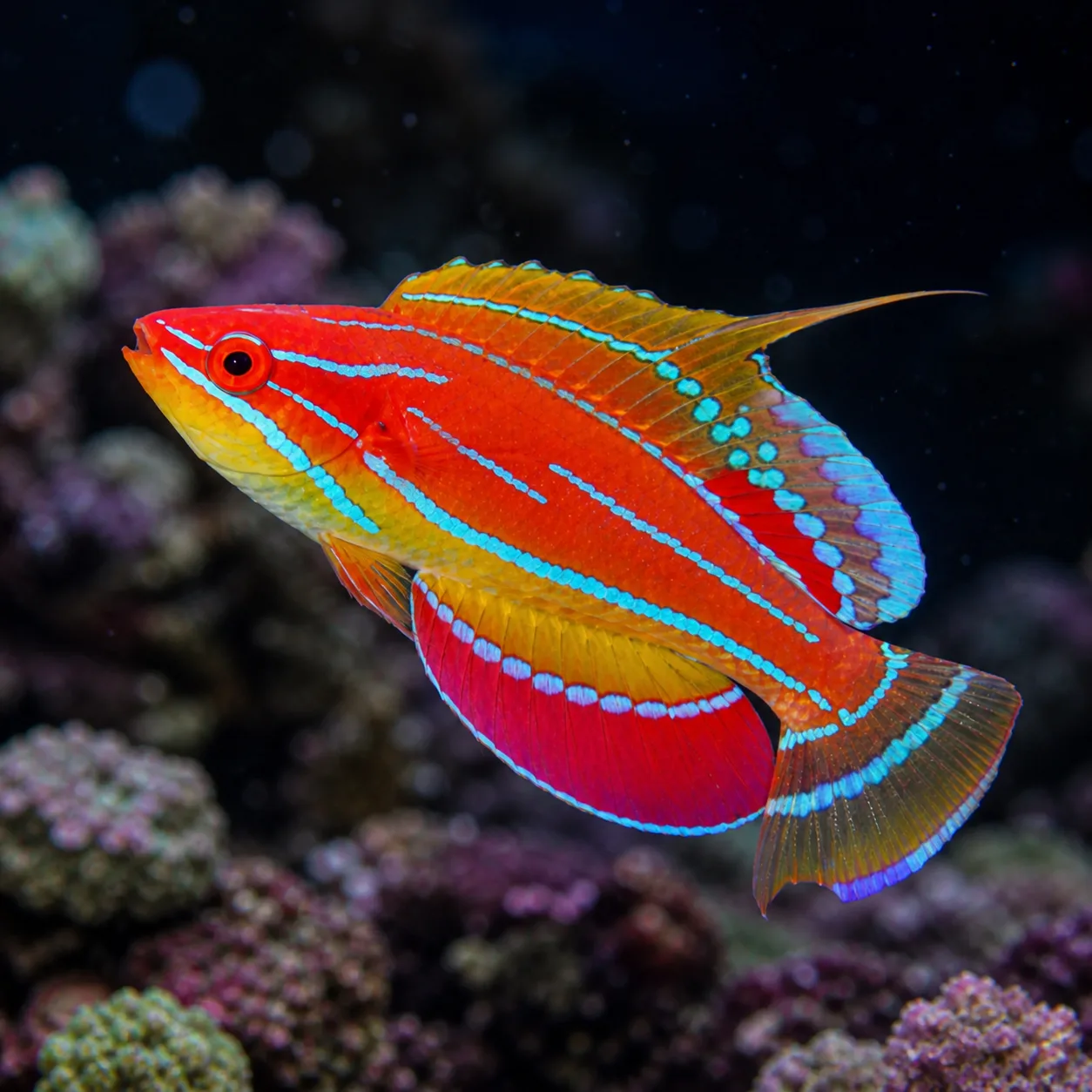
Illustrative images
McCosker's Flasher Wrasse
Paracheilinus mccoskeri
Overview
The McCosker's Flasher Wrasse, scientifically known as Novaculichthys macrolepidotus, is a beautiful and vibrant fish that is popular among marine aquarium enthusiasts. This species is known for its striking colors and fascinating behavior, making it a captivating choice for hobbyists.
Natural Habitat
McCosker's Flasher Wrasse is native to the coral reefs of the Indo-Pacific region, particularly around the Hawaiian Islands, and they often inhabit sandy or rubble bottoms near coral structures. They are typically found at depths ranging from 5 to 30 meters and are usually seen darting among the corals during the day.
Care Requirements
These fish are best suited for experienced aquarists due to their specific care needs and behavioral traits. McCosker's Flasher Wrasse requires a well-maintained marine aquarium with stable water parameters. They thrive in a tank with plenty of hiding spots created by live rock and sandy substrates. These elements mimic their natural habitat, providing them security and reducing stress.
Tank Setup
- Minimum Tank Size: 75 gallons is recommended for a single specimen or a small group.
- Water Type: Saltwater only.
- Filtration: Effective filtration is necessary to maintain high water quality.
- Lighting: Moderate lighting is ideal.
- Temperature Range: Ideally kept between 24°C and 27°C (75°F to 81°F).
- pH Level: Maintain a pH between 8.1 and 8.4.
Compatibility
McCosker's Flasher Wrasse are generally peaceful but may exhibit territorial behavior, especially towards their own kind. It is advisable to keep them in a species-specific tank or with other peaceful reef fish to avoid aggression. Ideally, they should be kept in groups with a ratio of one male to several females to reduce conflict. Avoid pairing them with overly aggressive species that could harass them.
Feeding
These wrasses are carnivorous and thrive on a varied diet. They should be offered high-quality live or frozen foods such as:
- Brine shrimp
- Mysis shrimp
- High-quality pellets and flakes
- Other meaty foods
Regular feedings of small amounts multiple times a day will promote health and vibrant coloration.
Lifespan
With proper care, McCosker's Flasher Wrasse can live for several years in captivity, typically ranging from 5 to 10 years, depending on the quality of care provided. Maintaining stable water parameters and a nutritious diet is crucial for their longevity.
Conclusion
The McCosker's Flasher Wrasse is a striking addition to any marine aquarium. With appropriate tank conditions and preventative measures against aggression, it can thrive and become a centerpiece in your setup. With careful attention to its needs, this colorful wrasse can be both a joy to observe and a rewarding part of your marine ecosystem.
How to care for McCosker's Flasher Wrasse
- 1
Set up the tank
Use a minimum 30-gallon (114-liter) tank with a tight-fitting lid to prevent jumping. Include live rock for hiding and hunting.
- 2
Acclimate slowly
Introduce the wrasse to the tank gradually to reduce stress and allow it to adjust to the new environment.
- 3
Maintain water parameters
Keep salinity at 1.020-1.025, pH between 8.1 and 8.4, and temperature between 72-78°F (22-26°C).
- 4
Provide a varied diet
Feed a mix of meaty foods like frozen mysis shrimp, brine shrimp, and quality marine flake and pellet foods.
- 5
Monitor tank mates
Ensure compatibility with other peaceful fish and avoid keeping multiple males to prevent aggression.
Frequently asked questions
What size tank does a McCosker's Flasher Wrasse need?▾
A minimum tank size of 30 gallons (114 liters) is recommended for McCosker's Flasher Wrasse.
What are the ideal water parameters for McCosker's Flasher Wrasse?▾
Maintain a salinity of 1.020-1.025, pH between 8.1 and 8.4, and a temperature range of 72-78°F (22-26°C).
What do McCosker's Flasher Wrasse eat?▾
They are carnivorous and enjoy a diet of meaty foods like frozen mysis shrimp, brine shrimp, and quality marine flake and pellet foods.
Are McCosker's Flasher Wrasse reef-safe?▾
Yes, they are reef-safe and will not harm corals or invertebrates.
Can McCosker's Flasher Wrasse live with other fish?▾
They are peaceful and can live with other non-aggressive fish but may display aggression towards members of the same species.