

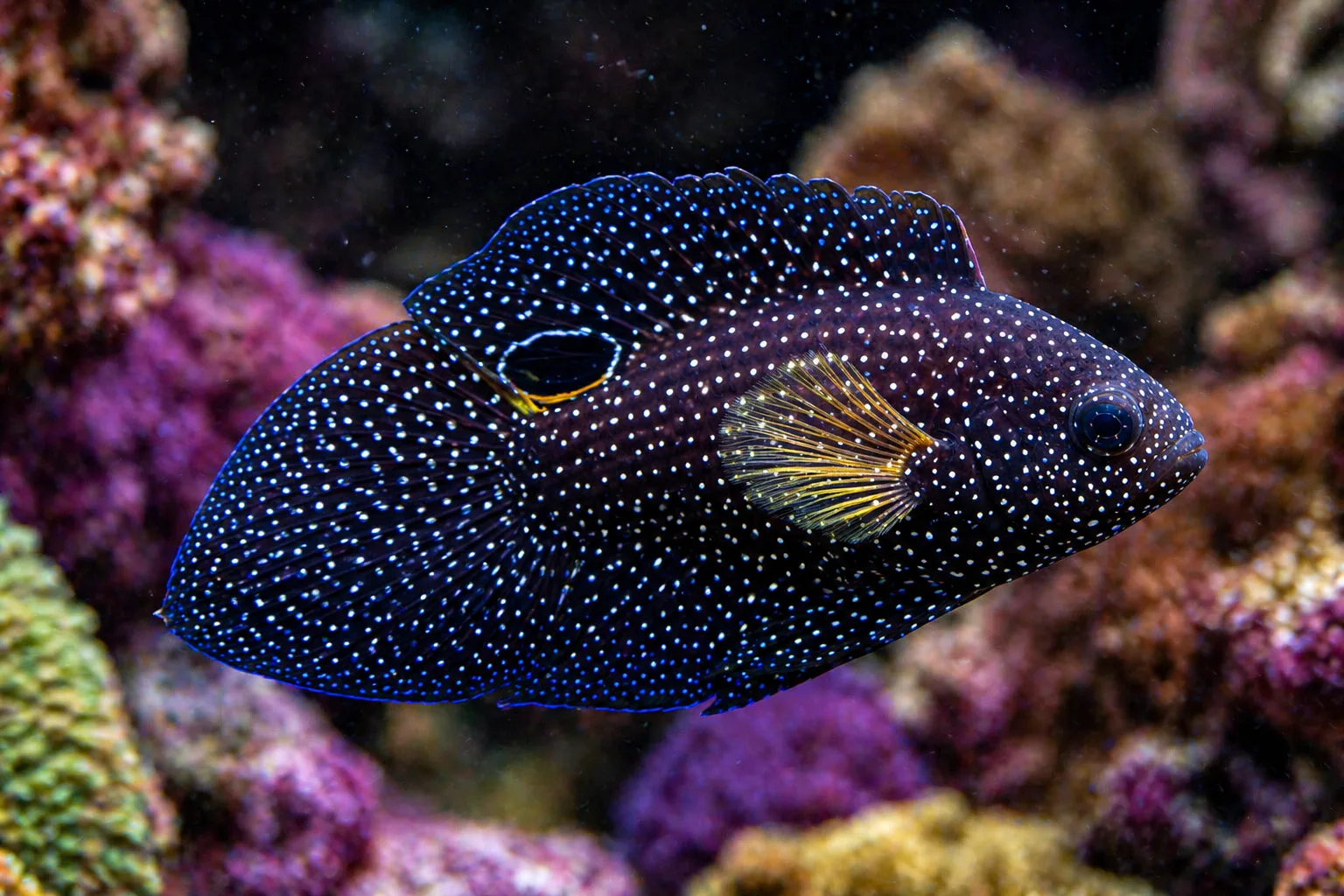
Illustrative images
Marine Betta
Calloplesiops altivelis
Overview
The Marine Betta, scientifically known as Calloplesiops altivelis, is a captivating fish native to the coral reefs of the Indo-Pacific region. Known for its striking appearance and intriguing behavior, this species is a popular choice among marine aquarium enthusiasts.
Natural Habitat
The Marine Betta can typically be found in sandy and coral-rich environments at depths ranging from 10 to 50 meters. Its natural habitat allows it to exhibit its natural behaviors, such as lurking in crevices and caves, which provides excellent shelter and security.
Care Requirements
Marine Bettas are considered to have a medium care level due to their specific needs and behaviors. Here are some essential care requirements:
- Tank Size: A minimum tank size of 150 liters is recommended to provide ample swimming space and hiding spots.
- Water Parameters: Maintain stable water parameters, including a temperature range of 24-28°C and a pH level between 8.1 and 8.4.
- Filtration: Excellent filtration is essential to keep the water quality high, as Marine Bettas are sensitive to poor water conditions.
Tank Setup
Creating a suitable environment for Marine Bettas involves the addition of live rock and caves to mimic their natural habitat. These structures not only provide hiding spots but also contribute to a healthy ecosystem within the aquarium.
Compatibility
Marine Bettas can be semi-aggressive and may exhibit territorial behavior, especially in smaller tanks. Ideal tank mates include:
- Peaceful reef fish such as clownfish and gobies
- Other non-aggressive species
Avoid keeping them with overly aggressive fish or species that resemble them in size and shape to reduce the risk of territorial disputes.
Feeding
In terms of diet, Marine Bettas are carnivorous. Offering a varied diet of high-quality frozen or live foods, such as:
- Brine shrimp
- Mysis shrimp
- Other small marine foods
They may also accept high-quality pellets designed for carnivorous fish. Regular feeding with a variety of foods is crucial for maintaining their health and vibrancy.
Lifespan
With proper care, Marine Bettas can live around 5 to 10 years, making them a rewarding addition to any marine aquarium.
Conclusion
The Marine Betta is a stunning choice for hobbyists seeking a unique and beautiful fish for their reef aquarium. Through careful attention to their care requirements, tank setup, and compatibility choices, you can enjoy observing this interesting species thrive in your aquatic environment!
How to care for Marine Betta
- 1
Set up the tank
Use a well-established 75-gallon or larger aquarium with plenty of rockwork, caves, and crevices to provide hiding spots.
- 2
Acclimate slowly
Introduce the Marine Betta using an acclimation box to monitor its behavior and ensure a smooth transition.
- 3
Maintain water parameters
Keep salinity at 1.020-1.025, temperature between 72-78°F (22-26°C), pH 8.1-8.4, and alkalinity 8-12 dKH.
- 4
Feed appropriately
Offer a varied diet of meaty foods like brine shrimp, krill, and small pieces of fish; feed small, frequent meals throughout the day.
- 5
Monitor tank mates
Keep with other peaceful fish, avoiding aggressive species that might harass the Marine Betta.
Frequently asked questions
What are the ideal water parameters for Marine Bettas?▾
Maintain a salinity of 1.020-1.025, temperature between 72-78°F (22-26°C), pH 8.1-8.4, and alkalinity 8-12 dKH.
What size tank is suitable for a Marine Betta?▾
A minimum aquarium size of 75 gallons is recommended to accommodate their size and provide ample hiding spaces.
What do Marine Bettas eat?▾
They are carnivorous, feeding on small fish and crustaceans; in captivity, offer a varied diet of meaty foods like brine shrimp and krill.
Are Marine Bettas reef-safe?▾
Yes, they are generally considered reef-safe but may feed on small invertebrates like ornamental shrimp.
How do Marine Bettas behave in an aquarium?▾
They are nocturnal and reclusive, often hiding during the day and becoming more active at night.