

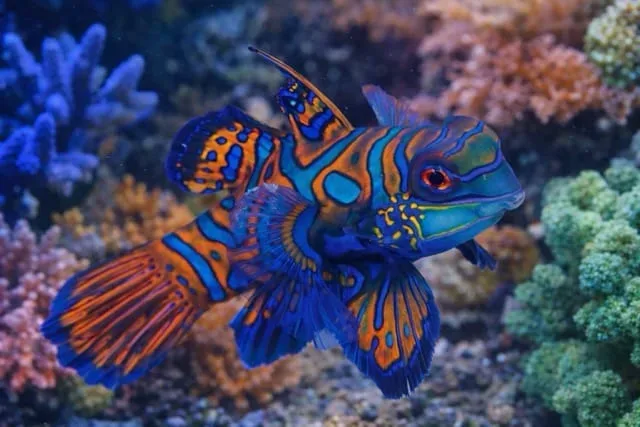
Illustrative images
Mandarinfish
Synchiropus splendidus
Overview
The Mandarinfish, scientifically known as Synchiropus splendidus, is a small, brightly colored fish native to the coral reefs of the Pacific Ocean. Its vibrant blue body, accented with orange and green patterns, makes it a popular choice among marine aquarium enthusiasts. This fish is known for its unique behavior and peaceful temperament, making it an attractive addition to community tanks.
Natural Habitat
Mandarinfish are found predominantly in shallow lagoons and coral reefs, primarily around the areas of the Western Pacific, including the Great Barrier Reef and the islands of Palau and Micronesia. They prefer environments with lots of hiding spots, such as crevices and coral, where they can rest and hunt for food.
Care Requirements
Mandarinfish are relatively hard to care for compared to more common aquarium species. They have specific requirements that must be met for them to thrive in captivity.
Tank Setup
When setting up a tank for Mandarinfish, it is essential to provide plenty of hiding spots and open swimming space. A minimum tank size of 100 liters is recommended to ensure they have enough room to swim and explore. Live rock is crucial as it not only supports filtration but also serves as a habitat and breeding ground for their natural food sources.
Water Conditions
Maintaining stable water conditions is vital for the health of Mandarinfish:
- Temperature: 24°C to 28°C
- Salinity: 1.020 to 1.025
- pH: 8.1 to 8.4
Feeding
Mandarinfish are renowned for their picky eating habits. In the wild, they mostly feed on small invertebrates, which can be challenging to replicate in an aquarium setting. It is recommended to provide live foods, such as copepods and amphipods, as they are essential for their nutrition. Additionally, formulated foods that cater to their dietary needs can be offered, but acceptance remains variable.
Compatibility
Mandarinfish are generally peaceful but require careful consideration when choosing tank mates. They do well with other peaceful reef fish, but caution is advised around aggressive species, which may stress them out. Keeping them with similar-sized fish that do not compete for food is ideal. Avoid mixing them with other mandarin-like species to reduce territorial disputes.
Conclusion
The Mandarinfish can be a stunning centerpiece in a marine aquarium, but it requires specific conditions and husbandry practices to thrive. With careful planning and regular maintenance, this captivating species can provide much enjoyment to hobbyists.
How to care for Mandarinfish
- 1
Set up the tank
Prepare a mature aquarium of at least 30 gallons with ample live rock to provide shelter and a natural food source for the Mandarinfish.
- 2
Acclimate slowly
Introduce the Mandarinfish to the tank gradually to minimize stress and allow it to adjust to the new environment.
- 3
Maintain water parameters
Keep the water temperature between 24-27°C (75-81°F), pH at 8.1-8.4, and salinity at 1.023-1.026 specific gravity.
- 4
Provide a suitable diet
Feed the Mandarinfish a variety of live and frozen foods, including copepods, amphipods, cyclops, baby brine shrimp, and finely chopped mysis.
- 5
Monitor health
Regularly observe the Mandarinfish for signs of stress or malnutrition, such as a pinched-in stomach, and adjust care routines as needed.
Frequently asked questions
What are the ideal water parameters for Mandarinfish?▾
Mandarinfish thrive in water temperatures of 24-27°C (75-81°F), a pH of 8.1-8.4, and a salinity of 1.023-1.026 specific gravity.
What size tank is suitable for keeping Mandarinfish?▾
A minimum tank size of 30 gallons (114 liters) is recommended for a single Mandarinfish, with larger tanks preferred for pairs.
What do Mandarinfish eat?▾
Mandarinfish primarily feed on small crustaceans like copepods and amphipods; in captivity, they may accept frozen foods such as cyclops, baby brine shrimp, or finely chopped mysis.
Can Mandarinfish be kept with other fish?▾
Mandarinfish are best kept with peaceful, non-aggressive tankmates to prevent competition for food.
How can I ensure my Mandarinfish gets enough food?▾
To ensure adequate nutrition, regularly seed the tank with live copepods and consider using a refugium or pod hotel to maintain a sustainable food source.