

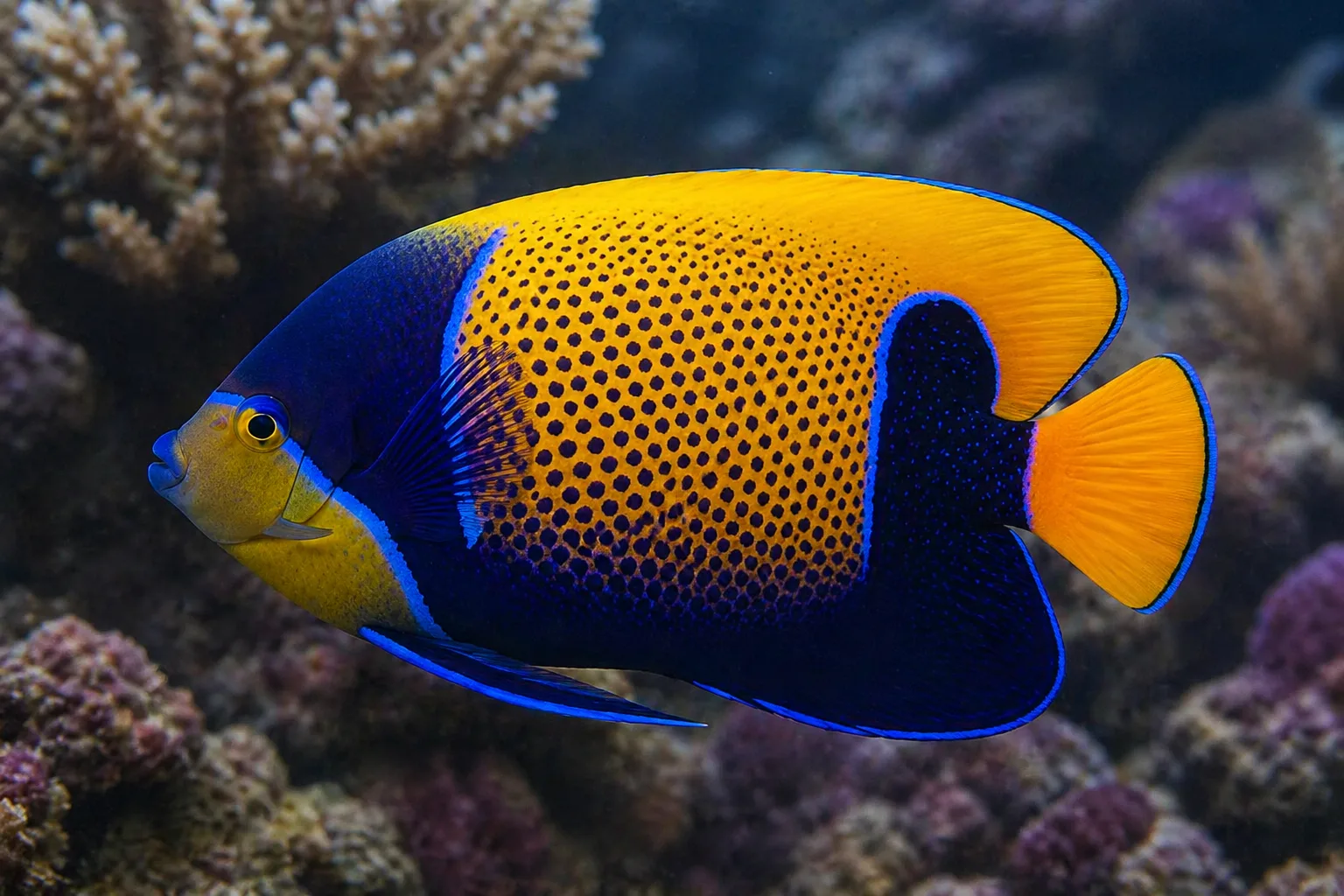
Illustrative images
Majestic Angelfish
Pomacanthus navarchus
Overview
The Majestic Angelfish, scientifically known as Pomacanthus nobilis, is a striking marine fish renowned for its vibrant coloration and unique appearance. This species is a popular choice for experienced aquarists looking to enhance their marine tanks with a regal species. Known for its bold colors, the Majestic Angelfish displays a beautiful combination of blue, yellow, and black, making it a stunning focal point in any aquarium.
Natural Habitat
The Majestic Angelfish is native to the coral reefs of the Indo-Pacific region. It is typically found at depths ranging from 10 to 60 meters, where it predominately resides in areas rich with coral growth. This habitat provides plenty of hiding spots and foraging opportunities typical for this species.
Care Requirements
Proper care for the Majestic Angelfish requires a well-maintained marine environment. Here are some essential care requirements:
- Tank Size: A minimum tank size of 400 liters (approximately 105 gallons) is recommended to provide adequate swimming space and territory.
- Water Type: Marine.
- Temperature: Ideally kept between 24°C to 27°C (75°F to 81°F).
- pH Level: Maintain a stable pH between 8.1 and 8.4.
- Salinity: A salinity range of 1.020 to 1.025 is ideal.
Tank Setup
The aquarium setup for Majestic Angelfish should mimic its natural habitat. Consider the following tips:
- Include live rock and coral structures for hiding and grazing opportunities.
- Provide good water circulation and filtration to maintain water quality.
- Ensure there are hiding spots and territories to minimize stress and aggression among tank mates.
Compatibility
Majestic Angelfish can be semi-aggressive towards their own species if space is limited. They generally do well with other fish species that are not overly aggressive or similar in shape. Some suitable tank mates include:
- Other large angelfish
- Butterflyfish
- Surgeonfish
- Wrasses
Feeding
Majestic Angelfish are omnivorous and require a varied diet to thrive. Offer a balanced diet consisting of:
- High-quality pellets or flakes designed for marine fish.
- Frozen or live foods such as brine shrimp, mysis shrimp, and spirulina-based foods.
Lifespan
When properly cared for, Majestic Angelfish can live for over 10 years in a well-maintained aquarium, provided they are not subjected to stress or poor water conditions.
How to care for Majestic Angelfish
- 1
Set up a spacious tank
Prepare a tank of at least 180 gallons (681 liters) with ample live rock to provide hiding spots and grazing areas.
- 2
Acclimate the fish slowly
Introduce the Majestic Angelfish to the tank gradually to reduce stress and allow it to adjust to the new environment.
- 3
Maintain stable water conditions
Keep water temperature between 72-78°F (22-26°C), pH between 8.1-8.4, and specific gravity between 1.020-1.025.
- 4
Provide a varied diet
Feed a mix of marine algae, sponges, and high-quality angelfish preparations to meet nutritional needs.
- 5
Monitor tank mates
Keep the Majestic Angelfish with other peaceful species, avoiding other large angelfish to prevent territorial disputes.
Frequently asked questions
What size tank does a Majestic Angelfish need?▾
A Majestic Angelfish requires a minimum tank size of 180 gallons (681 liters).
What is the natural diet of Pomacanthus navarchus?▾
In the wild, Pomacanthus navarchus primarily feeds on sponges and tunicates.
Can Majestic Angelfish be kept with other angelfish?▾
Majestic Angelfish are semi-aggressive and can be territorial, especially towards other angelfish. It's best to keep them as the only large angelfish in the tank.
What are the ideal water parameters for a Majestic Angelfish?▾
Maintain water temperature between 72-78°F (22-26°C), pH between 8.1-8.4, and specific gravity between 1.020-1.025.
Are Majestic Angelfish reef-safe?▾
No, Majestic Angelfish are not considered reef-safe as they may nip at corals and sessile invertebrates.