

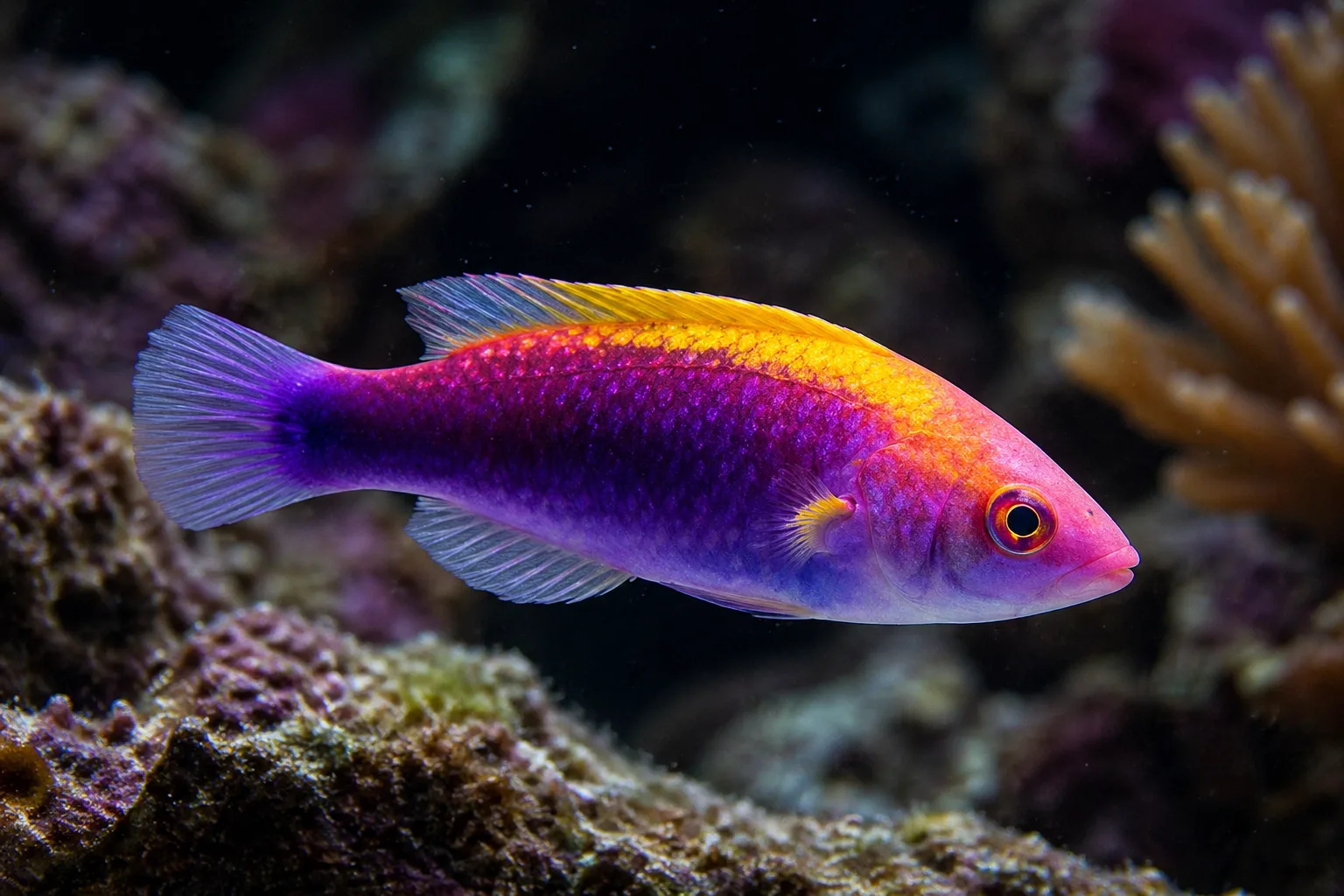
Illustrative images
Lubbock's Fairy Wrasse
Cirrhilabrus lubbocki
Overview
Lubbock's Fairy Wrasse, scientifically known as Cirrhilabrus lubbocki, is a vibrant and colorful marine fish that belongs to the wrasse family. Recognized for their beautiful coloration and active swimming behavior, these fish make a striking addition to reef aquariums. They are generally peaceful and adaptable, fitting well into community tanks that meet their care requirements.
Natural Habitat
This species is native to the coral reefs of the Indo-Pacific region, particularly around the islands of Indonesia and the Philippines. They are often found in shallow waters amidst coral formations, using the reef structure for shelter and feeding.
Care Requirements
Keeping Lubbock's Fairy Wrasse requires some attention to water quality and tank setup. Here are some essential care considerations:
- Minimum Tank Size: A tank of at least 60 liters is recommended to provide ample swimming space.
- Water Type: They thrive in marine environments.
- Lighting: Moderate to strong lighting is beneficial for both the fish and the aquarium plants.
- Temperature: Maintain water temperatures between 24–27°C (75–81°F).
- Water Parameters: These fish prefer stable salinity and pH levels typical of reef systems.
Tank Setup
When creating a habitat for Lubbock's Fairy Wrasse, consider the following:
- Incorporate plenty of live rock and coral to replicate their natural environment. This provides hiding spots and helps with biological filtration.
- Ensure the tank has a tight-fitting lid, as these wrasses are known to jump.
- Include open swimming spaces, as they are active swimmers.
Feeding
Lubbock's Fairy Wrasse is typically an omnivore, benefiting from a varied diet that includes:
- High-quality flake or pellet food
- Frozen or live foods such as brine shrimp, mysis shrimp, and other meaty offerings
- Vegetables like spirulina or marine algae which aid in their nutrition
Compatibility
Lubbock's Fairy Wrasse is generally peaceful and can coexist with a variety of tankmates, including:
- Other peaceful wrasses
- Small to medium-sized reef fish
- Invertebrates such as shrimp and snails
However, caution should be taken when introducing them to tanks with more aggressive species, as their timid nature may make them targets.
Conclusion
In summary, Lubbock's Fairy Wrasse is an excellent choice for aquarists looking to enhance the beauty and activity level of their marine aquarium. With proper care, suitable tank mates, and an appropriately set up environment, these fish can thrive, adding vibrancy to your underwater landscape.
How to care for Lubbock's Fairy Wrasse
- 1
Set up the tank
Use a minimum 40-gallon (150-liter) tank with a secure lid to prevent jumping. Provide ample live rock for hiding spots.
- 2
Acclimate slowly
Introduce the fish gradually to the tank to reduce stress and allow it to adjust to the new environment.
- 3
Maintain water parameters
Keep the temperature at 75–81°F (24–27°C), pH between 8.0 and 8.4, and specific gravity of 1.023–1.026.
- 4
Feed appropriately
Offer a varied diet of small meaty marine foods, including frozen mysis, brine shrimp, copepods, and high-quality pellets and flakes.
- 5
Monitor behavior
Observe the fish for signs of stress or aggression, and ensure it is interacting well with tank mates.
Frequently asked questions
What are the ideal water parameters for Lubbock's Fairy Wrasse?▾
Maintain a temperature of 75–81°F (24–27°C), pH between 8.0 and 8.4, and specific gravity of 1.023–1.026.
What is the minimum tank size for Lubbock's Fairy Wrasse?▾
A minimum tank size of 40 gallons (150 liters) is recommended for a single specimen.
What do Lubbock's Fairy Wrasse eat?▾
They are carnivorous, feeding on small meaty marine foods like frozen mysis, brine shrimp, copepods, and high-quality pellets and flakes.
Are Lubbock's Fairy Wrasse reef-safe?▾
Yes, they are completely reef-safe and do not harm corals or invertebrates.
Can Lubbock's Fairy Wrasse be kept with other fish?▾
They are compatible with most peaceful reef fish, including gobies, clownfish, and blennies, but should be avoided with aggressive species.