

Illustrative images
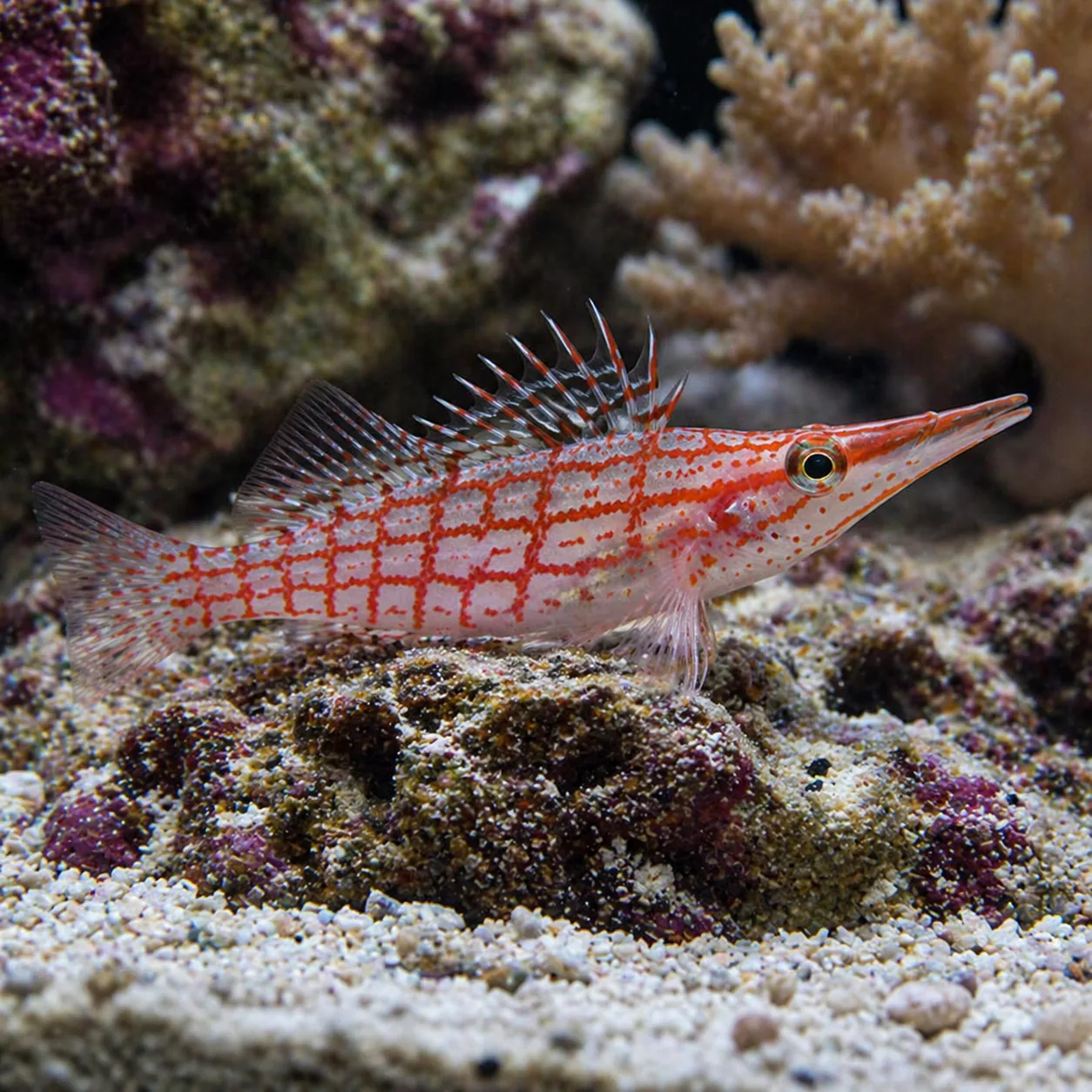
Longnose Hawkfish
Oxycirrhites typus
Overview
The Longnose Hawkfish (Oxycirrhites typus) is a captivating marine fish known for its elongated snout and vibrant coloration. This species is often favored by marine aquarium enthusiasts for its unique appearance and engaging behavior. The Longnose Hawkfish can add a dynamic element to your aquarium environment.
Natural Habitat
In the wild, Longnose Hawkfish are found in the warm waters of the Indo-Pacific region, typically in coral reefs. They prefer shallow waters where they can perch on corals and rocks, making them opportunistic hunters as they survey their surroundings for prey. Their natural habitat is crucial for their health in captivity, as it impacts their behavior and diet.
Care Requirements
Caring for a Longnose Hawkfish requires a solid understanding of marine aquarium management. Here are key aspects to consider:
Tank Setup
- Minimum Tank Size: A minimum of 75 gallons is recommended to provide ample space for swimming and hiding.
- Tank Composition: Incorporate live rock and coral structures to mimic their natural habitat. This also aids in their stress relief and provides hiding spots.
- Water Parameters: Maintaining stable salinity, temperature, and pH is essential. While specific ranges are not provided, keeping water clean and well-filtered is crucial.
Compatibility
Longnose Hawkfish are typically semi-aggressive and can display territorial behavior, especially with similar-looking species. It’s advisable to keep them with other non-aggressive fish that are of similar size. Some compatible tank mates include:
- Clownfish
- Wrasses
- Banggai Cardinals
Feeding
In the wild, Longnose Hawkfish feed primarily on small crustaceans and zooplankton. In a home aquarium, they will accept a variety of foods, including:
- High-quality marine flakes
- Pellets
- Frozen or live food such as brine shrimp and mysis shrimp
It's important to feed them regularly and ensure a balanced diet to prevent malnutrition.
Lifespan
With proper care, Longnose Hawkfish can live for several years in captivity, although specific lifespan metrics are not provided.
Conclusion
The Longnose Hawkfish is a striking addition to any marine aquarium, known for its charming behavior and unique appearance. With the right tank setup and care, it can thrive and become a focal point in your underwater landscape.
How to care for Longnose Hawkfish
- 1
Set up the tank
Use a minimum 30-gallon (114-liter) aquarium with live rock for hiding spots and perching areas.
- 2
Acclimate slowly
Introduce the fish gradually to prevent stress and ensure a smooth transition.
- 3
Maintain water parameters
Keep temperature at 75-82°F (24-28°C), pH between 8.1 and 8.4, and salinity at 1.020-1.025 specific gravity.
- 4
Feed appropriately
Offer a varied diet of meaty foods like mysis shrimp and brine shrimp, feeding 1-2 times daily.
Frequently asked questions
What are the ideal water parameters for Longnose Hawkfish?▾
Maintain a temperature of 75-82°F (24-28°C), pH between 8.1 and 8.4, and salinity at 1.020-1.025 specific gravity.
How big do Longnose Hawkfish grow?▾
They typically reach a maximum size of 5 inches (13 cm).
What do Longnose Hawkfish eat?▾
They are carnivorous, feeding on small crustaceans and fish; in captivity, offer meaty foods like mysis shrimp and brine shrimp.
Can Longnose Hawkfish live with other fish?▾
They are generally peaceful with larger fish but may prey on small ornamental shrimp and crabs.
How long do Longnose Hawkfish live?▾
They have a lifespan of 5-8 years.