

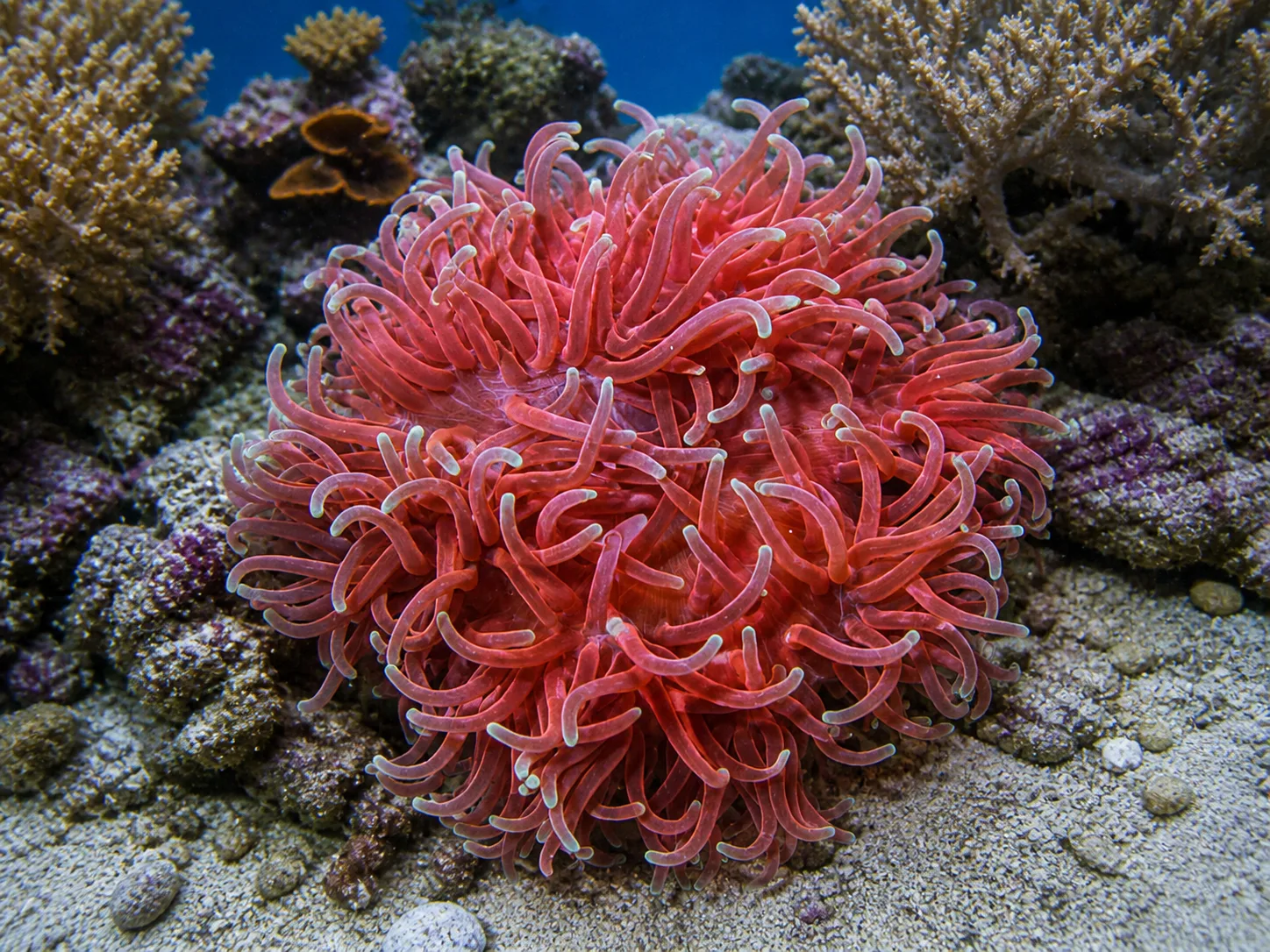
Illustrative images
Long Tentacle Anemone
Macrodactyla doreensis
Overview
The Long Tentacle Anemone, scientifically known as Heteractis crispa, is a striking marine invertebrate often sought after by aquarists for its captivating appearance and behavior. While commonly referred to as an anemone, it is essential to note that it is not a fish, but rather a member of the order Actiniaria, known for its symbiotic relationships with various fish species, particularly clownfish.
Natural Habitat
This species is typically found in the shallow waters of the Indo-Pacific region, inhabiting coral reefs. It tends to prefer sandy or rocky substrates, where it can anchor its base securely. Long Tentacle Anemones thrive in clear waters with strong lighting, which facilitates their photosynthetic symbionts (zooxanthellae) to flourish.
Care Requirements
Long Tentacle Anemones require a well-maintained marine aquarium to thrive. Here are some essential care parameters:
- Water Type: Marine
- Lighting: Moderate to high light is necessary; they benefit from full-spectrum lighting.
- Water Flow: Moderate flow helps in nutrient exchange while preventing the anemone from being damaged.
- Temperature: Maintain water temperatures between 24°C to 28°C.
- pH: Maintain a stable pH between 7.8 and 8.4.
- Salinity: A salinity level between 1.023 and 1.025 specific gravity is optimal.
Tank Setup
To create an ideal habitat for Long Tentacle Anemones, consider the following:
- Provide ample space, as they can expand significantly. A minimum tank size of 80 liters is preferred.
- Include live rock for anchoring, which mimics their natural habitat.
- Ensure good water circulation to promote health.
Compatibility
Long Tentacle Anemones can host clownfish and some other fish species that are circumstantially resistant to their stinging cells. However, care should be taken when introducing tank mates.
Feeding
While capable of photosynthesis through their symbiotic algae, they also require supplemental feeding. Feed your Long Tentacle Anemone with:
- Meaty foods: Mysis shrimp, chopped fish, and other seafood.
- Frequency: Feed 2-3 times a week, ensuring the food is small enough for the anemone to capture.
Conclusion
The Long Tentacle Anemone is a stunning addition to any marine aquarium, particularly for those interested in keeping clownfish. With proper care and a compatible environment, this species can thrive and become a focal point in your aquascape.
How to care for Long Tentacle Anemone
- 1
Set up the tank
Use a minimum 30-gallon tank with a sandy or rubble substrate at least 4 inches deep to allow the anemone to anchor its foot. ([reefs.com](https://reefs.com/invertebrates/long-tentacle-anemone/?utm_source=openai))
- 2
Acclimate slowly
Introduce the anemone to the tank slowly to minimize stress and allow it to adjust to its new environment. ([theaquariumwiki.com](https://www.theaquariumwiki.com/wiki/Macrodactyla_doreensis?utm_source=openai))
- 3
Maintain water parameters
Keep the water temperature between 72-79°F (22-26°C), pH between 8.1 and 8.4, and specific gravity (salinity) of 1.023-1.025. Nitrate levels should be kept between 1-20 ppm, nitrite levels below 0.0001 ppm, and phosphate levels between 0.01-0.1 ppm. ([tankfacts.com](https://www.tankfacts.com/invertebrates/saltwater/anemones/long-tentacle-anemone_189?utm_source=openai))
- 4
Provide appropriate lighting
Ensure moderate to high lighting, around 200-300 PAR, to support the anemone's photosynthetic needs. ([enviroliteracy.org](https://enviroliteracy.org/animals/where-do-you-put-a-long-tentacle-anemone/?utm_source=openai))
- 5
Feed appropriately
Offer small pieces of fish, mussels, crustaceans, and frozen foods to meet the anemone's carnivorous diet. ([reefs.com](https://reefs.com/invertebrates/long-tentacle-anemone/?utm_source=openai))
- 6
Monitor tankmates
Be cautious with tankmates, as the anemone is semi-aggressive and may sting other reef inhabitants if they encroach upon its space. ([fishy.wiki](https://fishy.wiki/en/salt-water-fish/actiniidae/macrodactyla-doreensis.phtml?utm_source=openai))
- 7
Observe behavior
Monitor the anemone for signs of stress or detachment, adjusting tank conditions as needed to ensure its well-being. ([theaquariumwiki.com](https://www.theaquariumwiki.com/wiki/Macrodactyla_doreensis?utm_source=openai))
Frequently asked questions
What are the ideal water parameters for a Long Tentacle Anemone?▾
Maintain a temperature of 72-79°F (22-26°C), pH between 8.1 and 8.4, and specific gravity (salinity) of 1.023-1.025. Nitrate levels should be kept between 1-20 ppm, nitrite levels below 0.0001 ppm, and phosphate levels between 0.01-0.1 ppm. ([tankfacts.com](https://www.tankfacts.com/invertebrates/saltwater/anemones/long-tentacle-anemone_189?utm_source=openai))
What is the minimum tank size for a Long Tentacle Anemone?▾
A minimum tank size of 30 gallons (113 liters) is recommended to accommodate the Long Tentacle Anemone's needs. ([reefs.com](https://reefs.com/invertebrates/long-tentacle-anemone/?utm_source=openai))
What is the maximum size of a Long Tentacle Anemone?▾
The Long Tentacle Anemone can grow up to 20 inches (50.8 cm) in diameter. ([theaquariumwiki.com](https://www.theaquariumwiki.com/wiki/Macrodactyla_doreensis?utm_source=openai))
What is the diet of a Long Tentacle Anemone?▾
The Long Tentacle Anemone is carnivorous, feeding on small pieces of fish, mussels, crustaceans, and frozen foods. ([reefs.com](https://reefs.com/invertebrates/long-tentacle-anemone/?utm_source=openai))
Is the Long Tentacle Anemone reef-safe?▾
The Long Tentacle Anemone is considered reef-safe with caution, as it may move around and sting other sessile invertebrates. ([fishy.wiki](https://fishy.wiki/en/salt-water-fish/actiniidae/macrodactyla-doreensis.phtml?utm_source=openai))
What is the temperament of a Long Tentacle Anemone?▾
The Long Tentacle Anemone is semi-aggressive and may sting other reef inhabitants if they encroach upon its space. ([fishy.wiki](https://fishy.wiki/en/salt-water-fish/actiniidae/macrodactyla-doreensis.phtml?utm_source=openai))
What is the recommended lighting for a Long Tentacle Anemone?▾
Provide moderate to high lighting, around 200-300 PAR, to support the Long Tentacle Anemone's photosynthetic needs. ([enviroliteracy.org](https://enviroliteracy.org/animals/where-do-you-put-a-long-tentacle-anemone/?utm_source=openai))
What is the recommended water flow for a Long Tentacle Anemone?▾
Aim for low to moderate water flow, as strong currents can stress the Long Tentacle Anemone, causing it to detach and wander. ([enviroliteracy.org](https://enviroliteracy.org/animals/where-do-you-put-a-long-tentacle-anemone/?utm_source=openai))