

Illustrative images
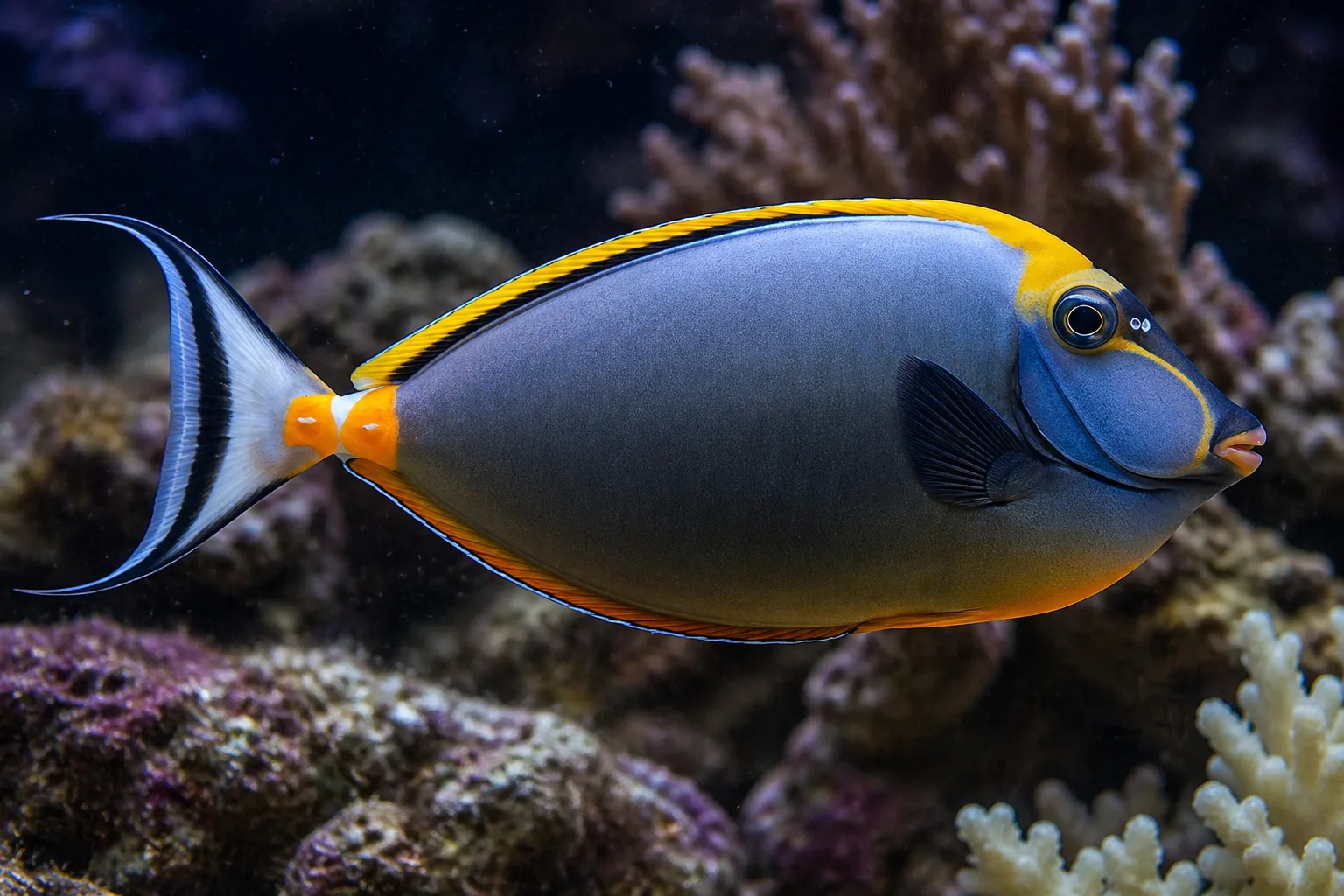
Lipstick Naso Tang
Naso elegans
Overview
The Lipstick Naso Tang, scientifically known as Naso lituratus, is a vibrant marine fish that is popular among aquarium enthusiasts. Recognized for its striking appearance, this species features a distinctive lipstick-red coloration on its snout and elegant dorsal fin that can enhance the aesthetics of any saltwater tank.
Natural Habitat
The Lipstick Naso Tang originates from the warm waters of the Pacific Ocean, specifically in reef environments around Polynesia and the Hawaiian Islands. They are typically found in shallow waters among coral reefs, where they graze on algae.
Care Requirements
Keeping a Lipstick Naso Tang requires a commitment to its care and environment. Here are key care considerations:
- Tank Size: A minimum tank size of 150 gallons is recommended to accommodate their active swimming needs.
- Water Conditions: Ideal conditions include a temperature range of 72-78°F (22-26°C), a pH level between 8.1 and 8.4, and moderate salinity.
- Filtration: A high-quality filtration system is essential to maintain water quality and provide adequate oxygenation.
Tank Setup
When setting up a tank for a Lipstick Naso Tang, consider the following:
- Live Rock: Incorporating live rock provides hiding spots and grazing surfaces for their diet.
- Open Swimming Space: They are active swimmers, so ensure there is plenty of open space.
- Corals: While they can coexist with some corals, caution should be taken as they may nibble on certain types.
Compatibility
Lipstick Naso Tangs are generally peaceful but can be territorial, especially as they mature. Suitable tank mates include:
- Other tangs (with caution)
- Non-aggressive wrasses
- Large dither fish like anthias
Avoid keeping them with overly aggressive species, as this may lead to stress and conflict.
Feeding
These fish are primarily herbivores in the wild, grazing on algae. In captivity, a varied diet should include:
- Vegetable-based foods
- Spirulina flakes or pellets
- Live or frozen foods occasionally for variety
Feeding multiple times a day will help them thrive and maintain their vibrant coloration.
Lifespan
With proper care, Lipstick Naso Tangs can live for several years in captivity, often around 10-15 years when provided with a stable environment and proper diet.
How to care for Lipstick Naso Tang
- 1
Set up a spacious tank
Ensure the aquarium is at least 150 gallons (568 liters) to accommodate the Lipstick Naso Tang's size and active swimming behavior.
- 2
Maintain optimal water conditions
Keep water temperature between 72-78°F (22-26°C), salinity at 1.020-1.025 specific gravity, pH between 8.1 and 8.4, and alkalinity (dKH) between 8 and 12.
- 3
Provide a varied diet
Offer a mix of algae-based foods, such as nori and spirulina, supplemented with small crustaceans like krill, mysis, and artemia to meet nutritional needs.
- 4
Monitor tank mates
Keep Naso elegans with other peaceful, reef-safe species to prevent territorial disputes, especially in smaller tanks.
Frequently asked questions
What is the ideal tank size for a Lipstick Naso Tang?▾
A minimum tank size of 150 gallons (approximately 568 liters) is recommended for a single Lipstick Naso Tang, as they can grow up to 18 inches (45 cm) in length and require ample swimming space.
What are the optimal water parameters for Naso elegans?▾
Maintain water temperature between 72-78°F (22-26°C), salinity at 1.020-1.025 specific gravity, pH between 8.1 and 8.4, and alkalinity (dKH) between 8 and 12 for Naso elegans.
What is the natural diet of the Lipstick Naso Tang?▾
In the wild, Naso elegans primarily feeds on benthic algae, especially brown algae like Sargassum and Dictyota.
Can Lipstick Naso Tangs be kept with other fish species?▾
Yes, Naso elegans is generally peaceful and can be kept with other reef-safe fish, but they may become territorial towards their own kind, especially in smaller tanks.
How can I distinguish between male and female Lipstick Naso Tangs?▾
Males develop long tail streamers and larger caudal peduncle spines as they mature, typically when they reach 6-9 inches (15-23 cm) in size.