

Illustrative images
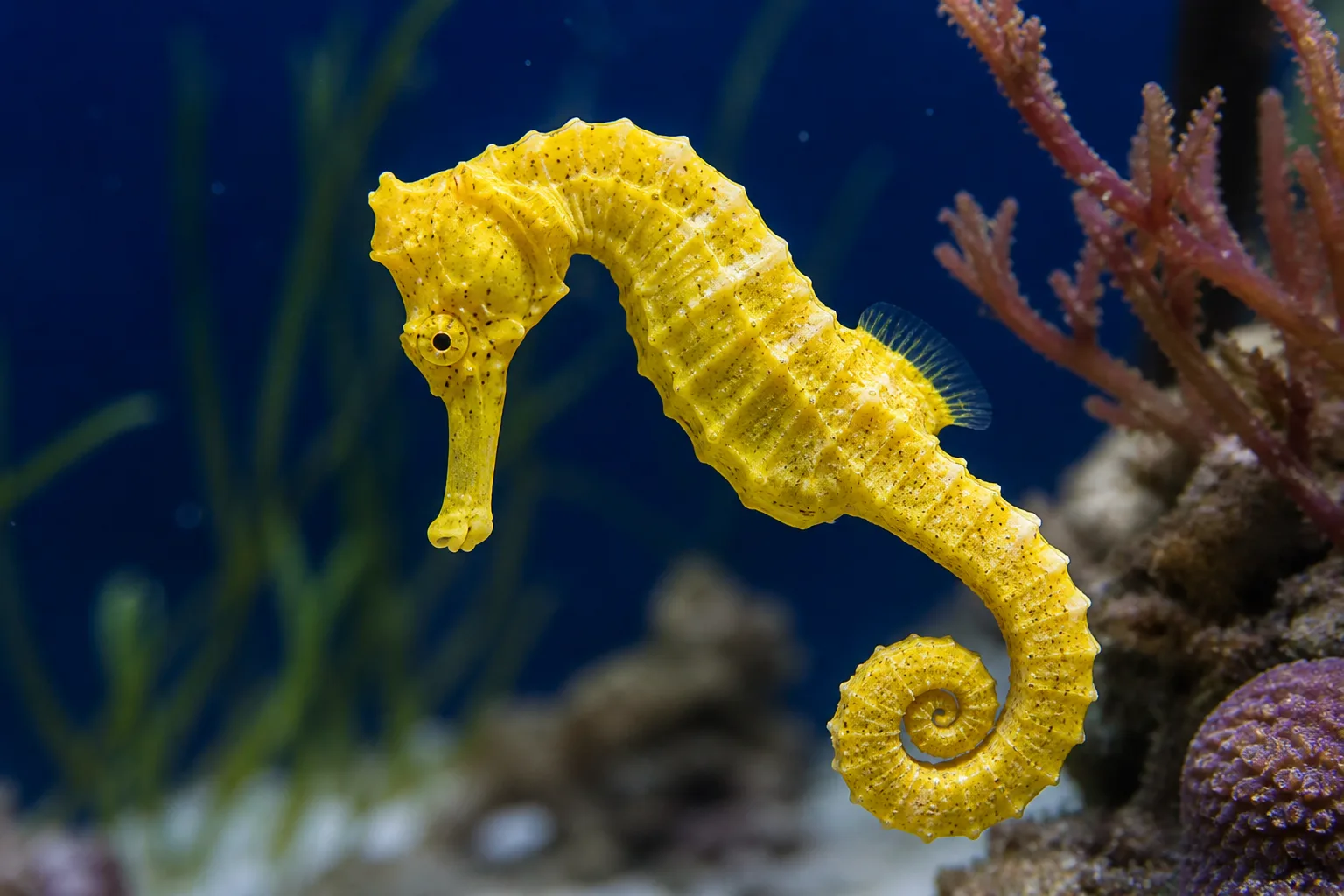
Lined Seahorse
Hippocampus erectus
Overview
The Lined Seahorse, or Hippocampus erectus, is a captivating marine fish known for its unique appearance and gentle demeanor. They are recognized by their elongated bodies, prehensile tails, and distinct, lined pattern along their sides. Found in various colors ranging from yellow to brown, these creatures are not just beautiful but also fascinating to observe in a well-maintained aquarium.
Natural Habitat
Lined Seahorses inhabit shallow coastal waters, seagrass beds, and coral reefs. They are typically found in the Western Atlantic Ocean, including areas along the eastern coast of the United States, the Gulf of Mexico, and parts of the Caribbean. Their natural environment allows them to blend into the habitat, providing protection from predators.
Care Requirements
Caring for Lined Seahorses requires specific conditions to ensure their well-being:
- Water Type: Marine
- Tank Size: A minimum tank size of 75 liters is recommended to provide ample space for swimming and hiding.
- Temperature: Maintain a temperature range of 22°C to 26°C (72°F to 78°F).
- Salinity: Aim for a specific gravity of 1.020 to 1.025.
- pH Level: Keep the pH between 7.8 and 8.4.
Tank Setup
Seahorses appreciate a well-structured environment. Consider incorporating various elements:
- Live plants or macroalgae for camouflage.
- Rock formations to create hiding spots.
- Gentle water flow to mimic their natural habitat.
A sandy substrate can also be beneficial, allowing them to anchor themselves using their tails.
Compatibility
Lined Seahorses are generally peaceful and should be housed with similarly peaceful tank mates. They can be compatible with:
- Small, non-aggressive fish.
- Marine invertebrates, such as shrimp and snails.
- Other seahorse species, provided they are housed in adequate numbers to prevent territorial behavior.
Avoid placing them with aggressive fish that may harass or compete for food.
Feeding
Lined Seahorses are opportunistic feeders and primarily consume live food. Their diet should consist of:
- Small shrimp (e.g., mysis shrimp).
- Planktonic foods.
- Other small marine invertebrates.
Feed them multiple times per day. If necessary, provide fortified foods to ensure proper nutrition.
Conclusion
The Lined Seahorse is an elegant addition to a marine aquarium, appealing to both novice and experienced aquarists. With the right care, they can thrive in a well-planned setting, showcasing their unique beauty and behaviors.
How to care for Lined Seahorse
- 1
Set up the tank
Use a species-only tank of at least 30 gallons (113 liters) with a height of at least 16 inches (40 cm) for optimal water circulation.
- 2
Acclimate slowly
Float the bag in the tank for 10 minutes, then gradually add tank water to the bag over 30 minutes to equalize temperature and salinity.
- 3
Maintain water parameters
Keep temperature between 22–26°C (72–79°F), salinity at 1.020–1.025, and pH between 8.1 and 8.4.
- 4
Provide suitable diet
Feed live or frozen small crustaceans like mysis shrimp, brine shrimp, and copepods multiple times daily.
- 5
Select compatible tankmates
Choose peaceful, slow-moving species; avoid aggressive or fast feeders to prevent competition for food.
Frequently asked questions
What is the ideal tank size for Lined Seahorses?▾
A minimum of 30 gallons (113 liters) is recommended for a pair; larger tanks are preferred for groups.
What are the optimal water parameters for Lined Seahorses?▾
Maintain a temperature of 22–26°C (72–79°F), salinity of 1.020–1.025, and pH between 8.1 and 8.4.
What do Lined Seahorses eat?▾
They primarily consume live or frozen small crustaceans like mysis shrimp, brine shrimp, and copepods.
Can Lined Seahorses live with other fish?▾
They should be housed with peaceful, slow-moving tankmates and are best kept in species-only tanks to prevent stress.
How do Lined Seahorses reproduce?▾
Males carry fertilized eggs in a brood pouch until they give birth to fully formed juveniles.