

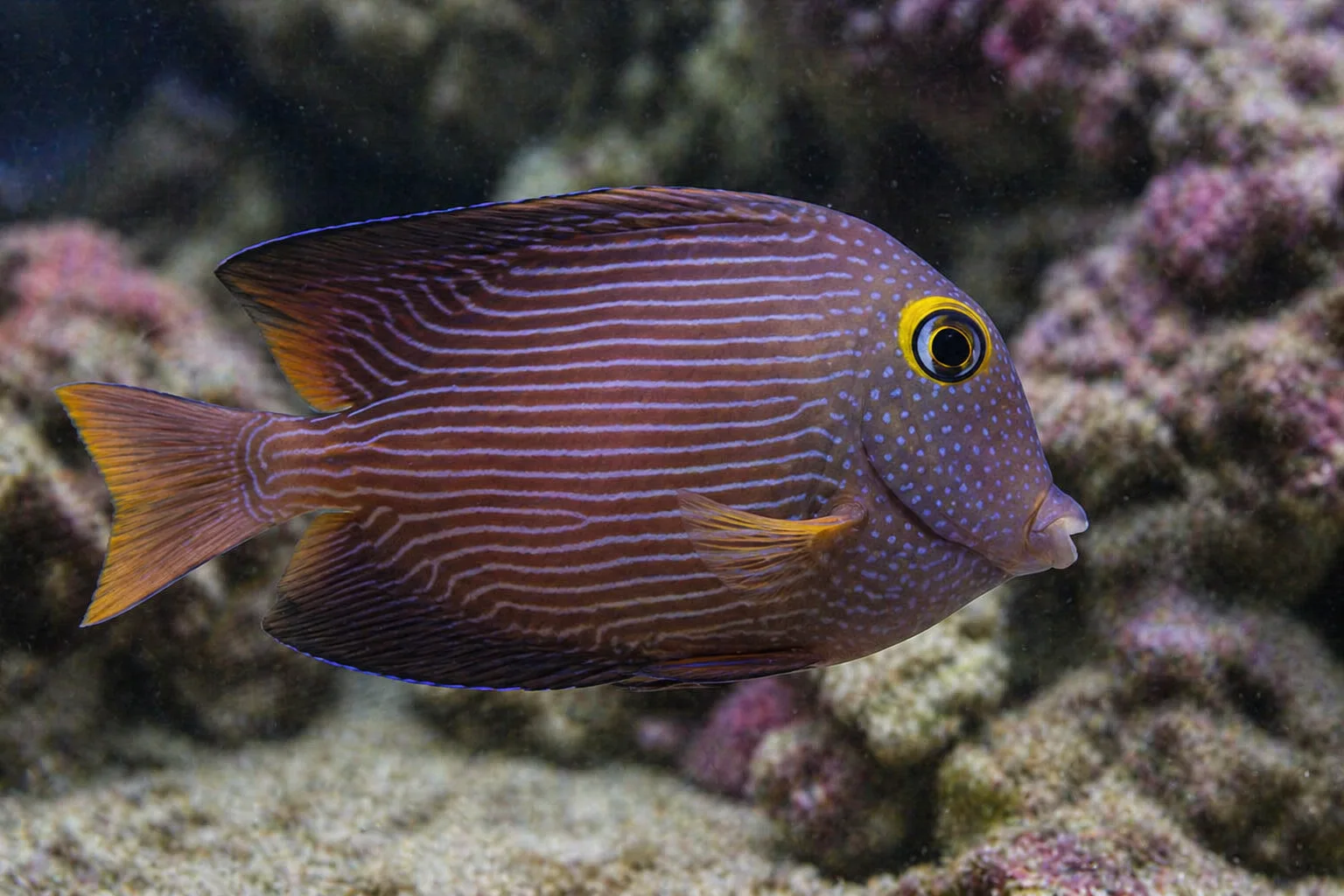
Illustrative images
Kole Tang
Ctenochaetus strigosus
Overview
The Kole Tang, scientifically known as Ctenochaetus strigosus, is a widely appreciated marine fish commonly found in aquariums. This species stands out due to its distinctive coloration and unique characteristics, making it a favorite among reef enthusiasts.
Natural Habitat
The Kole Tang is native to the waters of the Pacific Ocean, often residing in areas with abundant coral reefs and rocky substrates. These fish are typically found in shallow waters, where they graze on algae and detritus, contributing to the health of the reef ecosystem.
Care Requirements
In captivity, Kole Tangs are moderately easy to care for, but they do require specific conditions to thrive. They prefer a well-oxygenated tank with plenty of swimming space and hiding spots. A minimum tank size of 100 gallons is often recommended to provide ample room for movement and social interactions.
Tank Setup
A reef tank setup is ideal for the Kole Tang. Live rock is essential as it not only provides hiding spots but also a natural source of food through algae growth. Maintain stable water parameters, ensuring regular water changes to keep the environment healthy.
Compatibility
Kole Tangs are generally peaceful but can be territorial, especially toward other tangs and similar fish. It is recommended to introduce them to a well-established tank with suitable companions. Ideal tank mates include peaceful fish species like clowns, gobies, and wrasses.
Feeding
The diet of a Kole Tang mainly consists of algae; hence, providing plenty of algae sheets, spirulina, and high-quality pellets is crucial. They may also enjoy occasional treats of frozen foods or vegetable matter. Regular feeding helps maintain their health and vibrant colors.
Lighting and CO2 Requirements
While Kole Tangs do not have stringent lighting needs, a well-lit tank can promote the growth of algae, which serves as a food source. CO2 injection is not necessary, but keeping plants and algae growth balanced is important for their diet.
Conclusion
Overall, the Kole Tang is an excellent addition to a reef aquarium, offering both beauty and utility in maintaining the tank's ecosystem. With proper care and compatibility considerations, these fish can thrive for years in captivity.
How to care for Kole Tang
- 1
Set up the tank
Choose a well-established reef tank with ample live rock to provide grazing surfaces and hiding spots. Ensure the tank has strong water movement to keep detritus in suspension.
- 2
Acclimate slowly
Introduce the Kole Tang to the tank gradually to minimize stress. Use a drip acclimation method to match the tank's water parameters with those of the transport water.
- 3
Maintain water parameters
Regularly monitor and maintain water temperature between 75-82°F (24-28°C), pH between 8.1-8.4, and specific gravity between 1.020-1.025 to ensure optimal health.
- 4
Provide a varied diet
Offer a mix of high-quality spirulina-based flakes, pellets, and dried seaweed (nori) to meet the Kole Tang's nutritional needs. Supplement with occasional meaty foods like brine shrimp.
- 5
Monitor health
Regularly observe the Kole Tang for signs of stress or disease, such as changes in behavior, appetite, or appearance. Promptly address any issues to maintain a healthy environment.
Frequently asked questions
What is the ideal tank size for a Kole Tang?▾
A minimum tank size of 70 gallons (approximately 265 liters) is recommended for a single Kole Tang to provide ample swimming space and grazing opportunities.
What water parameters are best for a Kole Tang?▾
Kole Tangs thrive in water temperatures between 75-82°F (24-28°C), a pH of 8.1-8.4, and a specific gravity (salinity) of 1.020-1.025.
What do Kole Tangs eat?▾
Kole Tangs are herbivores that primarily feed on algae, detritus, and diatoms. In captivity, they should be offered a variety of vegetable-based foods, including spirulina-based flakes, pellets, and dried seaweed (nori).
Can Kole Tangs be kept with other fish?▾
Kole Tangs are generally peaceful but can be territorial toward other tangs, especially those of similar size and shape. It's advisable to keep them with non-competitive species to prevent aggression.
How big do Kole Tangs get?▾
Kole Tangs typically reach a maximum size of about 6 inches (15 cm) in length.
Are Kole Tangs reef-safe?▾
Yes, Kole Tangs are considered reef-safe and are known for their algae-eating habits, which can help control unwanted algae growth in reef aquariums.