

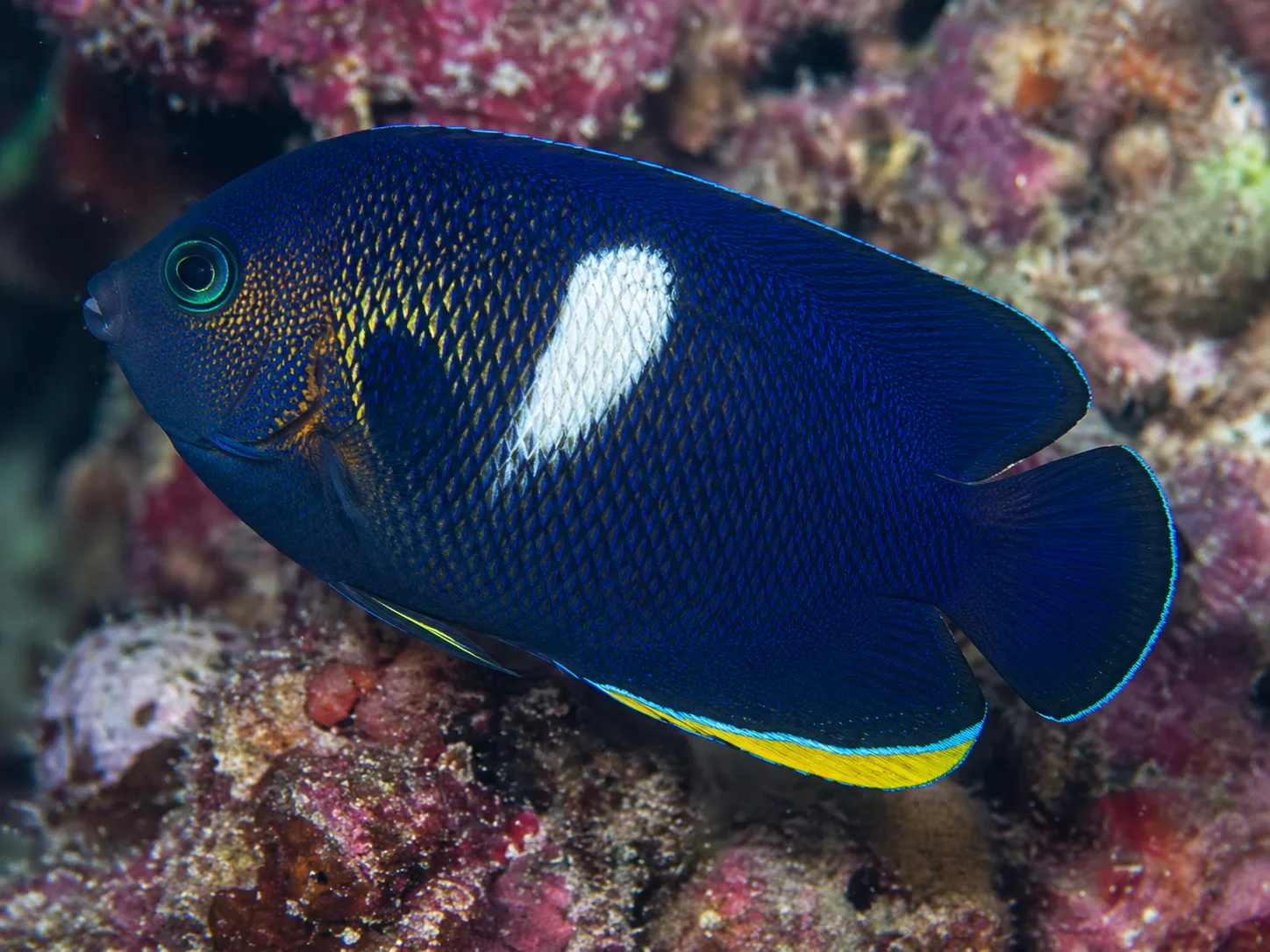
Illustrative images
Keyhole Angelfish
Centropyge tibicen
Overview
The Keyhole Angelfish, scientifically known as Cleithracara maronii, is a popular freshwater fish admired for its unique appearance and peaceful temperament. This species features a distinctive keyhole-shaped dark spot near its base, giving it a striking look in an aquarium setting.
Natural Habitat
Keyhole Angelfish are native to the slow-moving waters of the Amazon Basin in South America. They prefer to inhabit areas with dense vegetation and submerged structures, which provide them with cover and foraging opportunities in the wild.
Care Requirements
Tank Setup
When setting up a tank for Keyhole Angelfish, it is essential to recreate their natural habitat. A tank size of at least 100 liters is recommended to allow for swimming space and territorial behavior. The substrate should be soft, with plenty of hiding spots made from rocks, driftwood, and plants. Live plants not only enhance the aesthetic but also provide additional refuge.
Water Parameters
Keyhole Angelfish thrive in water with a temperature range of approximately 24-28°C and a pH between 6.0 and 7.5. Maintaining stable water conditions is crucial for their well-being. Regular water changes and filtration are necessary to keep the environment clean and healthy.
Diet
In their natural habitat, Keyhole Angelfish are omnivorous, feeding on a mix of plant matter and small invertebrates. In captivity, they can be offered a varied diet that includes high-quality flake food, pellets, and frozen or live foods like brine shrimp and bloodworms. A diverse diet will help enhance their coloration and overall health.
Compatibility
Keyhole Angelfish are generally peaceful and can be housed with a variety of community fish that have similar care requirements. Ideal tank mates include tetras, rasboras, and smaller barbs. It is advisable to avoid aggressive species that may bully the Keyhole Angelfish, as their peaceful nature makes them vulnerable in such situations.
Lifespan and Behavior
With proper care, Keyhole Angelfish can live for up to 10 years in captivity. They are known to exhibit some territorial behavior, especially during breeding periods, so providing ample space and hiding spots is essential to minimize conflicts with tank mates.
Conclusion
The Keyhole Angelfish is an attractive and relatively easy-to-care-for fish, making it suitable for both novice and experienced aquarists. Its unique appearance and calm demeanor make it a wonderful addition to a community aquarium, provided it is housed in the right conditions and with compatible tank mates.
How to care for Keyhole Angelfish
- 1
Set up the tank
Prepare a well-established aquarium of at least 55 gallons (208 liters) with ample live rock for hiding and grazing.
- 2
Acclimate slowly
Introduce the Keyhole Angelfish to the tank gradually to minimize stress and allow it to adjust to the new environment.
- 3
Maintain water parameters
Keep the water temperature between 72-78°F (22-26°C), pH at 8.1-8.4, and salinity between 1.020-1.025.
- 4
Provide a varied diet
Feed the Keyhole Angelfish a mix of marine algae, Spirulina, high-quality angelfish preparations, and meaty foods like mysis or frozen shrimp.
- 5
Monitor behavior
Observe the Keyhole Angelfish for signs of aggression, especially towards other angelfish species, and ensure it has sufficient space to establish territory.
Frequently asked questions
What is the ideal tank size for Keyhole Angelfish?▾
A minimum tank size of 55 gallons (208 liters) is recommended for a single Keyhole Angelfish. Larger tanks are preferable for multiple individuals to reduce territorial disputes.
What are the water temperature and pH requirements for Keyhole Angelfish?▾
Maintain a water temperature between 72-78°F (22-26°C) and a pH level of 8.1-8.4 for Keyhole Angelfish.
What is the maximum size of Keyhole Angelfish?▾
Keyhole Angelfish can grow up to 7.5 inches (19 cm) in length.
Are Keyhole Angelfish reef-safe?▾
Keyhole Angelfish are considered reef-safe with caution; they may nip at stony and soft corals, as well as clam mantles.
What is the recommended diet for Keyhole Angelfish?▾
Keyhole Angelfish are omnivores; provide a varied diet including marine algae, Spirulina, high-quality angelfish preparations, and meaty foods like mysis or frozen shrimp.