

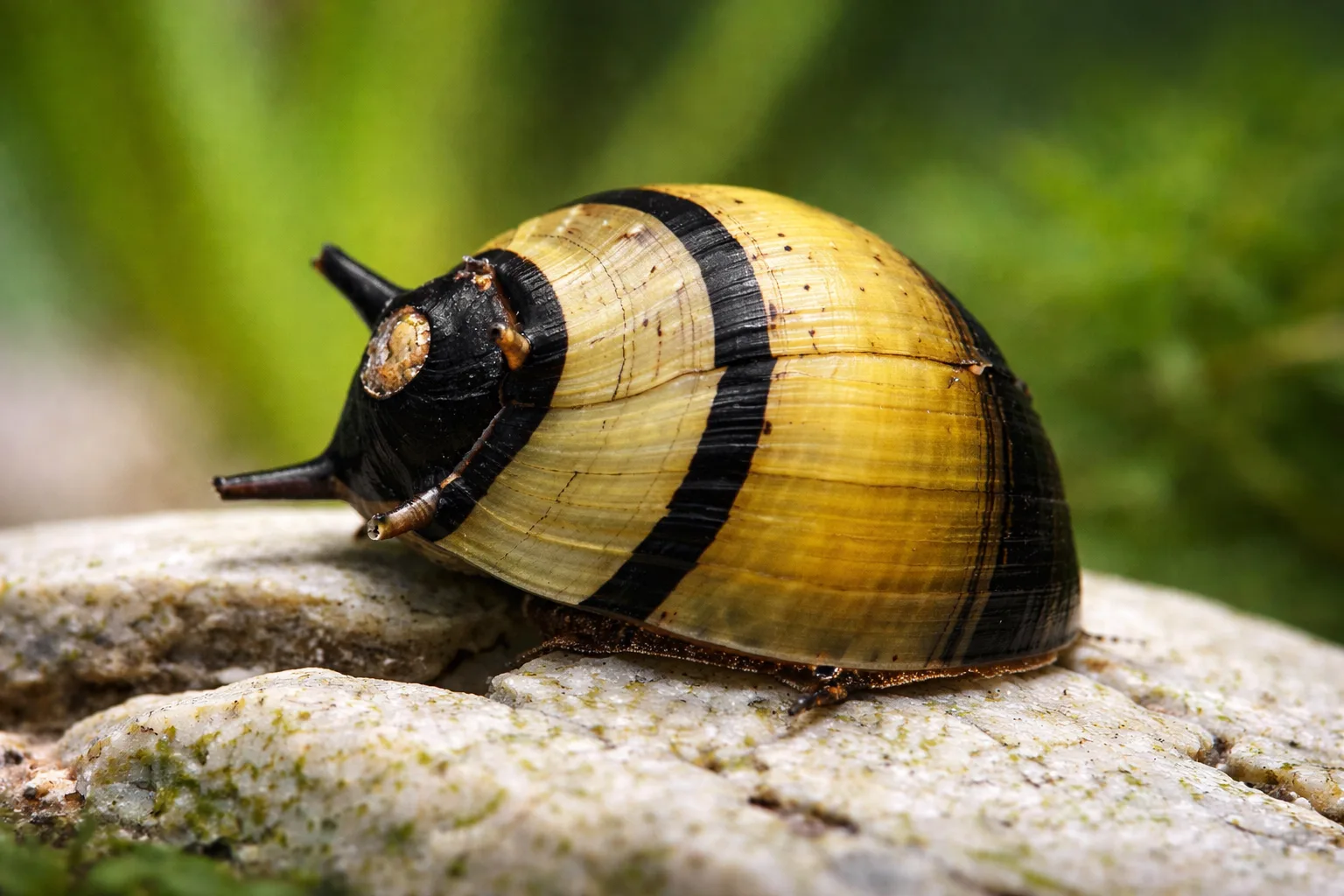
Illustrative images
Horned Nerite Snail
Clithon corona
Overview
The Horned Nerite Snail, scientifically known as Neritina natalensis, is a popular freshwater invertebrate among aquarium hobbyists. Recognized for its striking appearance, this snail features a patterned shell with distinct horns, adding a unique aesthetic element to any aquarium. Known for its algae-eating habits, it serves a practical purpose in maintaining tank cleanliness.
Natural Habitat
Originally found in brackish waters along the coasts of Africa and in some areas of Southeast Asia, Horned Nerite Snails thrive in various aquatic environments. They prefer environments with ample vegetation and a stable substrate to hide and graze on algae.
Care Requirements
Tank Setup
Creating a suitable environment for Horned Nerite Snails involves using a well-maintained freshwater tank. A minimum tank size of 20 liters is recommended. These snails prefer a sandy or fine substrate, as well as plenty of hiding spots that can be provided by rocks and plants. Use a cover to prevent them from escaping, as they are known to venture out of the tank.
Water Parameters
Although exact water parameters can vary, aim for a pH around 6.5 to 8.5, with a temperature range of 20-26°C. Regular water changes and good filtration are essential to maintain water quality.
Compatibility
Horned Nerite Snails are peaceful creatures and tend to coexist well with a variety of fish and other invertebrates. However, avoid keeping them with very aggressive or predatory species that might harm them. Community tanks are most suitable for these snails, where they can thrive alongside diverse tankmates.
Feeding
As natural herbivores, Horned Nerite Snails primarily feed on algae. Owners can supplement their diet with algae wafers or blanched vegetables (like spinach or zucchini) to ensure they receive adequate nutrition. Observation is crucial to ensure they are feeding properly; if algae levels drop too low, be prepared to offer alternative food sources.
Lifespan
In a well-maintained aquarium, Horned Nerite Snails can live up to 1-2 years, depending on the care they receive. Regular supervision of their health and feeding habits can contribute to a longer life.
Conclusion
Horned Nerite Snails make an excellent addition to many freshwater aquariums, providing both aesthetic appeal and a natural method of algae control. Appropriate care and tank conditions will ensure they flourish while enhancing the overall ecosystem of the aquarium.
How to care for Horned Nerite Snail
- 1
Set up the tank
Use a minimum 10-gallon tank with a secure lid, as these snails can climb out. Provide smooth surfaces for algae growth.
- 2
Acclimate slowly
Introduce snails gradually to avoid shock. Acclimate over 1–2 hours by slowly mixing tank water with the water they arrived in.
- 3
Maintain water parameters
Keep pH between 6.5–8.0, temperature at 65–85°F (18–29°C), and hardness (GH) of 7–15 dGH. Regular water changes help maintain stability.
- 4
Feed appropriately
Ensure a diet rich in algae and biofilm. Supplement with blanched vegetables like zucchini and spinach. Remove uneaten food to prevent water quality issues.
- 5
Monitor tankmates
Keep with peaceful species. Avoid aggressive fish or other snails that might harm them.
Frequently asked questions
What are the ideal water parameters for Horned Nerite Snails?▾
Maintain a pH of 6.5–8.0, temperature between 65–85°F (18–29°C), and hardness (GH) of 7–15 dGH. Stable water conditions are crucial for their health.
What size tank is suitable for Horned Nerite Snails?▾
A minimum tank size of 10 gallons (38 liters) is recommended to provide ample space for these snails.
What do Horned Nerite Snails eat?▾
They are omnivores, primarily feeding on algae, biofilm, and can be supplemented with blanched vegetables like zucchini and spinach.
Are Horned Nerite Snails compatible with other aquarium inhabitants?▾
Yes, they are peaceful and can coexist with non-predatory fish, other snails, and shrimp. Avoid housing them with aggressive species.
Do Horned Nerite Snails reproduce in freshwater?▾
No, they require brackish water conditions for breeding, making them ideal for freshwater aquariums without overpopulation concerns.