

Illustrative images
Head and Tail Light Tetra
Hemigrammus ocellifer
Overview
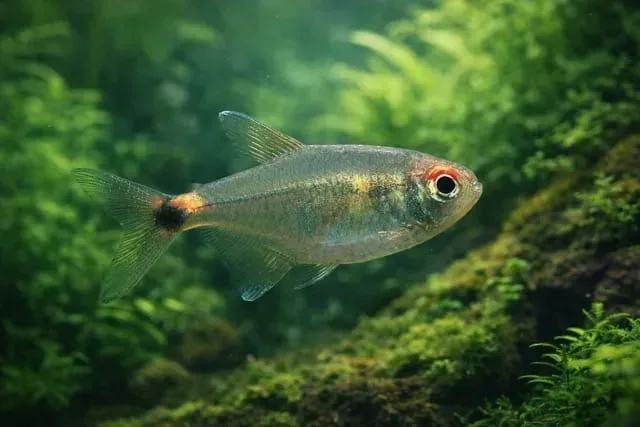
The Head and Tail Light Tetra, scientifically known as Hemigrammus ocellifer, is a small freshwater fish native to the Amazon Basin. With its distinctive coloration and lively behavior, this tetra is a popular choice among aquarium enthusiasts. It is known for the small reflective spots on its body, resembling headlights and tail lights, hence its common name.
Natural Habitat
This species thrives in slow-moving waters, such as streams and floodplains, rich in vegetation. The natural habitat is often characterized by dark waters, which provide shelter and hiding spots for these fish. The dense plant life offers both cover from predators and a source of food in the form of tiny organisms.
Care Requirements
The Head and Tail Light Tetra is considered a relatively easy species to care for, making it suitable for beginners as well as experienced aquarists. Here are some key care requirements:
- Tank Size: A minimum tank size of 40 liters is recommended for a small school.
- Water Temperature: Maintain a temperature range of 22-28°C.
- pH Level: A pH of 6.5 to 7.5 is suitable.
- Hardness: Soft to slightly hard water (3-12 dGH) is best.
Tank Setup
When setting up a tank for Head and Tail Light Tetras, consider the following:
- A dense planting layout, which mimics their natural habitat and provides cover.
- Open swimming space, as these fish enjoy being in schools and swimming freely.
- Soft, dim lighting to replicate their natural environment.
- Use of fine gravel or sand substrate to avoid harming the fish.
Compatibility
Head and Tail Light Tetras are generally peaceful and do well in community tanks. However, it's crucial to avoid housing them with aggressive or larger species that may view them as prey. Suitable tank mates include:
- Other small tetras
- Danios
- Peaceful barbs
- Small catfish
Feeding
These tetras are omnivorous and should be fed a varied diet that includes high-quality flake food, micro-pellets, and occasional live or frozen foods like brine shrimp or daphnia. Providing a varied diet is essential to ensure their health and vibrant coloration.
Lighting and CO2
Although Head and Tail Light Tetras adapt well to various lighting conditions, low to medium lighting is preferable. CO2 injection is not necessary, but providing a well-planted aquarium can help maintain stable water parameters.
Conclusion
The Head and Tail Light Tetra is a charming and colorful addition to any community aquarium. With proper care, they can thrive and bring a lively dynamic to your tank. They are best kept in schools of six or more to exhibit their natural behavior and enhance their beauty.
How to care for Head and Tail Light Tetra
- 1
Set up the tank
Use a minimum 76-liter (20 US gallon) tank with a dark substrate, plenty of plants, and some open swimming space.
- 2
Acclimate slowly
Introduce the tetras to the tank gradually to minimize stress and allow them to adjust to the new environment.
- 3
Maintain water parameters
Keep the water temperature between 24-28°C (75-82°F), pH between 5.5 and 7.5, and water hardness of 5-20 dGH.
- 4
Feed appropriately
Provide a varied diet of flake, granules, frozen, and live foods like brine shrimp and daphnia.
- 5
Monitor tank mates
Ensure all tank inhabitants are peaceful and compatible to prevent stress and aggression.
Frequently asked questions
What are the ideal water parameters for Head and Tail Light Tetras?▾
Maintain a temperature of 24-28°C (75-82°F), pH between 5.5 and 7.5, and water hardness of 5-20 dGH.
What size tank is suitable for Head and Tail Light Tetras?▾
A minimum tank size of 76 liters (20 US gallons) is recommended for a small school of these tetras.
What do Head and Tail Light Tetras eat?▾
They are omnivorous and accept a variety of foods, including flake, granules, frozen, and live foods like brine shrimp and daphnia.
How many Head and Tail Light Tetras should be kept together?▾
It's best to keep them in groups of at least 6 to ensure they feel secure and exhibit natural behavior.
Can Head and Tail Light Tetras live with other fish?▾
Yes, they are peaceful and can coexist with other non-aggressive species in a community tank.