

Illustrative images
Hammer Coral
Euphyllia ancora
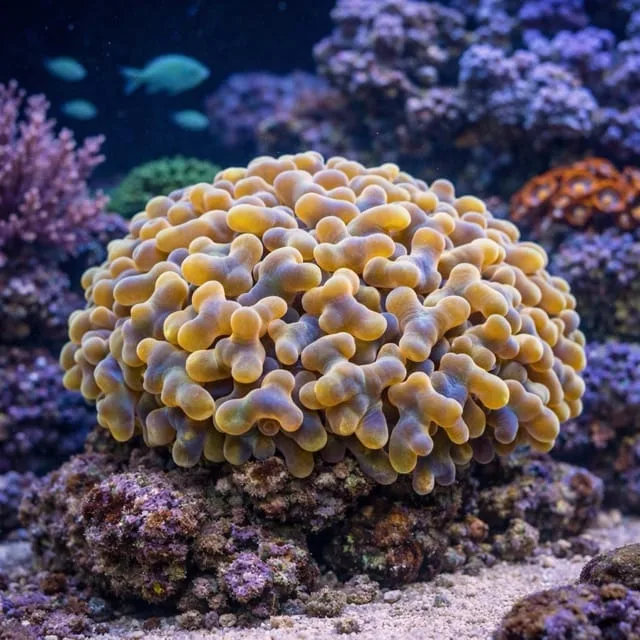
The Hammer Coral (Euphyllia ancora) gets its name from its distinctive, hammer- or anchor-shaped polyp tips. Available in a wide variety of stunning neon colors—from vibrant greens and golds to deep purples—this LPS coral is a beautiful centerpiece for a marine reef tank. Like its cousin the Torch Coral, it requires moderate lighting and a gentle, chaotic flow to keep its fleshy polyps happy and swaying. They are photosynthetic but will show much faster growth and better coloration when target-fed small meaty foods once or twice a week. Exercise caution when placing them, as they have a potent sting and need ample space away from neighbors.
How to care for Hammer Coral
- 1
Set up the tank
Ensure your aquarium has stable water parameters: temperature 74–83°F (23–28°C), pH 8.1–8.2, specific gravity 1.024–1.026, calcium 380–430 ppm, and alkalinity 3.5 meq/L.
- 2
Position the coral
Place Hammer Coral in the middle to lower sections of the tank, providing sufficient space from other corals to prevent stinging from its sweeper tentacles.
- 3
Adjust lighting
Provide moderate lighting with a PAR range of 80–150. Avoid intense, direct light to prevent bleaching and tissue stress.
- 4
Manage water flow
Maintain moderate, indirect water flow to gently sway the coral's tentacles. Avoid strong, direct currents that can cause tissue damage.
- 5
Feed appropriately
While primarily photosynthetic, supplement with meaty foods like brine shrimp or micro-plankton once or twice a week to promote growth and vitality.
Frequently asked questions
What are the ideal water parameters for Hammer Coral?▾
Hammer Coral (Euphyllia ancora) thrives in water with a temperature of 74–83°F (23–28°C), pH between 8.1 and 8.2, specific gravity of 1.024–1.026, calcium levels at 380–430 ppm, and alkalinity around 3.5 meq/L.
How should I position Hammer Coral in my aquarium?▾
Place Hammer Coral in the middle to lower sections of the tank, ensuring it has ample space from other corals to prevent stinging from its sweeper tentacles.
What lighting conditions are best for Hammer Coral?▾
Provide moderate lighting with a PAR range of 80–150. Avoid intense, direct light to prevent bleaching and tissue stress.
How do I feed Hammer Coral?▾
While Hammer Coral primarily relies on photosynthesis, supplementing with meaty foods like brine shrimp or micro-plankton once or twice a week can promote growth and vitality.
What water flow is suitable for Hammer Coral?▾
Maintain moderate, indirect water flow to gently sway the coral's tentacles. Avoid strong, direct currents that can cause tissue damage.