

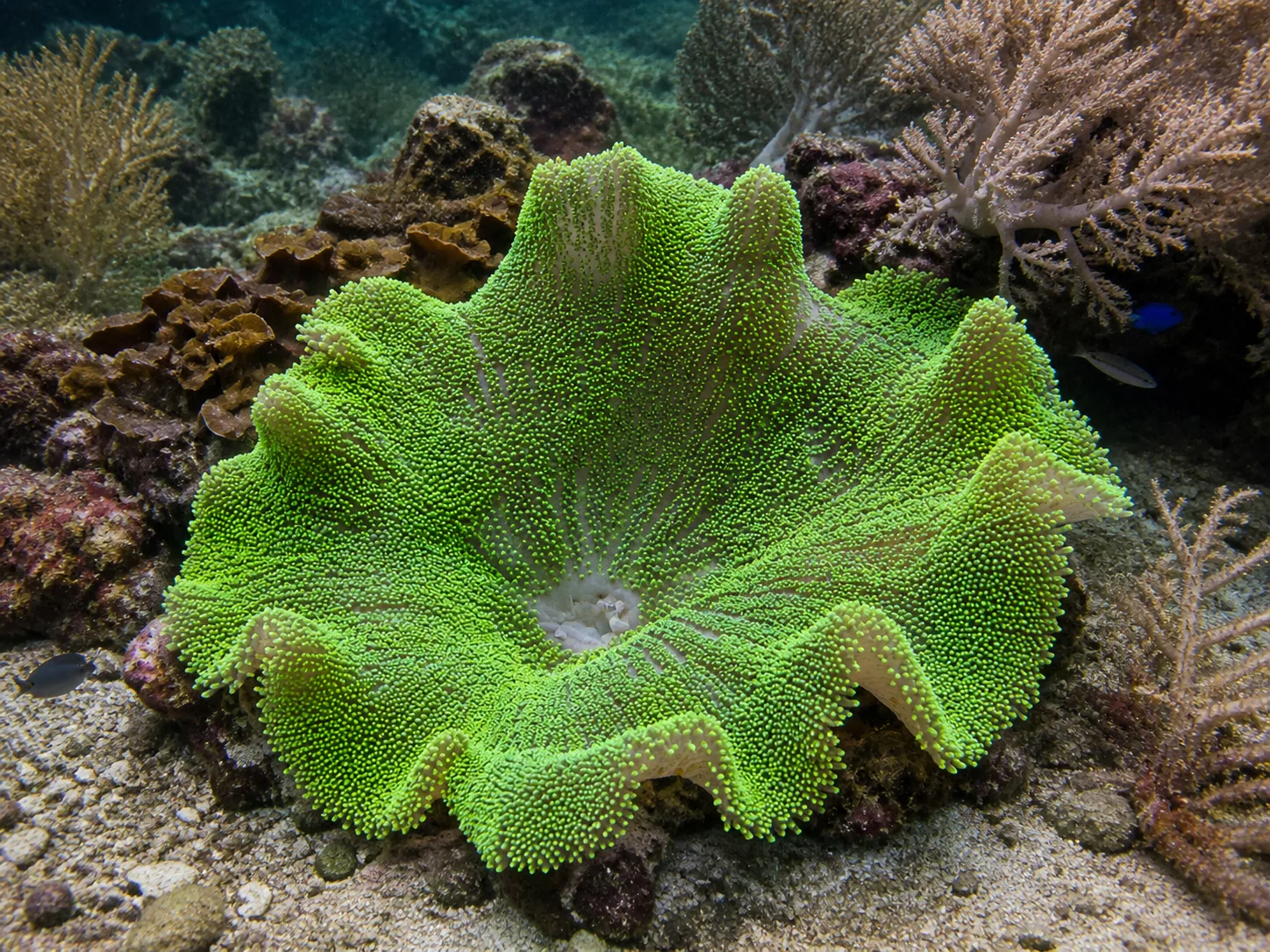
Illustrative images
Haddon's Carpet Anemone
Stichodactyla haddoni
Overview
The Haddon's Carpet Anemone, scientifically known as Stichodactyla haddoni, is a captivating marine invertebrate that is popular among reef aquarium enthusiasts. Known for its vibrant colors and unique texture, this anemone adds both beauty and biodiversity to a marine setup. These anemones are native to the Indo-Pacific region, commonly found in shallow waters where they can form symbiotic relationships with clownfish.
Natural Habitat
Haddon's Carpet Anemones inhabit sandy and rocky substrates in warm coastal waters. They are often located on the sea floor, where they can extend their tentacles to capture prey and offer shelter for small fish, particularly clownfish, which rely on them for protection.
Care Requirements
Caring for a Haddon's Carpet Anemone involves providing a stable marine environment with proper water parameters. They thrive best in well-maintained aquariums with good water flow and lighting suited for coral growth. Anemones can be sensitive to poor water quality, so regular monitoring and maintenance are essential.
Tank Setup
For a successful Haddon's Carpet Anemone setup, consider the following:
- Minimum Tank Size: A tank of at least 50 gallons is recommended to give ample space for the anemone to expand and for potential clownfish.
- Substrate: A sandy substrate allows for natural behavior, as they prefer to bury their foot into the sand.
- Lighting: Moderate to high lighting is beneficial. Metal halide or LED lights with the proper spectrum can promote their health.
- Water Movement: Moderate water flow is ideal to help bring food particles to the anemone while preventing it from being dislodged.
Compatibility
Haddon's Carpet Anemones are generally peaceful but can be host to specific marine species. They often form strong symbiotic relationships with clownfish, which help keep the anemone clean and in good health. However, caution is advised when adding other tank mates, as they may see smaller fish as potential prey.
Feeding
These anemones are carnivorous and thrive on a diet of meaty foods. Offering a variety of foods such as shrimp, fish, and other meaty marine foods will help maintain their health. Feeding should occur several times a week, but care should be taken not to overfeed, which can deteriorate water quality.
Caring for Your Anemone
To ensure the longevity and health of your Haddon's Carpet Anemone, regular water changes and monitoring of parameters such as salinity, pH, and temperature are crucial. Keeping the anemone clean by gently removing detritus and waste can also promote a healthy environment. Regular observations will help you identify any potential issues early on.
How to care for Haddon's Carpet Anemone
- 1
Set up the tank
Use a well-established aquarium of at least 50 gallons (189 liters) with a deep sand bed of 3-5 inches (7.5-12.5 cm) to accommodate the anemone's size and anchoring needs.
- 2
Acclimate slowly
Introduce the anemone to the tank gradually to minimize stress, allowing it to adjust to the new environment.
- 3
Maintain water parameters
Keep water temperature between 72-78°F (22-26°C), salinity at 1.023-1.025, and pH between 8.1-8.4 to ensure optimal health.
- 4
Provide appropriate lighting
Ensure high lighting conditions with an intensity of 200-300 PAR to support the anemone's photosynthetic needs.
- 5
Feed appropriately
Offer meaty foods like mysis or brine shrimp once a week, ensuring pieces are smaller than the anemone's mouth size to prevent regurgitation.
- 6
Monitor tankmates
Be cautious with tankmates, as the anemone can sting and potentially harm other corals, fish, and invertebrates.
- 7
Regularly monitor health
Observe the anemone for signs of stress or disease, and address any issues promptly to maintain a healthy aquarium environment.
Frequently asked questions
What size tank is suitable for a Haddon's Carpet Anemone?▾
A minimum tank size of 50 gallons (approximately 189 liters) is recommended for a Haddon's Carpet Anemone, as they can grow up to 20 inches (51 cm) in diameter. ([bluezooaquatics.com](https://www.bluezooaquatics.com/productDetail.asp?cid=74&did=2&pid=1086&utm_source=openai))
What are the ideal water parameters for a Haddon's Carpet Anemone?▾
Maintain water temperature between 72-78°F (22-26°C), salinity at 1.023-1.025, and pH between 8.1-8.4. ([liveaquaria.com](https://www.liveaquaria.com/products/haddons-carpet-anemone?utm_source=openai))
Can Haddon's Carpet Anemones host clownfish?▾
Yes, Haddon's Carpet Anemones can host various clownfish species, forming a mutualistic relationship. ([reeflings.com](https://reeflings.com/species/stichodactyla-haddoni?utm_source=openai))
What is the feeding behavior of Haddon's Carpet Anemones?▾
They are carnivorous and can consume small fish and invertebrates; spot feeding with meaty foods like mysis or brine shrimp is beneficial. ([reefchasers.com](https://reefchasers.com/blogs/reef-chasers-coral-care-guide/haddoni-carpet-anemone-care-guide?utm_source=openai))
Are Haddon's Carpet Anemones reef-safe?▾
They are reef-safe with caution, as they can sting and potentially harm other corals and invertebrates. ([bluezooaquatics.com](https://www.bluezooaquatics.com/productDetail.asp?cid=74&did=2&pid=1086&utm_source=openai))
What lighting conditions do Haddon's Carpet Anemones require?▾
They require high lighting conditions, with a recommended intensity of 200-300 PAR. ([reefchasers.com](https://reefchasers.com/blogs/reef-chasers-coral-care-guide/haddoni-carpet-anemone-care-guide?utm_source=openai))
How aggressive are Haddon's Carpet Anemones?▾
They are aggressive and can sting nearby corals, fish, and invertebrates. ([reefs.com](https://reefs.com/invertebrates/haddons-carpet-anemone/?utm_source=openai))
What is the natural habitat of Haddon's Carpet Anemones?▾
They are found in the shallow waters of the Indo-Pacific and Red Sea, residing in soft muddy or sandy substrates. ([liveaquaria.com](https://www.liveaquaria.com/products/haddons-carpet-anemone?utm_source=openai))