

Illustrative images
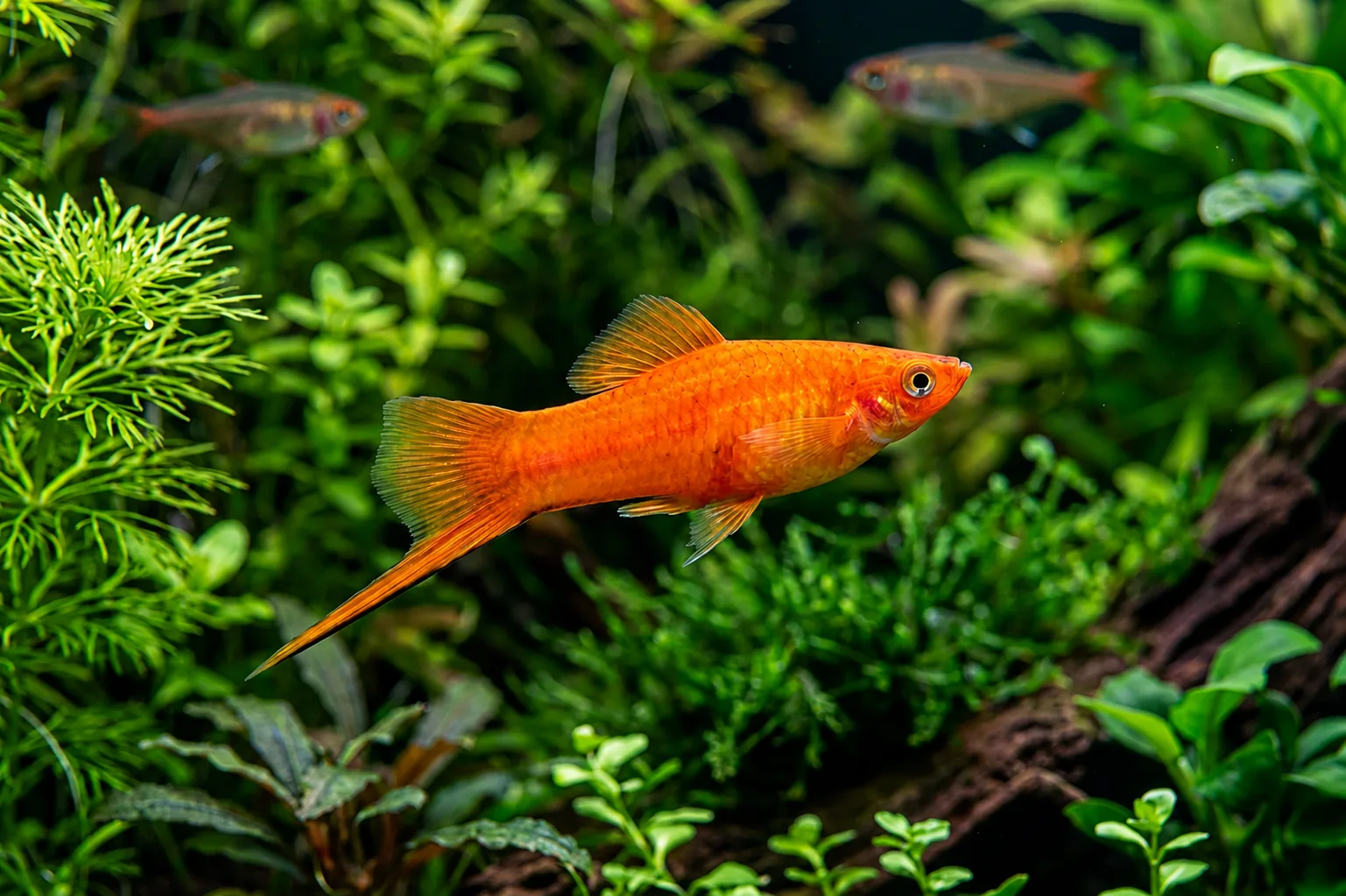
Green swordtail
Xiphophorus helleri
Overview
The Green Swordtail, scientifically known as Xiphophorus helleri, is a popular freshwater fish among aquarium enthusiasts. This vibrant species is renowned for its bright green color and distinctive sword-shaped tail, particularly prominent in males. Originating from Central America, the Green Swordtail is known for its lively behavior and adaptability, making it a great choice for both novice and experienced aquarists.
Natural Habitat
In the wild, Green Swordtails inhabit rivers, ponds, and streams, often found in areas with plenty of vegetation. This natural environment provides the fish with ample hiding spots while also offering open spaces for swimming. Their preference for densely planted areas emphasizes the importance of creating a similar environment in captivity.
Care Requirements
Tank Setup
For Green Swordtails, a minimum tank size of 75 liters (20 gallons) is recommended to allow enough swimming space and to accommodate a small group. The tank should be well-planted with hiding spots created by plants or decorations. A sandy or fine gravel substrate is ideal to mimic their natural habitat, while moderate water movement is also beneficial.
Water Parameters
- Temperature: 22-28°C (72-82°F)
- pH: 7.0-8.0
- Hardness: 10-30 dGH
Lighting
Moderate lighting is best, which helps in plant growth while allowing the fish to thrive. Consider providing some shaded areas in the tank, as this can aid in mimicking their natural environment.
Compatibility
Green Swordtails are generally peaceful but can exhibit semi-aggressive behavior during mating. They do best in community tanks with other peaceful species like tetras, danios, and other livebearers. Avoid housing them with larger or aggressive fish that may harass them.
Feeding
Being omnivorous, Green Swordtails will accept a variety of foods. A diet that includes high-quality flake food, pellets, and occasional live or frozen foods such as brine shrimp, daphnia, or bloodworms will support their health. Regular feeding ensures they maintain their vibrant coloration and optimal health.
Lifespan
When properly cared for, Green Swordtails can live up to 3-5 years. Regular water changes, a balanced diet, and a stable environment can contribute to a longer lifespan.
Conclusion
The Green Swordtail is an excellent addition to any freshwater aquarium, providing color and activity. By following the care recommendations, hobbyists can enjoy observing these lively fish in their underwater environment.
How to care for Green swordtail
- 1
Set up the tank
Use a minimum 15-gallon tank with a secure lid to prevent jumping. Include live plants and open swimming areas.
- 2
Acclimate slowly
Introduce Green Swordtails to the tank gradually to minimize stress.
- 3
Maintain water parameters
Keep water temperature between 68°F and 82°F (20°C to 28°C), pH between 7.0 and 8.0, and hardness between 12 and 35 dGH.
- 4
Feed appropriately
Provide a varied diet of high-quality flakes or pellets, supplemented with live or frozen foods like brine shrimp and bloodworms.
- 5
Monitor tank mates
Keep them with peaceful species like guppies, platies, and tetras. Avoid large, aggressive fish.
Frequently asked questions
What is the ideal tank size for Green Swordtails?▾
A minimum of 15 gallons is recommended for a single Green Swordtail, with larger tanks preferred for groups.
What water temperature do Green Swordtails prefer?▾
They thrive in temperatures between 68°F and 82°F (20°C to 28°C).
How can I distinguish male and female Green Swordtails?▾
Males have a distinctive sword-like extension on their tail fin, while females are slightly larger and more rounded.
What is the lifespan of a Green Swordtail?▾
They can live up to 5 years with proper care.
What is the natural habitat of Green Swordtails?▾
They originate from freshwater streams and rivers in Central America, particularly from Mexico to Guatemala.