

Illustrative images
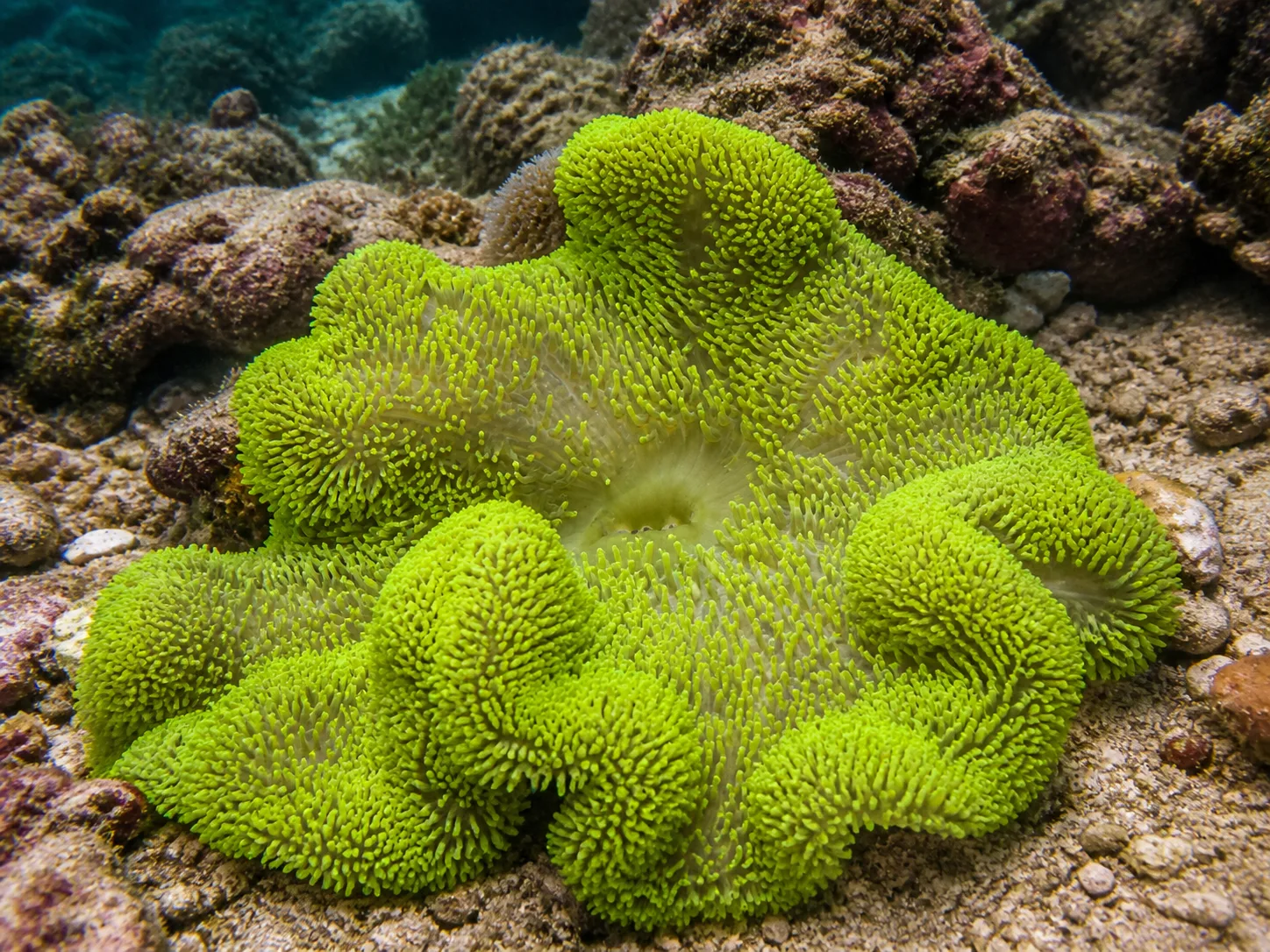
Giant Carpet Anemone
Stichodactyla gigantea
Overview
The Giant Carpet Anemone, often admired for its striking appearance, is a marine invertebrate that can enhance the aesthetic of your reef aquarium. Known for its large, colorful body, this anemone can serve as both a beautiful focal point in your tank and a natural habitat for certain clownfish species.
Natural Habitat
Giant Carpet Anemones are typically found in warm, shallow waters of the Indo-Pacific region. They prefer sandy substrates and are often located among coral reefs where they can anchor themselves securely.
Care Requirements
Owning a Giant Carpet Anemone requires dedicated care and attention. They thrive in well-maintained tanks with stable water parameters. Here’s a breakdown of their essential needs:
- Tank Size: A minimum of 100 gallons is recommended to provide enough space for growth.
- Lighting: Moderate to high lighting is necessary to support their symbiotic relationship with zooxanthellae, which helps them obtain nutrients.
- Water Parameters: Maintaining stable levels is critical.
Tank Setup
In setting up a tank for the Giant Carpet Anemone, it’s important to consider their environmental needs:
- Provide ample hiding spots and places to attach.
- Ensure good water circulation to prevent waste accumulation.
- Keep tank mate compatibility in mind—avoid aggressive neighbors.
Compatibility
Giant Carpet Anemones are semi-aggressive and should be placed with caution. They are best kept with compatible clownfish species that can safely host within their tentacles. Avoid more aggressive fish that might irritate or disturb them.
Feeding
Although they derive nutrients from sunlight, they also require regular feeding. Offer meaty foods such as:
- Silversides
- Krill
- Frozen shrimp
Feeding should occur several times a week to ensure they receive adequate nutrition.
Additional Care Notes
Regular monitoring of water quality and parameters, including pH and salinity, is crucial. Be prepared to perform water changes regularly to maintain ideal conditions.
Lifespan
With proper care, the Giant Carpet Anemone can live for several years, becoming a stable part of your reef ecosystem.
How to care for Giant Carpet Anemone
- 1
Set up the tank
Use a well-established aquarium with stable water quality, strong lighting, and medium water flow.
- 2
Acclimate slowly
Introduce the anemone to the tank gradually to minimize stress and allow it to find a suitable spot.
- 3
Provide appropriate lighting
Ensure high-intensity lighting to support the anemone's symbiotic relationship with zooxanthellae.
- 4
Feed regularly
Offer meaty foods like fish, shrimp, or mussels at least once a week to supplement its diet.
Frequently asked questions
What size tank is needed for a Giant Carpet Anemone?▾
A minimum tank size of 189 liters (50 gallons) is recommended for a Giant Carpet Anemone.
What are the ideal water parameters for a Giant Carpet Anemone?▾
Maintain a salinity of 1.023-1.025, pH between 8.1-8.4, and carbonate hardness (KH) of 8-12.
Can Giant Carpet Anemones host clownfish?▾
Yes, they can host various clownfish species, including Amphiprion ocellaris and Amphiprion percula.
How often should I feed a Giant Carpet Anemone?▾
Feed it at least once a week with small pieces of fish or shellfish meat, such as shrimp or krill.
Is the Giant Carpet Anemone reef-safe?▾
With caution; it can be aggressive towards nearby corals and other invertebrates.