

Illustrative images
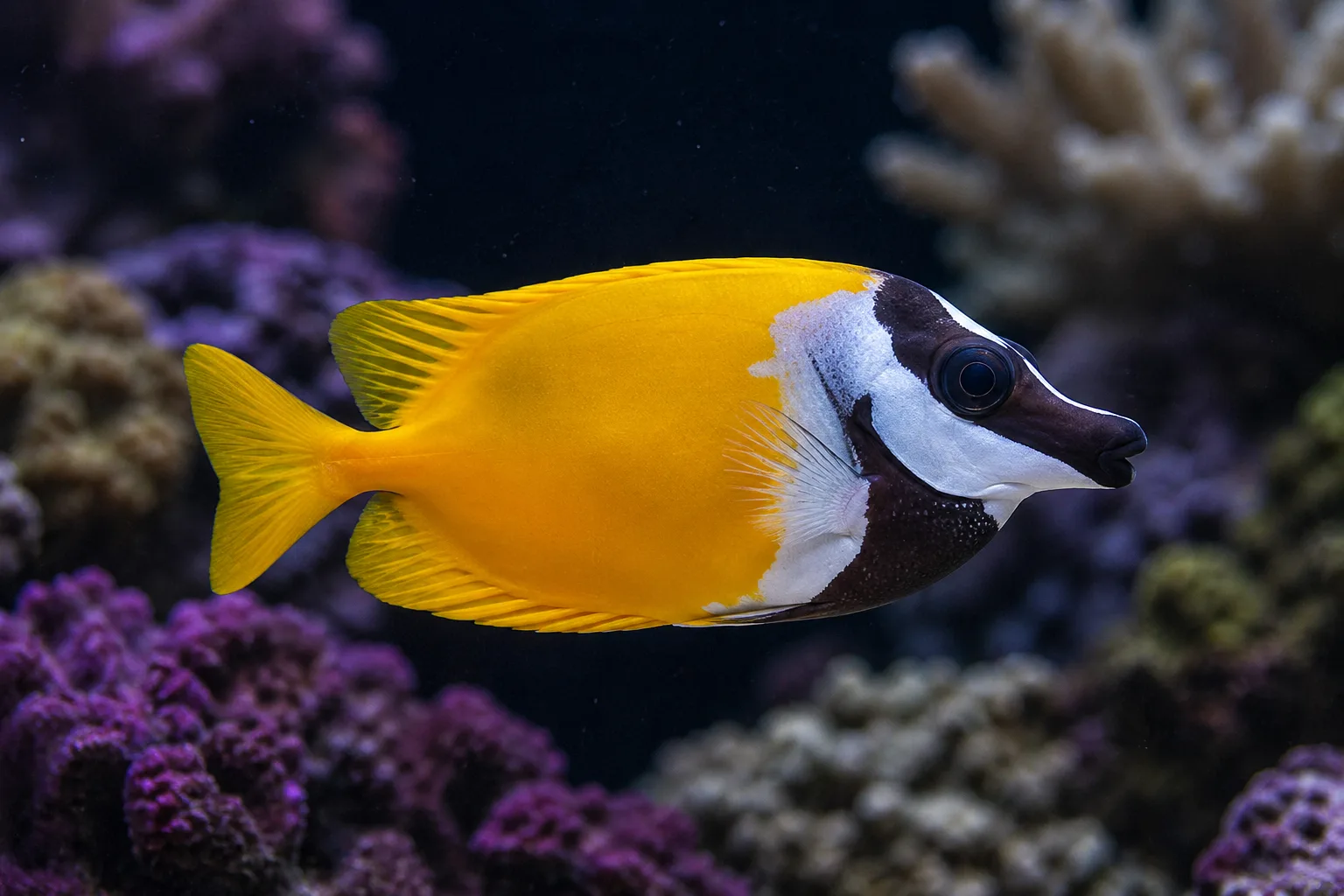
Foxface Rabbitfish
Siganus vulpinus
Overview
The Foxface Rabbitfish, scientifically known as Siganus vulpinus, is a marine fish popular among aquarium enthusiasts for its unique appearance and hardy nature. Known for its distinctive fox-like face and bright coloration, this species can add a beautiful touch to any reef or fish-only tank. The fish is native to the reefs of the Indo-Pacific region and is often found in areas with abundant coral cover.
Natural Habitat
In the wild, Foxface Rabbitfish inhabit shallow reefs and lagoons, where they can find food and shelter. They typically dwell among corals and rocky substrates, which provide both protection from predators and opportunities for foraging. This species is herbivorous, primarily feeding on algae and plant matter found in their natural surroundings.
Care Requirements
Caring for a Foxface Rabbitfish in an aquarium requires some essential considerations:
- Tank Size: A minimum tank size of 75 gallons is recommended for these fish to thrive, allowing ample space for swimming.
- Water Quality: Maintaining high water quality is crucial. Regular water changes and a good filtration system will help keep the environment stable.
- Lighting: Moderate lighting is suitable, as they generally thrive in bright environments mimicking their natural habitat.
- Temperature: A stable temperature between 24-28°C (75-82°F) is ideal for the Foxface Rabbitfish.
Tank Setup
When setting up a tank for a Foxface Rabbitfish, consider the following:
- Provide ample hiding spots and territories using rock formations and caves.
- The tank should be decorated with live rock and suitable marine plants to mimic their natural habitat.
- Ensure sufficient open swimming space, as Foxface Rabbitfish are active swimmers.
Compatibility
Foxface Rabbitfish can be moderately aggressive, especially towards other rabbitfish or fish with similar body shapes. It's essential to choose tank mates carefully:
- They generally do well with other herbivorous species and peaceful reef fish.
- Avoid housing them with overly aggressive fish that may cause stress.
Feeding
Feeding a Foxface Rabbitfish is straightforward, as they are omnivorous and primarily herbivorous. A varied diet is important for their health:
- Provide high-quality flake or pellet foods specifically designed for herbivores.
- Supplement their diet with fresh or blanched vegetables, such as spinach, lettuce, or zucchini.
- Diet should be high in algae; algae sheets can be offered for grazing.
Lifespan
With proper care, the Foxface Rabbitfish can live for up to 5 to 7 years in captivity, although some individuals may live longer.
How to care for Foxface Rabbitfish
- 1
Set up the tank
Use a minimum 75-gallon tank with plenty of swimming space and hiding spots. Include live rocks for grazing and biological filtration.
- 2
Acclimate slowly
Introduce the fish to the aquarium water gradually to reduce stress and prevent shock.
- 3
Maintain water parameters
Keep salinity at 1.020-1.025, pH between 8.1 and 8.4, and temperature between 72-79°F (22-26°C). Regularly monitor and adjust as needed.
- 4
Provide a varied diet
Offer a mix of algae, seaweed, and high-quality herbivore preparations. Supplement with small amounts of meaty foods like Mysis and Brine Shrimp.
- 5
Monitor behavior
Observe for signs of stress or aggression. Ensure the tank mates are compatible and that the fish is not nipping at corals.
Frequently asked questions
What are the ideal water parameters for Foxface Rabbitfish?▾
Maintain a salinity of 1.020-1.025, pH between 8.1 and 8.4, and a temperature range of 72-79°F (22-26°C).
What size tank is suitable for a Foxface Rabbitfish?▾
A minimum tank size of 75 gallons (approximately 284 liters) is recommended to accommodate their size and swimming needs.
What do Foxface Rabbitfish eat?▾
They are primarily herbivorous, feeding on algae, seaweed, and high-quality herbivore preparations. They may also accept small amounts of meaty foods like Mysis and Brine Shrimp.
Are Foxface Rabbitfish reef-safe?▾
Generally, they are reef-safe but may nip at large-polyped corals and certain soft corals if underfed. Providing a varied diet can help mitigate this behavior.
How long do Foxface Rabbitfish live?▾
They have a lifespan of 8-12 years in captivity.